
Citroën ë-C3 in Portugal: Real Price, Specs and the €12,990 French Headline
Published: 21/05/2026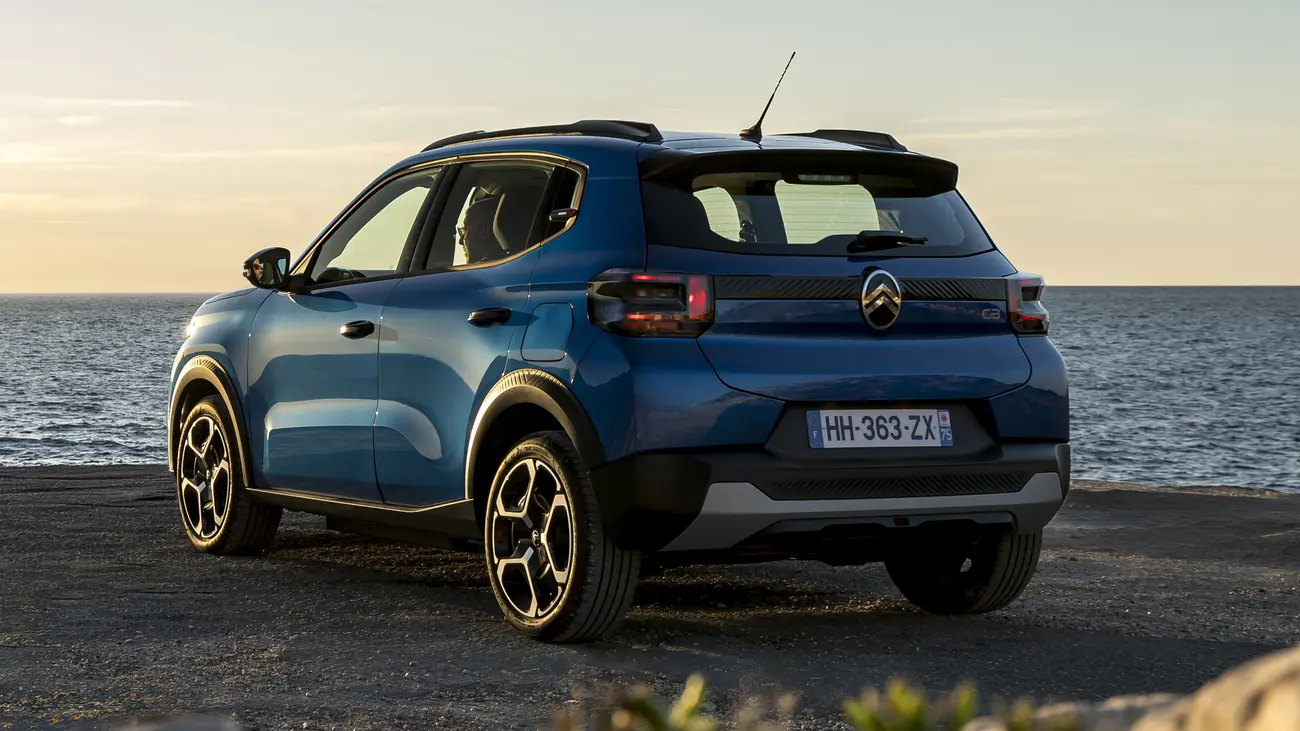
€12,990. It is the price that gave the Citroën ë-C3 European headlines — and that does not exist in Portugal
The Citroën ë-C3 Urban Range launched in May 2026 with a number that grabbed half of Europe's attention: €12,990 for a brand-new electric city car. The figure is real, but it only applies to a very narrow slice of French buyers. In Portugal, where there is no equivalent scheme, the same car costs roughly the headline discount on top of the headline price.
It is worth understanding why — and whether, without the French magic, the Citroën ë-C3 still earns its place in the Portuguese market.
The maths behind €12,990
The catalogue price of the ë-C3 You Urban Range in France is €19,990. The advertised €12,990 comes from stacking two layers of incentives:
- €6,100 CEE subsidy (Certificats d'Économies d'Énergie) — available only to ménages en précarité énergétique, households in officially recognised energy poverty.
- €900 Citroën rebate — applied to every buyer.
Households that do not qualify as vulnerable get the standard CEE of €3,500 plus the €900 rebate, taking the ë-C3 home for €15,590. That is the realistic accessible price in France. The €12,990 is an outlier, not the rule.
Portugal has no direct equivalent to the CEE scheme. The Fundo Ambiental grants €4,000 toward new EV purchases under €62,500 (ex-VAT), but the annual budget runs out within hours every year. Add the ISV (vehicle tax) exemption and the reduced IUC (annual road tax), and the effective price of the ë-C3 in Portugal lands closer to €18,000–€19,000 — in line with the €19,990 catalogue price in Germany and €20,990 in the Netherlands.
Citroën ë-C3 Urban Range: the spec sheet
The entry-level trim is the Urban Range — sold in Portugal as Autonomia Urbana. Here is the summary:
| Specification | Value |
|---|---|
| Battery (usable) | 29.8 kWh LFP |
| Power | 113 hp (83 kW) |
| Torque | 120 Nm |
| Drive | Front-wheel drive |
| 0-100 km/h | 11.6 s |
| Top speed | 125 km/h |
| WLTP range (mixed) | 213-215 km |
| WLTP range (urban) | 304 km |
| Real-world combined range | around 175 km |
| AC charging | 7.4 kW (Type 2) |
| DC charging | 30 kW max (CCS, optional) |
| 10-80% DC time | 44 min |
| Length | 4.02 m |
| Boot | 310 L (1,200 L seats folded) |
| Seats | 5 |
| Battery warranty | 8 years / 160,000 km |
The 29.8 kWh battery uses LFP (lithium iron phosphate) chemistry — the same technology behind almost every entry-level Chinese EV. It is less energy-dense than NMC, but safer, cheaper, and tolerates thousands of charge cycles with minimal degradation. For a car built for city duty, it is the right call.
What 175 km of real range buys you
EV Database estimates 175 km of real-world combined range, a figure confirmed by Presse-Citron's test, which recorded average consumption of 14 kWh/100 km in mixed driving. In mild-weather city use, that climbs to 265 km. On a cold motorway, it drops to 120 km.
Translated into Portuguese reality: the ë-C3 is fine for the daily routine of anyone living in Lisbon, Porto, or Coimbra who covers less than 50 km a day. A Lisbon-Évora day trip is comfortable. Lisbon-Porto requires a mandatory charging stop — and that is where the car shows its biggest weakness.
The Achilles heel: 30 kW DC charging
Fast charging is the Urban variant's weak point. It is capped at 30 kW on DC, and the fast-charging hardware itself is an optional extra costing around €500 (not standard). The result: a 10-80% charge takes 44 minutes, even on a 150 kW rapid charger.
For context, the Standard Range variant (43.7 kWh) charges at 100 kW and does 20-80% in 26 minutes. The gap is not cosmetic — it is the difference between an EV that can travel and an EV that is strictly an urban tool.
If long trips are rare and you can plan a long lunch stop, the Urban version works. If trips are frequent or time-sensitive, the upgrade to the Comfort Range pays for itself fast.
ë-C3 vs Dacia Spring vs Leapmotor T03: which one to pick
These three define the cheapest end of the Portuguese EV market right now. They are positioned differently, and the ë-C3 does not win on every metric.
| Citroën ë-C3 Urban | Dacia Spring | Leapmotor T03 | |
|---|---|---|---|
| Approximate Portugal price | €18,000-19,000 | from ~€17,500 (65 hp) | from ~€17,000 |
| Battery | 29.8 kWh LFP | 26.8 kWh | 37.3 kWh |
| Power | 113 hp | 45 or 65 hp | 95 hp |
| WLTP range | 213 km | 228 km (65 hp) | 265 km |
| 0-100 km/h | 11.6 s | 13.7 s (65 hp) | 12.7 s |
| Seats | 5 | 4 | 4 |
| Boot | 310 L | 308 L | 210 L |
| Segment | B | A | A |
The Dacia Spring is smaller, lighter, and cheaper in 45 hp guise — but it only seats four and carries a Euro NCAP rating of one star (2021). The Leapmotor T03 packs more standard kit (panoramic roof, 15-inch alloys, automatic climate control) and offers more range, but its infotainment is poor and lacks Apple CarPlay and Android Auto.
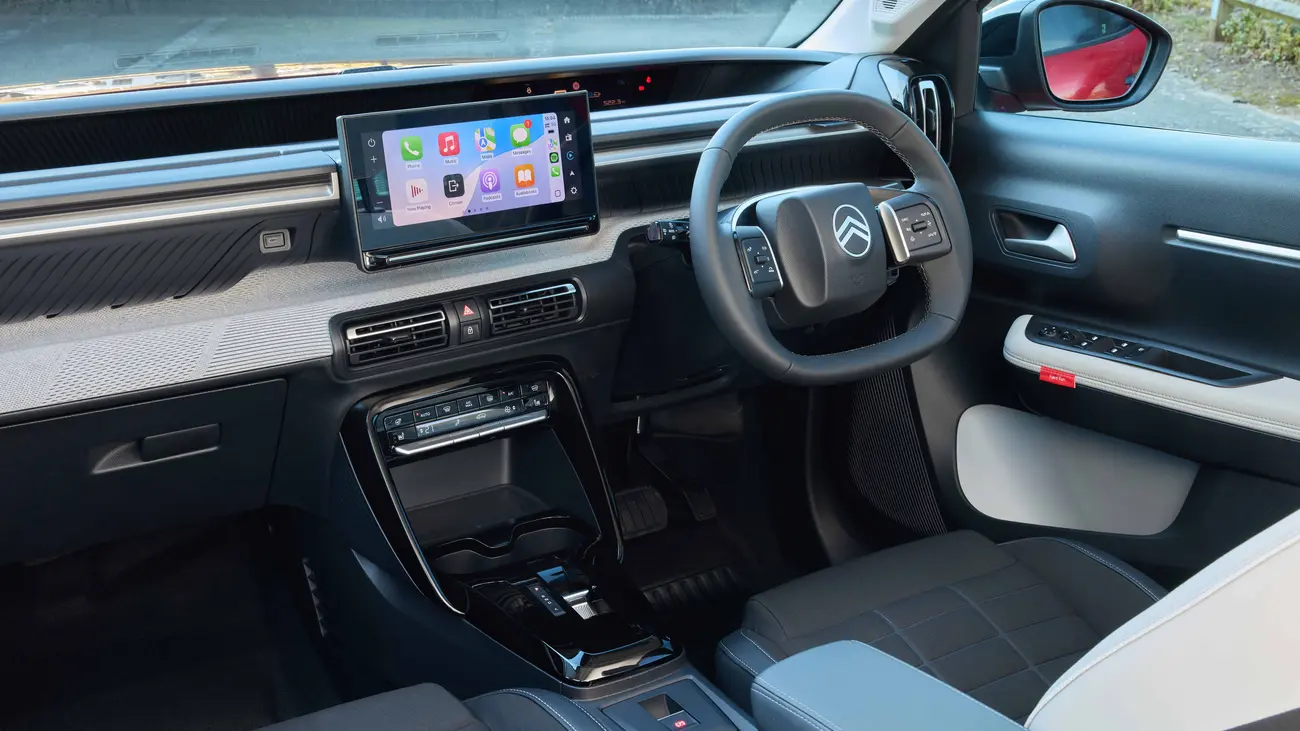
The ë-C3 is, of the three, the most car: five real seats, a bigger boot, the new STLA SmartCar platform shared with future Stellantis models, and an interior that punches above its segment. You pay for that in euros — but you also gain real usability when there are kids or luggage onboard.
Where the Citroën ë-C3 shines — and where it stumbles
Presse-Citron's test (7/10) and What Car?'s review converge on the same conclusions.
Strengths:
- Generous interior space for the segment, especially in the rear
- High driving position with strong visibility
- Physical climate controls (rare in this price bracket)
- Apple CarPlay and Android Auto as standard
- Comfortable cruising on smooth tarmac
Weaknesses:
- Weak regenerative braking, no one-pedal mode
- Pronounced body roll in corners
- Brake pedal modulation is tricky
- Modest sound insulation
- Struggles on steep climbs (tested on 15% gradients in the Marseille calanques)
- No Euro NCAP rating yet
The ë-C3 is, fundamentally, a city car with SUV stance — and it plays that role honestly. It is not a touring car or a driver's car. It is a comfortable urban runabout with five seats and an entry-level price.
Frequently Asked Questions
The catalogue price of the Citroën ë-C3 Urban Range in Portugal lands near €19,990, in line with the €19,990 sticker in Germany and €20,990 in the Netherlands. With ISV exemption, reduced IUC, and the €4,000 Fundo Ambiental grant (when budget is available), the effective price falls to roughly €18,000-€19,000. The €12,990 French headline does not apply in Portugal — it requires the €6,100 CEE subsidy reserved for households in energy poverty in France.
The €12,990 figure stacks two French incentives on top of the €19,990 catalogue price: a €6,100 CEE subsidy (Certificats d'Économies d'Énergie) restricted to ménages en précarité énergétique, plus a €900 Citroën rebate. Portugal has no direct equivalent to the CEE scheme. The Fundo Ambiental grants €4,000 per new EV under €62,500 ex-VAT, but the annual budget is exhausted within hours every year.
The ë-C3 Urban Range has a WLTP combined range of 213-215 km, but EV Database and Presse-Citron's test point to around 175 km in mixed real-world driving, with average consumption of 14 kWh/100 km. In mild-weather city use it climbs to 265 km, but on a cold motorway it falls to 120 km. For daily routines under 50 km/day in Lisbon, Porto, or Coimbra it is comfortably enough; for frequent long trips it is not.
DC charging is the Urban variant's Achilles heel: it is capped at 30 kW and is an optional extra costing around €500. A 10-80% charge takes 44 minutes even on a 150 kW rapid charger. By comparison, the Comfort Range (43.7 kWh) charges at 100 kW and does 20-80% in just 26 minutes — anyone planning frequent intercity travel should pay the upgrade to the larger version.
The ë-C3 is clearly the most car of the three: five real seats, a 310 L boot, the new STLA SmartCar platform, and B-segment dimensions, but it costs €18,000-€19,000 in Portugal. The Dacia Spring starts from around €17,500 (65 hp version), seats only four, and carries a one-star Euro NCAP rating (2021). The Leapmotor T03 starts from around €17,000 with a 37.3 kWh battery and 265 km WLTP range, but its infotainment is weak and it lacks Apple CarPlay and Android Auto.
Does the ë-C3 make sense in Portugal?
Yes, in three scenarios:
- Second family car — for the school run, errands, and city loops. The real 175 km is more than enough.
- Small business fleet — combined with ISV exemption, reduced IUC, and VAT deductibility, the total cost of ownership stacks up well against a petrol city car.
- Cautious first-time EV buyer — for anyone wanting to try the technology without spending €35,000 on a mid-range model.
It is the wrong choice if frequent intercity travel is on the cards. For that, stepping up to the 43.7 kWh Comfort Range — or to a Renault 5, MG4, or BYD Dolphin — pays for itself on the first long trip.
The €12,990 headline will keep showing up in articles, but the real Portuguese maths is different. The ë-C3 is still the cheapest B-segment EV on sale here — it just is not the miracle the French marketing hints at.