
Chery Fulwin T7 Price in Portugal: Why a €12,000 Chinese EV Doubles
Published: 04/09/2026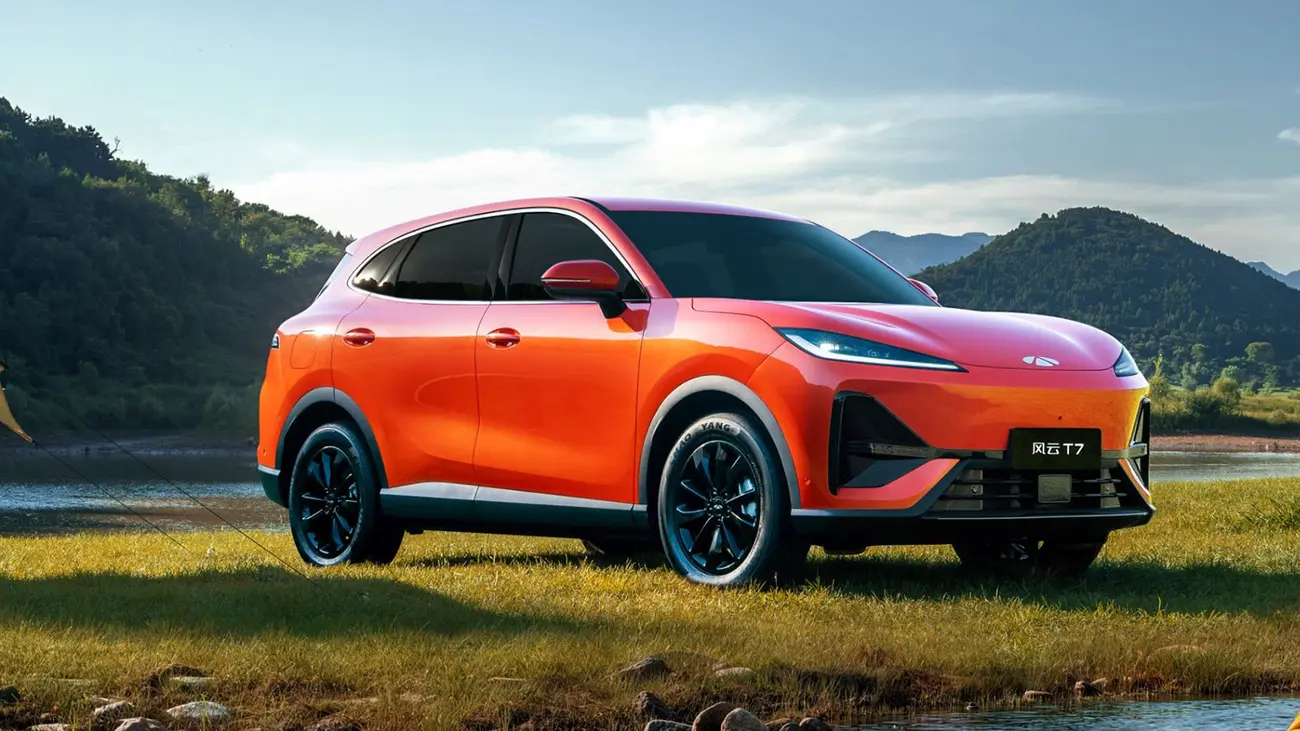
A 600 km electric SUV for under €13,000 — but only in China
On 27 August, Chery put the Fulwin T7 on sale: a 4,570 mm compact electric SUV with a 178 kW (239 hp) motor, a 65.05 kWh LFP battery and 600 km of certified range. Entry price: 97,900 yuan. With the launch trade-in campaign, 94,900 yuan — a little over €12,000 at the late-August 2026 rate of roughly 8 yuan to the euro.
None of those numbers will reach Portugal. Not the price, not the range. And the gap is not a rounding detail: by the time a car like this lands in a European showroom, the sticker tends to double. It is worth walking through exactly where the money enters the calculation — because most of it is not where people assume.
What 97,900 yuan buys you
The spec sheet is the part that stings. For less than a basic petrol supermini costs in Portugal, the Fulwin T7 includes:
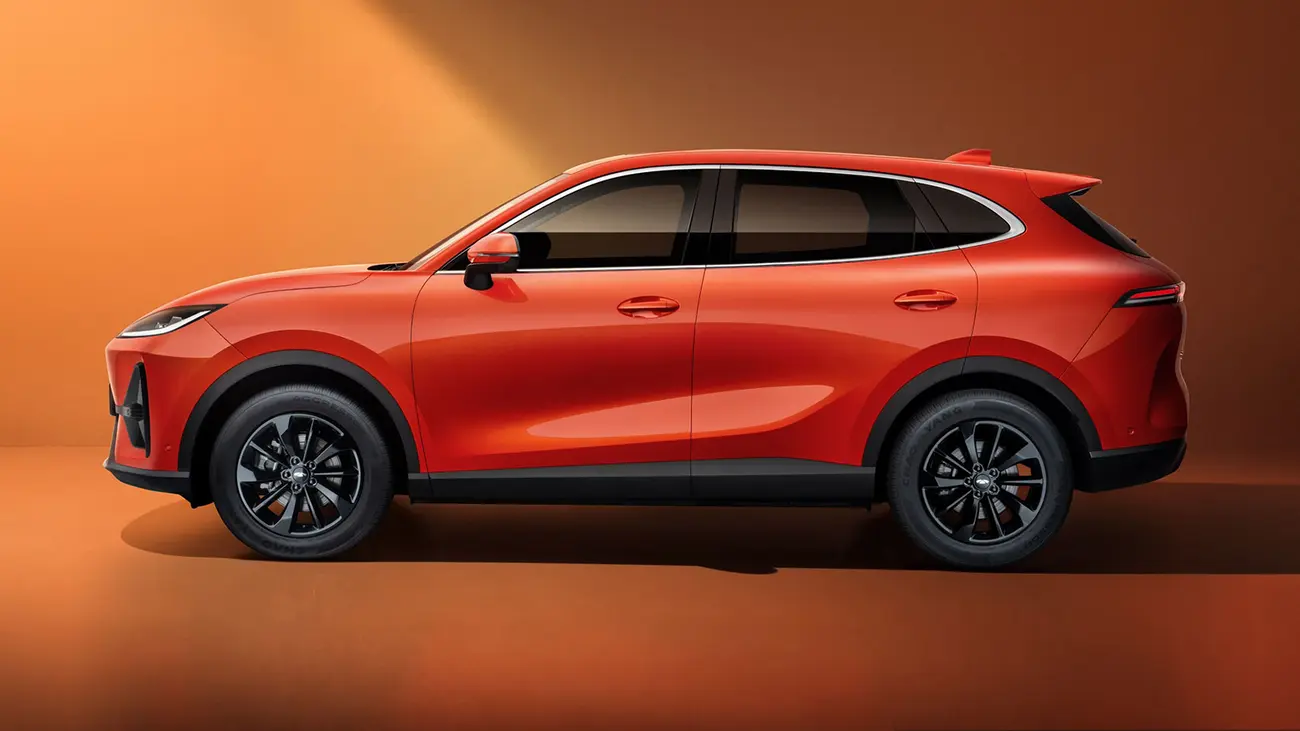
- A 178 kW (239 hp) rear motor with 275 Nm, 180 km/h top speed
- A 65.05 kWh "Rhino" LFP battery, identical across all three trims
- 600 km CLTC range, 12.9 kWh/100 km, DC charging from 30 to 80% in about 20 minutes
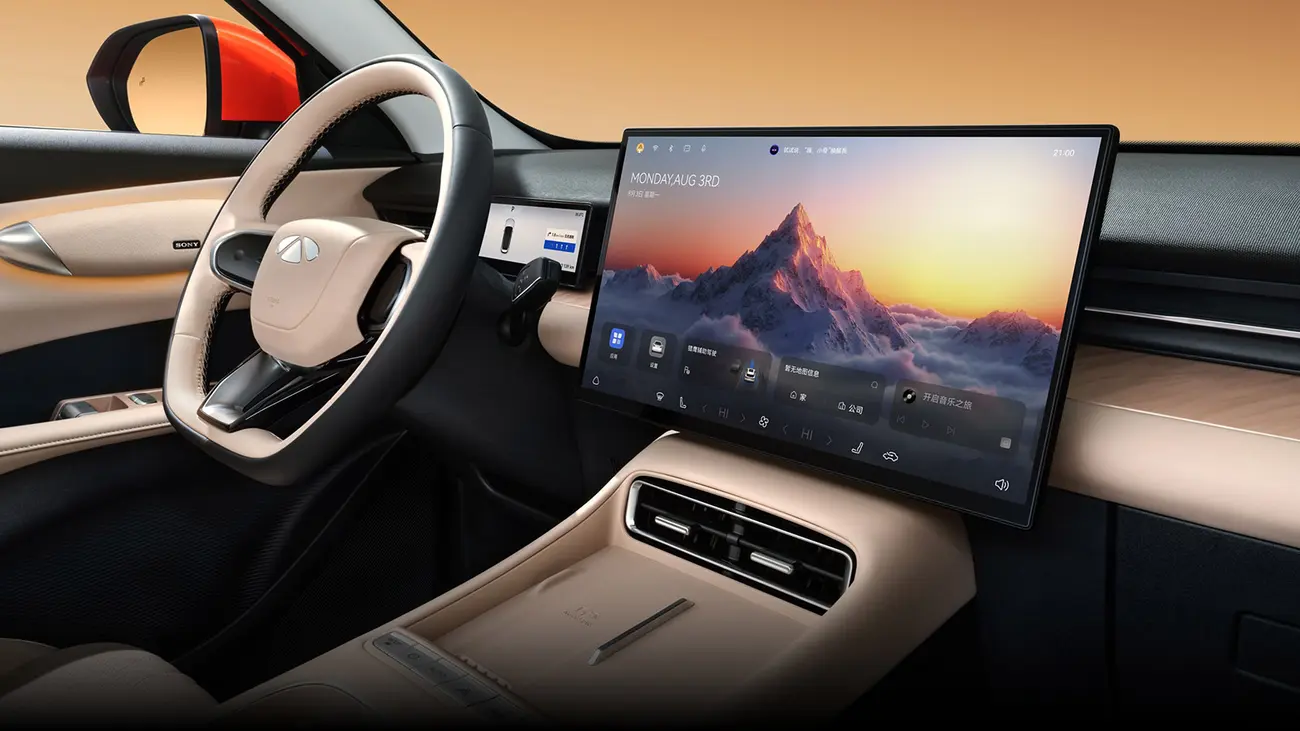
- A 15.6-inch 2.5K centre screen, 8.8-inch cluster, Qualcomm 8155 chip (or the 4 nm SA8775 with 72 TOPS and 5G on the top trim)
- Nine airbags and a cage body structure that is 80% high-strength steel
- Falcon 500 driver assistance with 22 sensors (3 radars, 7 cameras, 12 ultrasonic) and highway NOA on the top trim
- Heated and ventilated front seats, a 1,955 x 1,310 mm flat reclined surface, V2L up to 6.6 kW
The Fulwin T7 is the domestic version of the Lepas L6, the model Chery already sells in Thailand and South Africa and is preparing for Europe. So this is the car that will eventually arrive here — under a different name, with a different homologation and a very different price.
600 km CLTC is not 600 km WLTP
Before tax enters the picture, one number changes on its own. The Fulwin T7's 600 km figure comes from China's CLTC cycle, which is famously generous: modest speeds, gentle acceleration, mild temperatures. Europe's WLTP cycle is harsher, and on comparable cars it typically shaves 10% to 20% off the CLTC number.
In practice: a European-homologated Fulwin T7 would likely be quoted somewhere between 480 and 540 km WLTP from the same 65 kWh battery. Real winter motorway driving will be lower again. That is still a strong figure for a car this size — but it is a different spec sheet from the one in the Chinese press releases.
What the EU charges an electric car built in China
Since 30 October 2024, battery electric vehicles built in China pay countervailing (anti-subsidy) duties on entry into the European Union, under Implementing Regulation (EU) 2024/2754. They run for five years and sit on top of the standard 10% import duty that any non-EU car already paid.
The rates differ by group:
| Manufacturer | Countervailing duty | Total with the 10% import duty |
|---|---|---|
| Tesla (Shanghai) | 7.8% | 17.8% |
| BYD Group | 17.0% | 27.0% |
| Geely Group | 18.8% | 28.8% |
| All other cooperating companies | 20.7% | 30.7% |
| SAIC Group (MG) | 35.3% | 45.3% |
| Non-cooperating companies | 35.3% | 45.3% |
Chery has no individual rate published in the regulation. That means a China-built Chery BEV falls, absent a specific arrangement, into the "other cooperating companies" bracket — 20.7%, or roughly 30.7% total customs load. That is the assumption used below, and it is an assumption, not a rate the EU has assigned to the brand.
One more moving part: since 12 January 2026 the European Commission has a framework allowing Chinese manufacturers to swap tariffs for minimum-price commitments, model by model. For buyers, that changes very little on the sticker — it mostly changes who keeps the margin: the manufacturer instead of the EU budget.
ISV 0%, no IUC, 23% VAT: the Portuguese layer
Here Portugal is unusually kind. ISV — the registration tax that normally kills cheap imports — does not apply to a pure EV at all: battery electric vehicles get a 100% ISV exemption. IUC, the annual road tax, is waived too. A Fulwin T7 would escape both of the taxes that make a cheap Chinese petrol car unviable here.
What remains is IVA, Portugal's VAT, at 23% on the final price and non-deductible for private buyers. Companies can deduct 100% of the VAT on BEVs costing up to €62,500 plus VAT, and electric cars are neither taxed as a benefit in kind nor subject to autonomous taxation — which is why leasing and fleet channels are where a car like this makes the most financial sense in Portugal.
There is also a €4,000 state incentive for private buyers of a new BEV, conditional on scrapping an older vehicle and subject to a price cap. Treat that cap carefully: official sources and 2026 press reporting disagree on the applicable ceiling, so check the terms in force when you apply — the scheme is first-come, first-served and the annual budget runs out.
The maths, step by step: what it would cost in Portugal
There is no official European or Portuguese price for the Fulwin T7 or the Lepas L6. What follows is a model, not a quote — the arithmetic is shown precisely so you can disagree with the assumptions.
| Step | Value | Assumption |
|---|---|---|
| Chinese showroom price | €12,200 | 97,900 yuan at roughly 8 CNY/EUR |
| Export value (stripped of Chinese VAT and local margin) | €10,000 | estimate; removes 13% Chinese VAT and dealer margin |
| Shipping and insurance to the EU (CIF value) | €11,000 | about €1,000 of sea and inland logistics |
| 10% import duty | €1,100 | base tariff for cars |
| 20.7% countervailing duty | €2,277 | "other cooperating" band; Chery has no own rate |
| Cleared customs value | €14,377 | |
| EU type-approval, GSR2, eCall, European specification | €800 | amortised per unit |
| Importer and dealer margin, warranty, parts, marketing | plus 25% | standard distribution practice |
| Price before VAT | €18,970 | |
| IVA at 23% | €4,363 | non-deductible for private buyers |
| ISV | €0 | full exemption for EVs |
| Estimated Portuguese sticker price | around €23,300 |
Look at what the table actually says. EU tariffs account for roughly €3,400 of that price and VAT for another €4,400. Together they still fall well short of explaining the jump from €12,200 to €23,300. The single largest block is distribution margin — and margin is a commercial decision, not a legal obligation.
Why the car costs more than the maths requires
Market data makes this uncomfortably clear. BBVA Research put the BYD Dolphin at €12,947 in China against €35,490 in the Netherlands — a 174% premium. The 64 kWh MG4 went from €17,939 to €35,785, roughly +100%. The BYD Atto 3 Comfort jumped from €17,923 to €39,990 in Germany, +123%. No combination of 30% tariffs and 23% VAT gets you there.
The explanation is simpler than a tariff schedule. Chinese manufacturers price against European rivals, not against their own domestic sticker. If a Volkswagen ID.3 sells for €38,000, there is no commercial reason to place an equivalent competitor at €20,000. Rhodium Group calculated that BYD earns per-car margins roughly 38% higher in Europe than at home, even after the duties. And the Chinese price is not a neutral benchmark either: it is set inside a ferocious domestic price war where thin margins and volume-at-any-cost are accepted tactics.
Building in Europe is the only thing that really moves the price
A car assembled inside the EU pays neither the 10% duty nor the countervailing duty. That is why every Chinese brand with volume ambitions is putting up plants here: BYD in Szeged, Hungary and in Turkey, Leapmotor in Poland, Changan with announced plans since March 2025.
Chery is on the same path, and closer to us than most people realise. It runs a joint venture with EV Motors at the former Nissan site in Barcelona, where the first car — an Ebro S700 — came off the line in November 2024. Own-brand production has slipped into 2026, with a target of 150,000 units a year by 2029. If a European descendant of the Fulwin T7 is assembled in Barcelona, the €3,400 of tariffs in our table disappear outright — and the car is built a few hundred kilometres from Lisbon, with obvious knock-on effects for logistics and parts supply.
Frequently Asked Questions
There is no official European or Portuguese price for the Chery Fulwin T7, so any figure is a modelled estimate rather than a quote. Starting from the 97,900 yuan Chinese showroom price (around €12,200 at late-August 2026 rates) and adding shipping, the 10% import duty, the countervailing duty, EU type-approval, importer and dealer margin and 23% VAT, our model lands close to €23,300 — roughly double. The single largest block is not tax but distribution margin, which is a commercial choice rather than a legal requirement.
The 600 km headline is measured on China's CLTC cycle, not Europe's WLTP. CLTC is considerably more optimistic — low speeds, gentle acceleration, mild temperatures — and on comparable cars WLTP typically comes in 10% to 20% lower. With the same 65.05 kWh LFP battery, a European homologated version should advertise somewhere between 480 and 540 km WLTP, and less again on winter motorway runs.
Since 30 October 2024, under Implementing Regulation (EU) 2024/2754, battery electric cars built in China pay countervailing duties for five years on top of the standard 10% car import duty: Tesla Shanghai 7.8% (17.8% total), BYD Group 17.0% (27.0%), Geely Group 18.8% (28.8%), other cooperating companies 20.7% (30.7%), and SAIC/MG plus non-cooperating firms 35.3% (45.3%). Chery has no individual rate published in the regulation, so a China-built Chery BEV falls by default into the other-cooperating band of 20.7%, around 30.7% of total customs load. Since 12 January 2026 there is also a framework letting makers swap tariffs for per-model minimum price undertakings.
No. Fully electric vehicles get a 100% ISV exemption in Portugal and are exempt from the annual IUC road tax, regardless of where they are built — the tax that makes cheap imported combustion cars unviable simply does not apply. What remains is 23% VAT on the final price, non-deductible for private buyers, plus registration and homologation costs. Companies can deduct 100% of the VAT on EVs up to €62,500 plus VAT, which makes leasing and fleet purchase the most tax-efficient route.
Waiting for a 600 km electric SUV at €12,000 is unrealistic — neither the Fulwin T7 nor anything else will land there. The €20,000 to €25,000 band for a compact EV with a 60 kWh-plus battery is plausible within two or three years, and it depends mostly on where the car is assembled: a car built inside the EU pays neither the 10% duty nor the countervailing duty, and Chery already produces in Barcelona through its joint venture with EV Motors, targeting 150,000 units a year by 2029. Watch three data points when the Lepas L6 reaches Europe: when order books open, the certified WLTP figure, and the stated place of manufacture.
Is it worth waiting?
If you are holding out for a 600 km electric SUV at €12,000 in Portugal, it is not coming — not from the Fulwin T7, not from anything else. But €20,000 to €25,000 for a compact EV with a 60-plus kWh battery is plausible within two or three years, and it depends far less on tariffs than on two things: where the car is assembled, and how aggressively the brand decides to enter the market.
The announcements worth tracking are the European ones, not the Chinese ones: the date the Lepas L6 opens order books here, the certified WLTP figure, and the country of assembly on the spec sheet. Those three data points decide the number you will see in the showroom.