
The Most Reliable Electric Cars in Portugal: A 3,055-Owner Ranking
Published: 05/07/2026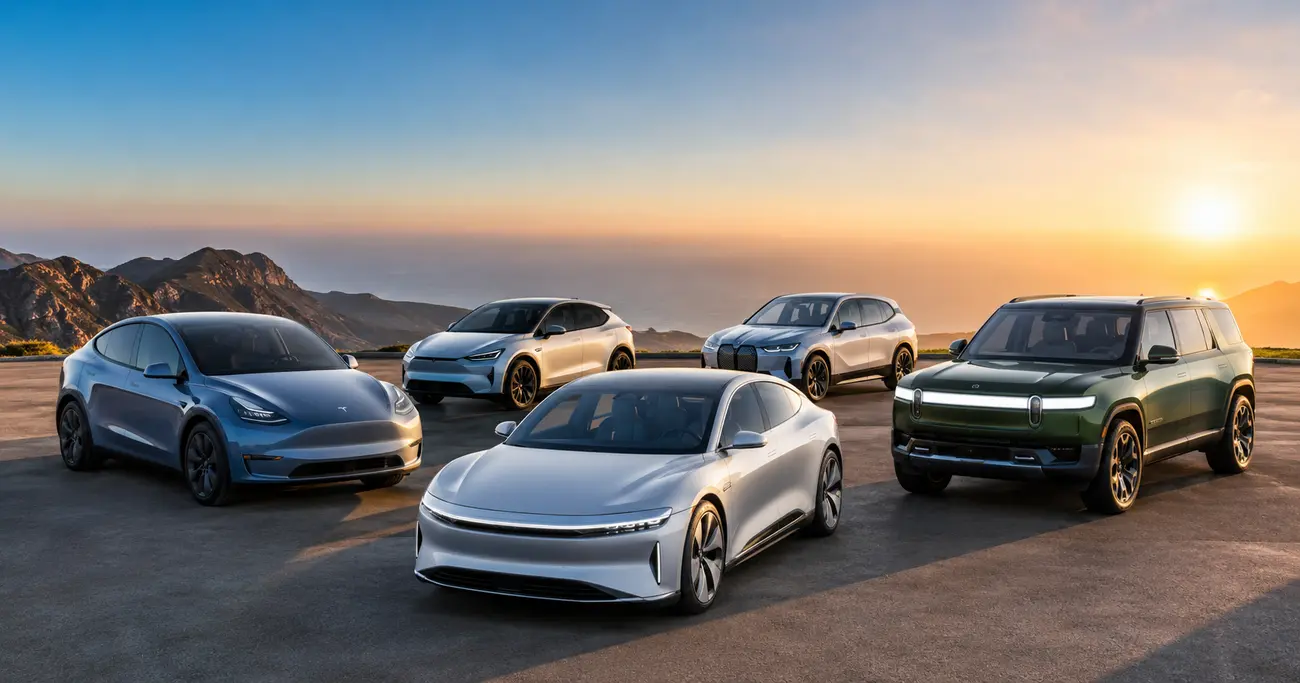
What 3,055 owners say about reliability
If you're hunting for the most reliable electric cars Portugal has to offer on the used market, the best source isn't the manufacturer's brochure — it's the people who live with the car every day. A survey by La Chaîne EV asked 3,055 EV owners about their experience, and the headline is reassuring: average satisfaction landed at 9.08 out of 10, and 85.5% of cars never had an immobilising breakdown. In other words, the vast majority never left anyone stranded on the roadside.
That matters here because Portugal's used-EV market is finally picking up steam. There are more second-hand Teslas, Nissans and Renaults at reachable prices than ever — and the question everyone asks is the same: which electric car has the fewest problems?
The most reliable EV brands: Tesla and BMW lead
In the brand ranking, Tesla and BMW tied at the top with 9.53/10. But the two scores don't carry equal weight. Tesla's rests on 1,090 responses — a third of the entire survey — while BMW's comes from just 70. Statistically, Tesla is the more solid winner.
And one figure speaks for itself: 55% of Tesla owners would buy the brand again — the survey's loyalty record. The reported problems were minor: temperamental screens and stubborn door handles. Nothing that strands the car.
| Brand | Average score /10 | Immobilising breakdowns per car | Would buy again |
|---|---|---|---|
| Tesla | 9.53 | — | 55% |
| BMW | 9.53 | — | — |
| MG | 9.03 | 0.11 | — |
| Hyundai | 8.85 | 0.48 | — |
| Renault | 8.77 | — | 33% |
| Citroën | 8.00 | — | — |
| Peugeot | 7.80 | — | — |
The real surprise sits in the breakdown column, not the badge. Volvo leads with just 0.03 breakdowns per car, followed by MG (0.11) and Nissan (0.15). Non-premium brands prove that reliability isn't the same as prestige. At the bottom, Citroën (8.00) and Peugeot (7.80) were dragged down by breakdowns.
Watch one telling detail: nine in ten respondents consider Hyundai reliable, yet the brand posted the worst breakdown rate in the top tier (0.48 per car). Perception and data don't always agree.
The most reliable models, per an independent survey
A second study — by the UK magazine What Car?, run with MotorEasy — surveyed 29,967 drivers about 46 electric models. Because it uses a different method, its results don't line up perfectly with the French survey, and that's normal: every survey weighs things its own way. Even so, the podium is revealing.
| Rank | Model | Score | Fault rate |
|---|---|---|---|
| 1 | BMW i3 | 97.4% | 11% |
| 2 | BMW i4 | 96.8% | 16% |
| 3 | Nissan Leaf | 96.5% | 15% |
| 4 | Hyundai Ioniq 6 | 95.7% | 11% |
| 5 | Mini Electric | 94.2% | 17% |
| 6 | MG 5 | 94.1% | 24% |
| 7 | Renault Megane E-Tech | 93.6% | 22% |
| 8 | Tesla Model 3 | 92.8% | 23% |
| 9 | Cupra Born | 92.5% | 25% |
| 10 | Fiat 500e | 91.9% | 19% |
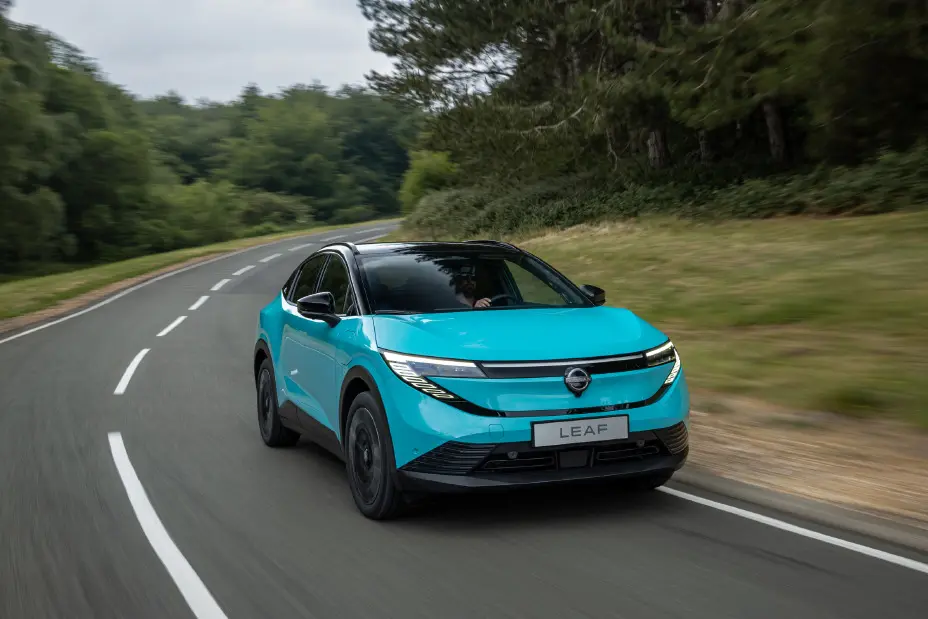
The BMW i3 leads at 97.4% — and when something does go wrong, BMW covers 100% of warranty repairs. The Nissan Leaf, third at 96.5%, is great news for anyone after a cheap used EV: it's one of the oldest electric cars on the market and still causes few problems. The Tesla Model 3 comes in eighth, with a big practical edge — nearly half of all faults were fixed the same day, thanks to Tesla's mobile mechanics.
The models to check more carefully
It's not all good news. At the bottom of the What Car? table, the Porsche Taycan had a 54% fault rate — more than half the cars had problems. Next come the Hyundai Ioniq 5 (42% faults), the Polestar 2 (41%), the Renault Zoe (39%) and the original Hyundai Ioniq (38%). The list also includes the Volkswagen ID.3, Opel Corsa Electric, MG 4 and Peugeot e-208.
This doesn't make them bad cars — it means that, second-hand, it's worth checking the history, asking for service records and confirming warranty status before you sign.
Battery degradation on a used EV: the fear the data dismantles
The big worry for used-EV buyers is always the same: what if the battery is worn out? The survey data is the best answer. On average, battery state of health stayed near 90% even beyond 200,000 km.
In plain terms: a five- or six-year-old EV with 150,000 km is not a car with a dying battery. It's a car that likely still holds over 85% of its original capacity — plenty for the daily commute and most longer trips. On top of that sits the battery warranty, which on most brands covers 8 years or 160,000 km.
The honest counterpoint: EVs are still young
There's a less rosy side worth knowing. Consumer Reports in the US, with roughly 380,000 owners, reached a different conclusion: EVs average about 80% more problems than petrol cars, while hybrids have 15% fewer.
How does that square with the European survey's 9.08/10? Two reasons. First, the problems Consumer Reports counts include plenty of small things — software, screens, 12V batteries — that don't strand the car but still count as a "problem". The most common EV faults aren't in the motor or the traction battery: they're in the humble 12V auxiliary battery and minor electronic niggles. Second, EV tech is still young. Hybrids have been around for nearly three decades and are fine-tuned to the last detail.
The lesson for buyers in Portugal? Established brands and proven platforms age better. A model in its second or third generation tends to be more reliable than a first-attempt launch.
Frequently Asked Questions
In owner surveys, the models with the fewest faults are the BMW i3 (97.4% satisfaction), the BMW i4 (96.8%) and the Nissan Leaf (96.5%). At brand level, Volvo posts the best immobilising-breakdown record (just 0.03 per car), followed by MG (0.11) and Nissan (0.15). The practical rule: pick a model already in its second or third generation, on a proven platform.
The data is reassuring: battery state of health averaged near 90% even beyond 200,000 km. In practice, a five- or six-year-old EV with 150,000 km typically still holds over 85% of its original capacity. On top of that, most brands warranty the battery for 8 years or 160,000 km, which protects the used buyer.
For most drivers, yes. Portugal's used-EV market is more mature, and the data shows 85.5% of cars never had an immobilising breakdown, with average satisfaction of 9.08/10. Add access to the MOBI.E charging network and the tax breaks (ISV exemption and lower IUC). Before buying, confirm the battery's state of health and what's left of the warranty.
Contrary to the common fear, the most frequent faults are not in the motor or the traction battery. They sit in the humble 12V auxiliary battery and minor electronic and software niggles, such as screens or door handles. These rarely strand the car, but they count as a problem in surveys and so inflate the fault statistics.
It depends on the source. According to Consumer Reports (US, ~380,000 owners), EVs average about 80% more problems than petrol cars, while hybrids have 15% fewer — thanks to nearly three decades of fine-tuning. If absolute reliability is the priority, a well-sorted hybrid is the safest bet; but there are used EVs (Tesla Model 3, Nissan Leaf, BMW i3/i4) with very solid track records.
EV or hybrid: what to pick for a used car
If absolute reliability is the priority, a well-sorted hybrid is still the safest used bet. But if the goal is to save on fuel and maintenance — and to tap into the MOBI.E charging network and the EV tax breaks (ISV exemption, lower IUC) — the data shows there are used EVs that cause very few headaches.
The practical rule we draw from all this: pick a model with a strong track record (a Tesla Model 3, a Nissan Leaf, a BMW i3 or i4), confirm the battery's state of health before buying, and check what's left of the warranty. Do that and the risk of a nasty surprise drops sharply. Portugal's used-EV market is more mature than ever — and it's worth watching how prices evolve as more cars reach second-hand buyers.