
Why Chinese electric cars are still cheaper in Portugal despite EU tariffs
Published: 16/07/2026
Why Chinese electric cars are still cheaper in Portugal despite EU tariffs
Two years after Brussels slapped anti-subsidy tariffs on China-built EVs, the verdict is in: Chinese electric cars are still, on average, 21% cheaper than their European rivals. That is the headline finding of an analysis by Transport & Environment (T&E), one of the sharpest watchdogs of the European car market. For anyone hunting for the best-value electric car in Portugal, that is good news — the price gap has not gone away.
The obvious question is: how? If EU tariffs on Chinese electric cars have been in force since July 2024, why do brands like BYD, MG and Leapmotor still undercut everyone else? The answer has less to do with where the car is assembled and more to do with who controls the battery.
The tariff stopped something — just not what Brussels wanted
On the surface, the numbers look like a win for the tariffs. Chinese-made EVs fell from 22% of the EU market in 2024 to 17% in the first quarter of 2026. Mission accomplished? Not quite.
That drop hides a very different story. The players who retreated were not the Chinese brands — they were the Western ones that used to build cars in China and have since moved production to Europe. Tesla, for example, saw its share of those imports fall from 26% to 19%. European brands' share of China-built EV imports slid from 38% to 23%. Chinese brands, meanwhile, now account for more than half of all EVs imported from China into the EU.
Put simply: the tariff pushed Tesla, BMW and Volvo out of building cars in China. It did not push BYD out of the European market.
BYD, MG, Leapmotor: each brand felt the tariff differently
A detail many people miss is that the tariff is not the same for everyone. Each manufacturer got a rate based on the level of subsidy the EU investigation found, added to the 10% base duty.
| Manufacturer | Applied tariff | Effect on imports (2023–2025) |
|---|---|---|
| SAIC (MG) | ~35% + 10% base | EV imports nearly halved |
| BYD | 17% + 10% base | EV imports more than doubled |
MG, hit with the highest rate, shrank. BYD, on a far lower rate, surged. That explains a lot of what you see in Portuguese showrooms today: BYD's line-up widened fast, while MG leaned on other fronts.
Why Chinese cars are cheaper: it all starts with the battery
Here is the point the tariffs never touched. The price advantage of Chinese EVs does not come only from where the car is assembled — it comes from the supply chain, and above all from the battery.
While cars faced tariffs of up to 45%, batteries imported from China entered Europe at a duty of just 4.7%. The result? Chinese battery imports increased sevenfold between 2020 and 2025. Fewer than a quarter of the batteries produced in the EU actually come from European manufacturers. Whoever owns the cell owns the cost of the car.
T&E wants to close that loophole with a 20% tariff on Chinese batteries — and calculates it would raise the price of EU-built EVs by just 2.8%. That figure alone shows how dependent European industry has become on the Chinese battery.
The plug-in hybrid play and the European factories
Chinese brands did not sit still. They adapted on two fronts.
The first was the plug-in hybrid. Because PHEVs are not subject to the same tariff as pure EVs, Chinese makers flooded the market with them — their EU PHEV share climbed from 3% in 2024 to 13%. A clever way around the barrier.
The second was building on European soil. Ten new factories have been announced in Europe since September 2023. BYD is finishing its first plant in Hungary this year. Leapmotor, in partnership with Stellantis, already assembled the T03 at a Polish plant and is shifting production to Zaragoza, Spain. A car built in the EU pays no import tariff — the barrier simply disappears.
What this means if you are buying in Portugal
For the Portuguese buyer, the message is straightforward: Chinese EVs are still worth it, and they remain among the most competitive on price. That 21% gap means, on a 35,000€ car, roughly 7,000€ of savings against an equivalent European rival — money that covers years of charging.
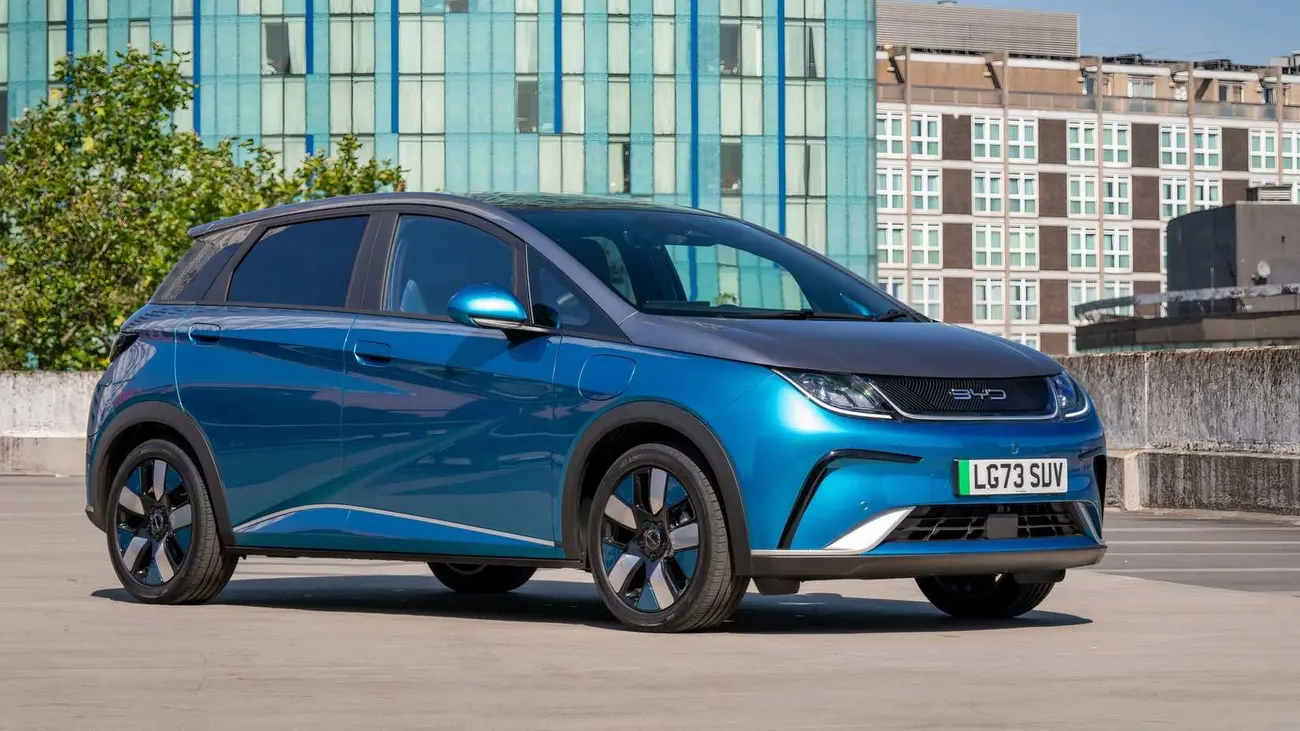
Beyond the sticker price, Portugal's tax rules work in these cars' favour. A pure EV is exempt from ISV (the vehicle registration tax) and enjoys a reduced IUC (the annual circulation tax), which pulls the real cost of a BYD or a Leapmotor even closer to a petrol city car. Models like the Leapmotor T03, the BYD Dolphin and the small Chinese EVs arriving on the market show exactly where the affordable-price frontier sits today.
Two signals are worth watching over the coming months. One: if Brussels moves on the battery tariff, part of the Chinese advantage could narrow. Two: as BYD's and Leapmotor's European factories come online, some models will stop paying the tariff — and could get even cheaper. For now, anyone buying a Chinese EV in Portugal is still getting more car for the same money.
Frequently Asked Questions
According to the Transport & Environment analysis, Chinese EVs remain on average 21% cheaper than equivalent European rivals, even two years after the EU tariffs. On a 35,000€ car, that works out to roughly 7,000€ of savings versus a comparable European model.
The anti-subsidy tariffs, in force since July 2024, vary by manufacturer: MG (SAIC) was hit with about 35% plus a 10% base duty, while BYD faced only 17% plus the 10%. Even so, the price advantage held, because much of the cost comes from the Chinese battery, which enters Europe at a duty of just 4.7%.
Yes, they remain among the most competitive on price. The 21% gap versus European models still holds, and Portugal's tax rules help: a pure EV is exempt from ISV and enjoys a reduced IUC. Watch two signals, though: a possible EU tariff on batteries, which could narrow the advantage, and the arrival of BYD's and Leapmotor's European factories, which could push some prices even lower.
The most established in the Portuguese market are BYD, MG (part of the SAIC group) and Leapmotor, all named in the T&E report. BYD's line-up widened quickly thanks to its lower tariff, with models like the Dolphin, while Leapmotor focuses on affordable city cars such as the T03 and B03x, already priced from around 24,900€.
The advantage comes not just from where the car is assembled but above all from the supply chain and the battery. Chinese battery imports increased sevenfold between 2020 and 2025 at minimal tariffs, and fewer than a quarter of the batteries used in the EU come from European producers. Whoever owns the cell owns the cost of the car, and that is where Chinese makers keep their pricing lead.