
Portugal EV market share in August 2026: 36.1% as the EU hits a record 27.7%
Published: 04/10/2026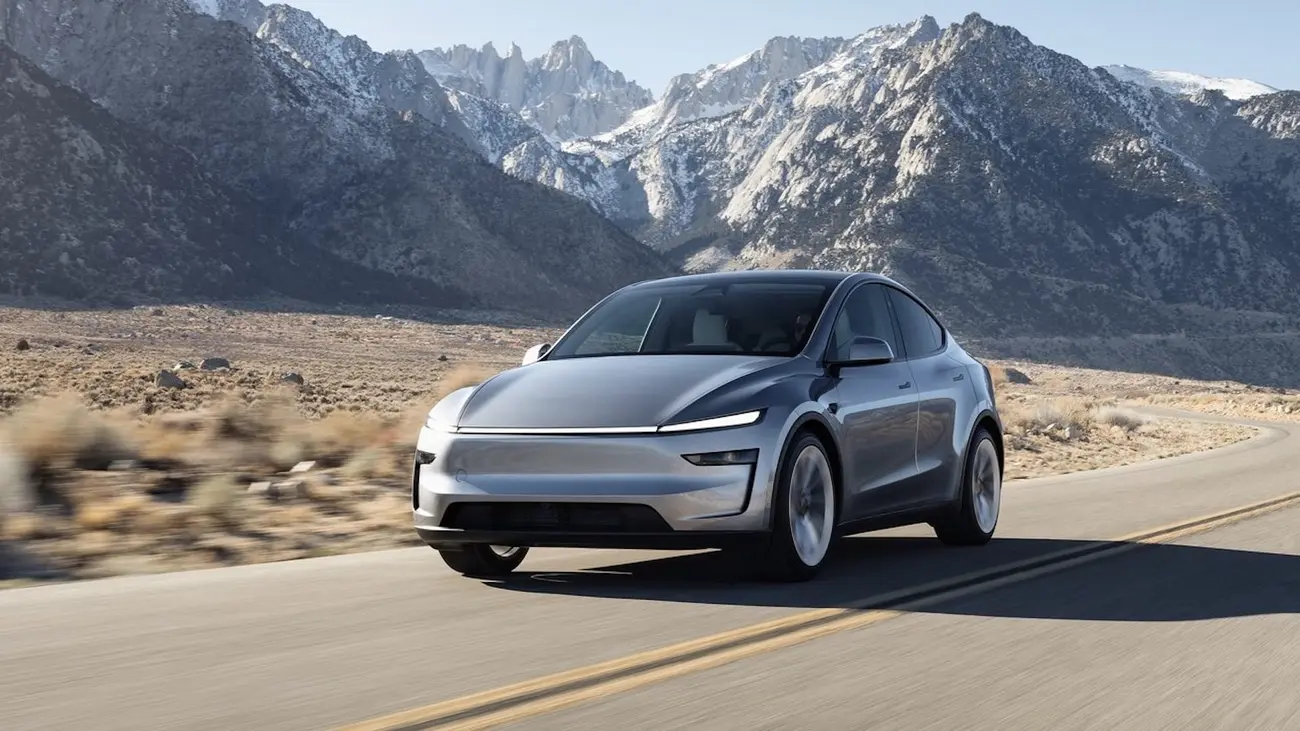
Electric cars in August 2026: a record market share in Europe
27.7%. That was the share of fully electric cars among new passenger car registrations in the European Union in August 2026, according to ACEA, the European carmakers' association. It is the highest ever, up from 17.8% in August 2025. Put simply, one in four new cars sold in the EU no longer has a combustion engine.
Portugal went further. Data from ACAP, the Portuguese automotive association, puts Portugal's EV market share in August 2026 at 36.1%: more than one in three new cars registered here was a pure battery-electric vehicle. That is 8.4 percentage points above the EU average, in a month when Europe itself was setting records.
August by the numbers in the European Union
The EU registered 708,211 new cars in August, 4.5% more than a year earlier. Of those, 196,486 were battery-electric (BEV). Compared with 120,797 in August 2025, that is a 62.7% jump — the overall market barely moved, while EVs surged.
Plug-in hybrids (PHEVs) grew too, though at a far gentler pace: 78,426 units, an 11.1% share and +10.8% year on year. Add BEVs and PHEVs together and almost 39% of new EU cars in August came with a charging port.
Some perspective is in order. Conventional and mild hybrids are still the best-selling powertrain, accounting for roughly a third of August registrations. EVs are climbing fast, but they are not yet the European buyer's first choice.
| Powertrain (EU, August 2026) | Units | Share | Year-on-year change |
|---|---|---|---|
| Battery-electric (BEV) | 196,486 | 27.7% | +62.7% |
| Plug-in hybrid (PHEV) | 78,426 | 11.1% | +10.8% |
| Hybrid (HEV + MHEV) | — | about 1/3 | — |
| Total market | 708,211 | 100% | +4.5% |
Germany and France drive demand
By volume, Germany leads with 68,930 EVs registered in August (+75.1%). France follows with 36,159 units and the most striking growth among the big markets: +112.8%. Denmark rounds out the podium with 13,887 (+54.6%).
Other strong growth figures highlighted by ACEA include Belgium (+43.9%), the Netherlands (+43.5%) and Portugal at +65.2% — ahead of the EU average.
Widen the lens to include the EFTA countries and the UK, and Europe registered 243,207 EVs in August, a 29% share (+52.2%). Norway, as usual, plays in a different league: 98.7% of new cars sold there in August were electric.
Portugal's EV market share in 2026: 36.1% in August
5,079 fully electric cars. That is how many were registered in Portugal in August 2026, up 65.2% on August 2025, out of a total market of 14,086 new passenger cars (+8.4%). The 36.1% share is a big step up from last year, when — by our own calculation from the published growth rate — it stood at roughly 24% (an approximate figure; ACAP did not publish it).
It is also a leap from early summer. In June, Portugal's EV share was 28.7%. Two months later, it is more than seven points higher.
Electrified cars as a whole (battery-electric, plug-in and hybrid) totalled 10,391 units in August, +20.5%. In other words, nearly three in four new cars sold in Portugal that month had some form of electrification.
January to August: 26.8% versus 21.7%
One good month could be a fluke. Eight months is a trend. Between January and August 2026, Portugal registered 169,323 new passenger cars (+9.5%), of which 45,388 were electric (+43.1%). The year-to-date EV share is 26.8% — against 21.7% for the EU as a whole.
| Indicator | Portugal | European Union |
|---|---|---|
| BEV share, August 2026 | 36.1% | 27.7% |
| BEV share, August 2025 | about 24% (approx.) | 17.8% |
| EVs registered, August 2026 | 5,079 | 196,486 |
| Year-on-year growth, August | +65.2% | +62.7% |
| BEV share, January-August 2026 | 26.8% | 21.7% |
| EVs, January-August 2026 | 45,388 (+43.1%) | 1,641,333 (+44.9%) |
| Total market, January-August | 169,323 (+9.5%) | +5.3% |
One more ACAP figure says a lot about the Portuguese market: 75.6% of this year's registrations were alternative-energy vehicles. The "pure" petrol or diesel car is now a minority in Portugal.
Country ranking: where Portugal stands for electric cars in Europe
Based on ACEA data for January-August, compiled by InsideEVs Italy across 31 European countries (EU, EFTA and UK), Portugal ranks 11th for EV market share and 12th by volume.
| Rank | Country | BEV share (Jan-Aug 2026) |
|---|---|---|
| 1 | Norway | 97.8% |
| 2 | Denmark | 80.6% |
| 3 | Finland | 48.7% |
| 4 | Iceland | 46.4% |
| 5 | Sweden | 41.9% |
| 6 | Malta | 39.8% |
| 7 | Netherlands | 39.3% |
| 8 | Belgium | 37.8% |
| 9 | Luxembourg | 30.3% |
| 10 | France | 29.9% |
| 11 | Portugal | 26.8% |
| 12 | Ireland | 26.3% |
| 13 | Germany | 26.2% |
| 14 | United Kingdom | 25.6% |
| 15 | Austria | 25.2% |
| 19 | Spain | 10.2% |
| 23 | Italy | 8.1% |
The countries ahead of Portugal are mostly Nordic markets and small, wealthy Benelux states. Behind it sit Germany and the UK — Europe's two biggest EV markets by volume. The contrast with the rest of southern Europe is stark: Portugal's share is more than double Spain's (10.2%) and more than triple Italy's (8.1%).
In absolute terms, the 45,388 EVs registered in Portugal place it just behind Austria (53,449) and ahead of Switzerland (37,631). Not bad for a market of Portugal's size.
Best-selling electric cars in Europe in August 2026
The Tesla Model Y was once again Europe's best-selling EV in August, with the Skoda Elroq close behind. One caveat: this top 10 (Dataforce data, via Automobile Propre) covers the EU, EFTA and the UK — not just the EU.
| # | Model | August 2026 registrations | Year-on-year change |
|---|---|---|---|
| 1 | Tesla Model Y | 10,281 | +20.1% |
| 2 | Skoda Elroq | 9,289 | +44.6% |
| 3 | BMW iX1 | 6,635 | +24.2% |
| 4 | BMW iX3 | 6,444 | New model |
| 5 | Volkswagen ID.4 | 6,358 | +28.4% |
| 6 | Tesla Model 3 | 6,259 | -3.4% |
| 7 | Skoda Enyaq | 5,693 | +33.0% |
| 8 | Renault 5 E-Tech | 5,533 | +34.2% |
| 9 | Mercedes CLA | 5,335 | +494% |
| 10 | Mercedes GLC | 5,312 | New model |
German brands and the Volkswagen Group dominate the list, with two heavyweight newcomers: the new BMW iX3 and the electric Mercedes GLC. The Tesla Model 3 is the only car in the top 10 to decline. The Renault 5 is the most affordable model on the list — a clear sign of demand for compact EVs at sensible prices.
As for Portugal, there is no reliable model-by-model ranking of August's best-selling EVs yet. We would rather not guess.
Chinese brands gain ground
At brand level, the Chinese push is unmistakable. Between January and August, BYD registered 177,752 cars in the EU (+163%), SAIC (MG and Maxus) 163,707 (+19.8%), Chery 116,318 (+250.9%) and Leapmotor 62,508 (+426.8%). Tesla, with 142,165 units, grew 65.9%. These figures cover all powertrains — ACEA does not break down EVs by brand.
In August, the five Chinese-owned groups tracked by ACEA grew their share of the EU market from 6.6% to 10.8% — roughly one in nine new cars. That figure includes Volvo, which ACEA counts within the Geely group. The German groups (Volkswagen, BMW and Mercedes-Benz) slipped from 41.3% to 39.1%.
Frequently Asked Questions
In August 2026, fully electric cars accounted for 36.1% of new passenger car registrations in Portugal (5,079 out of 14,086 units), according to ACAP. For January to August, the share stands at 26.8% (45,388 EVs), compared with an EU average of 21.7%. The monthly share was 28.7% in June, so August marks a jump of more than seven points in just two months.
Based on January-August 2026 data for 31 European countries (EU, EFTA and UK), Portugal ranks 11th by BEV share (26.8%) and 12th by volume (45,388 units). It is ahead of Ireland (26.3%), Germany (26.2%) and the UK (25.6%), and its share is more than double Spain's (10.2%) and more than triple Italy's (8.1%). Norway (97.8%) and Denmark (80.6%) lead the table.
The Tesla Model Y was Europe's best-selling EV (EU, EFTA and UK) in August 2026, with 10,281 registrations (+20.1%). It was followed by the Skoda Elroq with 9,289 units (+44.6%) and the BMW iX1 with 6,635 (+24.2%). The Tesla Model 3 was the only top-10 model to decline (-3.4%), while the new BMW iX3 and the electric Mercedes GLC went straight into the ranking.
Not yet on a year-to-date basis. Between January and August 2026, EVs reached 21.7% of the EU market, level with petrol (21.7%, down from 28%), but diesel adds another 7.3%, leaving pure combustion engines at around 29%. Conventional and mild hybrids remain the best-selling powertrain, with 36.6% of registrations so far this year.
Fully electric cars in Portugal are exempt from ISV (registration tax) at purchase and from annual IUC road tax, which helps explain why the country sits above the European average. With EU average fuel prices hitting €2.092/litre for petrol and €2.226/litre for diesel in September 2026 (the highest since 2005), the per-kilometre cost of an EV charged at home is increasingly hard to beat. With 45,388 new EVs registered in the first eight months alone, the supply of used electric cars in Portugal is set to grow in the coming years, giving second-hand buyers more choice.
Why electric car sales are growing
EY points to two reasons for August's jump: EV incentives in several countries and one extra working day compared with August 2025. EY's Constantin M. Gall warns that growth is "primarily driven by subsidies for e-mobility" and may fade once they end.
There is a third factor every driver in Portugal feels at the pump. In the week of 21 September, average EU fuel prices hit €2.092 per litre for petrol and €2.226 per litre for diesel — the highest since the European Commission's series began in 2005. At those prices, the per-kilometre cost of an EV charged at home is hard to ignore.
Portugal adds its own tax advantages: fully electric cars are exempt from ISV (the one-off vehicle registration tax) and from IUC (the annual road tax), and they remain the most attractive option for company fleets. That framework goes a long way to explaining why Portugal consistently sits above the European average.
What this means if you are buying a car
More new EVs today means more used EVs tomorrow. With 45,388 units registered in the first eight months of the year alone, the supply of nearly-new electric cars in Portugal is set to grow over the coming years — bringing more choice and more pressure on prices.
If you are on the fence, the numbers show that EVs are no longer a niche bet in Portugal. Compare the total cost — purchase, energy, tax and maintenance — against an equivalent hybrid before you decide.
September will be a useful test. If Portugal's share holds above 30% without the help of an extra working day, August's record stops looking like a peak and starts looking like the new normal.