
2035 Combustion Engine Ban in Portugal: What the EU Committee Vote Changes
Published: 06/11/2026
The 2035 combustion engine ban: Portugal's buyers get a door left ajar
New petrol, diesel and hybrid cars may still be on sale in the EU after 2035 after all. On 22 October, the European Parliament's Industry (ITRE) and Transport (TRAN) committees backed a compromise that replaces the 100% CO2 cut for new cars with a 95% target — and, with European green-steel credits, the minimum cut actually required at the tailpipe drops to 87.5%.
For anyone buying a car in Portugal, that means the 2035 combustion engine ban, as adopted in 2023, is being rewritten. But nothing has changed in law yet. Before drawing conclusions — or putting off an EV purchase — it's worth understanding what was voted, who backed it and what still has to happen.
What the ITRE and TRAN committees voted for
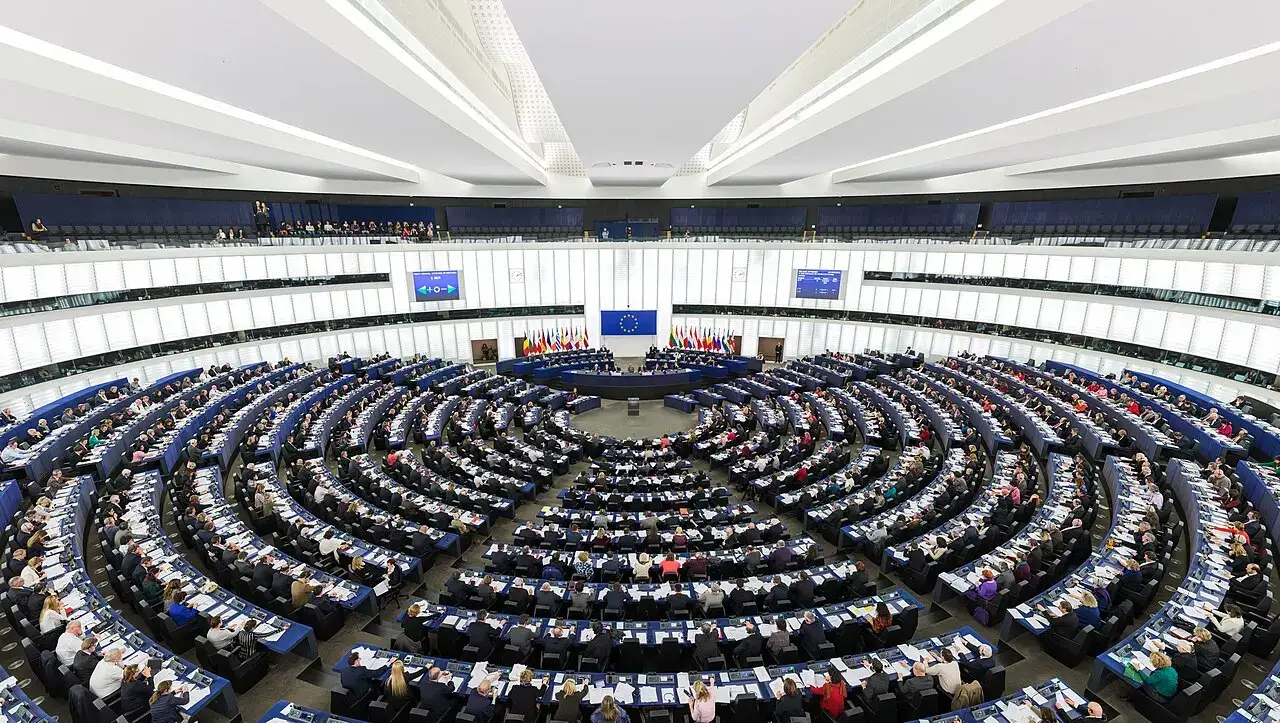
The text was negotiated by the EPP, the Socialists and Democrats (S&D) and Renew Europe, the three groups that make up the so-called "Centre Platform". MEPs from these parties settled the compromise amendments on 20 October, and two days later both committees adopted them.
| Committee | For | Against | Abstentions |
|---|---|---|---|
| Industry (ITRE) | 49 | 27 | 5 |
| Transport (TRAN) | 27 | 18 | 1 |
Both the right (ECR, Patriots for Europe, Europe of Sovereign Nations) and the left (Greens/EFA and The Left) voted against. Jens Gieseke (EPP), who chairs the Transport committee, argues carmakers need flexibility and planning certainty. For the Greens, Michael Bloss accused the Social Democrats and conservatives of betting on the combustion engine and slowing down e-mobility.
The 2035 target: 95% or 87.5%?
Precision matters here, because the figures shift depending on who's quoting them. The headline target becomes a 95% cut in CO2 emissions compared with 2021. Of those 95 points, up to 7.5 percentage points can be covered by credits for low-carbon steel made in Europe — for passenger cars only.
In practice, a manufacturer using the full steel allowance only needs to cut measured tailpipe emissions by 87.5%. Agence Europe frames it exactly that way: an 87.5% target, provided the remaining emissions up to 95% are offset with steel credits. Same maths, viewed from the other end.
That 5% to 12.5% of headroom is what would allow petrol, diesel and especially hybrid cars to keep being registered after 2035. Not in large numbers — each brand's fleet average would still have to sit very close to zero — but they would no longer be banned outright.
The other flexibilities in the deal
- 2030: the target stays at −55%, but is averaged over 2029 to 2031 (the Commission had proposed 2030 to 2032).
- Renewable fuels: cars running on eligible renewable fuels (e-fuels and biofuels) would count as zero-emission vehicles.
- Super-credits: small affordable EVs and particularly efficient EVs earn carmakers extra credits — no longer a perk reserved for cars under 4.20 m. The threshold for "particularly efficient" hasn't been published yet.
- "Made in Europe": the compromise folds in the European-content dimension of the Industrial Accelerator Act (IAA), including super-credits for European manufacturers. An ITRE vote on the IAA, expected in December, is a condition for moving forward on the three automotive texts.
Vans get even more slack
Light commercial vehicles get a bigger reprieve. The 2030 target falls from the Commission's proposed 40% (50% under current law) to 35%. For 2035, it drops from 90% to 80%. If you run a small business in Portugal on a diesel van, this is the part with the most direct effect.
Current law, Commission, Parliament and Berlin/Paris side by side
There are now four versions on the table. Only one is in force.
| Item | Current law (2023) | Commission (Dec 2025) | Parliament compromise (Oct 2026) | Germany/France (Oct 2026) |
|---|---|---|---|---|
| Cars, 2035 vs 2021 | −100% | −90%, with full compensation of the remaining 10% | −95% (minimum −87.5% at the tailpipe with 7.5 pp steel credits) | −90%, no offsets |
| Cars, 2030 | −55% | −55% (2030–2032 average) | −55% (2029–2031 average) | — |
| Vans, 2030 | −50% | −40% | −35% | — |
| Vans, 2035 | −100% | −90% | −80% | — |
| Renewable-fuel cars | not zero-emission | compensation mechanism | count as zero-emission | — |
| Corporate fleet EV quotas (2030) | none | binding, per country (45% EU-wide) | "aspirational", no penalties | Germany opposed |
One detail worth noticing: the Commission's December 2025 proposal cut "only" to 90% (roughly 11 g CO2/km fleet average), but required the remaining 10% to be fully offset with European green steel, e-fuels or biofuels. The Parliament compromise drops that full-compensation requirement. Friedrich Merz and Emmanuel Macron, meanwhile, agreed on 16 October a joint position of 90% with no offset mechanism at all and a narrower "Made in Europe" definition.
Company car EV quotas for 2030: another retreat
A week later, on 27 October, the same Centre Platform dropped another piece of the package. The Commission wanted binding, country-specific quotas for electrifying corporate fleets from 2030 — modelled on Belgium's company-car tax scheme, which sent EV sales there soaring. The EU-wide average target would have been 45%.
Under the deal, those targets become "aspirational". Member states that miss them face no penalties. In the Council, a nine-country coalition led by Poland had already rejected binding targets in June.
In Portugal, company cars make up a large share of EV sales, largely thanks to favourable tax treatment for businesses. Without an EU quota, that driver keeps depending on national tax policy rather than on Brussels. Worth knowing if you're an expat whose employer provides a company car.
How many jobs are at stake? The ICCT study
The relaxation has been sold as a way to protect jobs in the car industry. On 28 October, the ICCT (International Council on Clean Transportation) published a 58-page report, "Powering jobs", that reaches the opposite conclusion.
| Scenario (employment in 2035 vs 2025) | Change |
|---|---|
| Keep current standards | approx. −2% |
| Current standards + industrial policy (local-content rules, production incentives) | approx. +10% (~320,000 more jobs) |
| Standards delayed by five years | up to −6% (loss of up to 185,000 jobs) |
"Weakening the CO2 standards is being presented as a way to protect jobs, but our analysis shows the opposite." — Sandra Wappelhorst, ICCT Research Lead and lead author
There's an important caveat. The 185,000-jobs scenario models a generic five-year delay in the standards — with 100% electric new-car sales only reached in 2040 — not the exact Parliament compromise or the Commission's proposal. It shows the direction of the impact, not a forecast for the text just voted.
The study also covers only passenger-car production and its supply chain, and leaves out automation, digitalisation and geopolitical factors. The gap between the best and worst scenarios is about half a million jobs by 2035, though differences stay small until 2030. What matters most is how much battery, recycling and charging-related production stays inside the EU.
What changes for car buyers in Portugal
For now, nothing. The 2023 law, with its 100% cut in 2035, stays in force until a new text is adopted. And even if the compromise passes as it stands, these rules apply to each manufacturer's average new-car fleet emissions — not to cars already on the road.
Can I still buy a petrol car in Portugal after 2035?
If the compromise is adopted, yes — but from a much shorter list. With a target between 87.5% and 95%, brands will have to sell almost exclusively EVs to balance their books. The combustion and hybrid models that survive will be few and most likely pricier, since every unit eats into the CO2 allowance.
Will hybrid cars be banned in Portugal in 2035?
Under current law, hybrids (plug-ins included) can no longer be sold new from 2035. Under the Parliament compromise, hybrids and combustion cars could keep being registered. This is the change ordinary buyers will notice most.
Can used petrol cars still be driven after 2035?
Yes. None of the versions under discussion bans driving combustion cars that are already registered, or buying and selling them on the used market. The EU rule only concerns new cars.
Is it worth buying a diesel car in Portugal in 2026?
The decision is still more about tax and practicality than regulation. EVs remain exempt from ISV (the one-off registration tax) and IUC (the annual road tax) in Portugal, and running costs tend to be lower if you charge at home or on the MOBI.E public network. A diesel bought today can be driven for the rest of its life — what this U-turn may shift, over time, is the resale value of combustion cars, which no longer face such a clear expiry date in the new-car market.
Frequently Asked Questions
The law in force since 2023 requires new cars to cut CO2 emissions by 100% in 2035 compared with 2021, which amounts to a de facto ban on combustion engines. The European Commission proposed lowering this to 90% in December 2025, with the remaining 10% fully offset, and on 22 October 2026 the European Parliament's ITRE (49 votes in favour) and TRAN (27 in favour) committees backed a 95% target with a tailpipe floor of 87.5%. None of this is law yet: the 100% target still applies until a new text is adopted.
Under current law, neither conventional nor plug-in hybrids can be sold new from 2035. Under the Parliament compromise, the 5% to 12.5% emissions margin would let hybrids and combustion cars still be registered, and cars running exclusively on eligible renewable fuels (e-fuels and biofuels) would count as zero-emission. Because the rule applies to each brand's fleet average, expect only a limited choice of these models.
They are credits carmakers earn for using low-carbon steel made in Europe in their passenger cars. In the Parliament compromise they can cover up to 7.5 percentage points of the 95% target, lowering the effective tailpipe cut required to 87.5%. Germany and France back an alternative 90% target with no offset mechanism at all, so whether these credits survive depends on the plenary and the Council.
Not if the 27 October 2026 deal holds. The Commission wanted binding country-specific quotas from 2030, averaging 45% across the EU and modelled on Belgium's company car scheme. The EPP, S&D and Renew turned them into non-binding "aspirational" targets with no penalties, and a nine-country Council coalition led by Poland had already rejected mandatory targets in June 2026.
Next comes a vote in the lead Environment committee (ENVI) in early November 2026, followed by a plenary vote in December 2026. Trilogue negotiations with the EU Council, which needs a qualified majority, then begin. A final deal is expected in the first quarter of 2027, and German dealer association VAD does not expect anything before March 2027.
When will the EU decide on the 2035 combustion engine ban?
There's still a long road ahead:
- Early November 2026 — vote in the Environment committee (ENVI), which leads the file.
- December 2026 — plenary vote to set Parliament's position.
- Trilogue — negotiations with the Council of the EU, where a qualified majority is needed and Germany and France are pushing for 90% without offsets.
A final deal is expected in the first quarter of 2027; German car dealers' association VAD doesn't expect anything before March 2027. Until then, the 100% target for 2035 remains the law.
If you're choosing a car in the coming months, the takeaway is straightforward: the compromise buys combustion engines and hybrids more time after 2035, but doesn't change the direction of travel. Whichever version wins, the target lands between an 87.5% and a 100% cut — and the new-car market in 2035 will be mostly electric either way. The number to watch in December is whether those 7.5 points of steel credits survive the plenary and the Council.