
Which Chinese Cars Are Now Built in Europe? 2026 Guide for Portugal
Published: 01/07/2026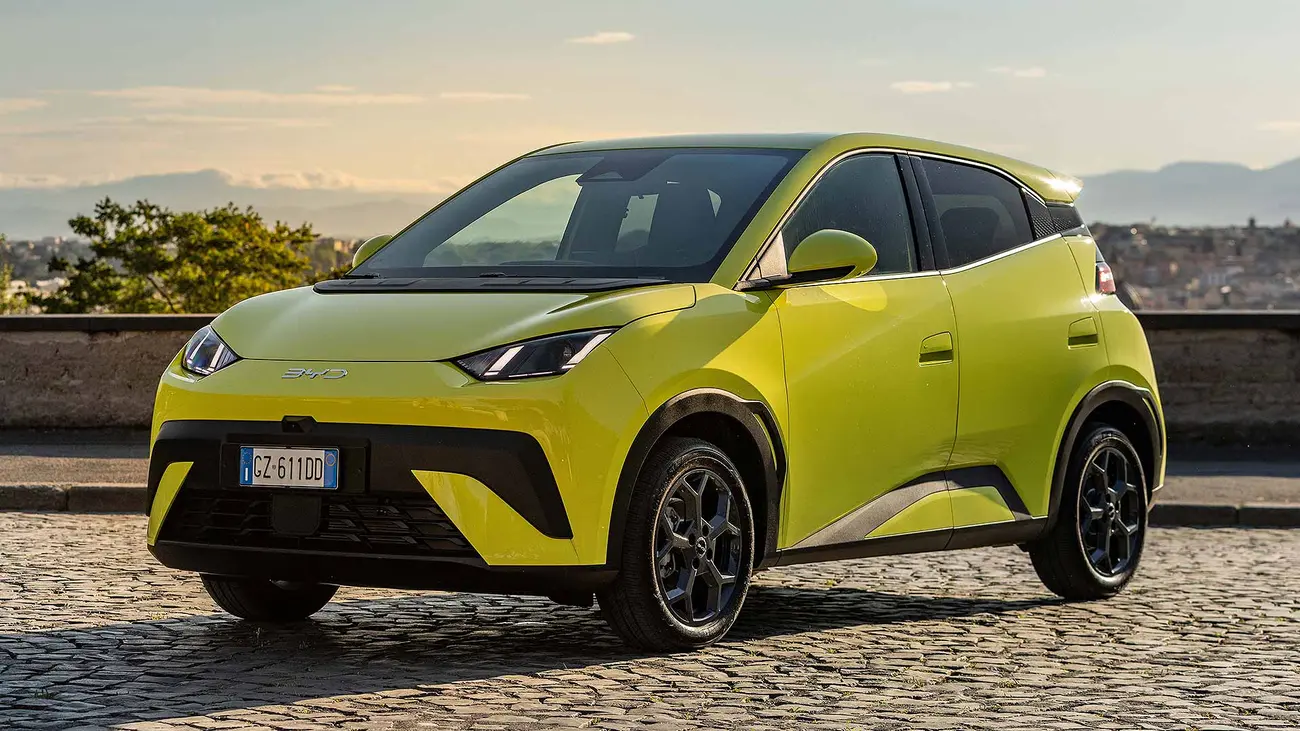
Why Chinese cars made in Europe change the maths for buyers in Portugal
There's a very concrete reason Chinese brands are opening factories in Spain, Hungary and Austria: money. Since 31 October 2024, the European Union has applied countervailing duties on fully electric cars built in China, on top of the 10% import duty that already existed. For an MG, that adds up to nearly 45% in taxes. Building the car on European soil wipes out most of that burden — and, in several countries, unlocks purchase incentives reserved for EU-built vehicles.
The practical upshot for buyers in Portugal is simple: more Chinese models arriving here, at prices that no longer carry the weight of the tariffs. Here's the current picture of which Chinese cars are now built in Europe, factory by factory.
How heavily the EU tariffs hit Chinese electric cars
The duties aren't the same for everyone. The European Commission set a figure per manufacturer, based on the level of subsidies it identified in China. These duties run for five years and always stack on top of the 10% base rate.
| Manufacturer | Countervailing duty | Approx. total (with 10% base) |
|---|---|---|
| SAIC / MG | 35.3% | around 45.3% |
| Geely (Volvo, Polestar, Zeekr) | 18.8% | around 28.8% |
| BYD | 17.0% | around 27.0% |
| Tesla (Shanghai-built) | 7.8% | around 17.8% |
| Other cooperating (Xpeng, Nio) | around 20.7% | around 30.7% |
| Non-cooperating | up to 35.3% | up to around 45.3% |
Five countries voted against the measures: Germany, Hungary, Malta, Slovakia and Slovenia. It's no coincidence that three of them — Hungary, Slovakia and, indirectly, Spain through Stellantis — are now home to Chinese factories. Where there's political will, there's investment.
Chery in Spain: Europe's most advanced Chinese factory
Chery is the furthest ahead. In April 2024 it set up the Ebro EV Motors joint venture and took over Nissan's old, idle plant in Barcelona. It's a rare case: a Chinese factory breathing new life into a European site instead of closing one.
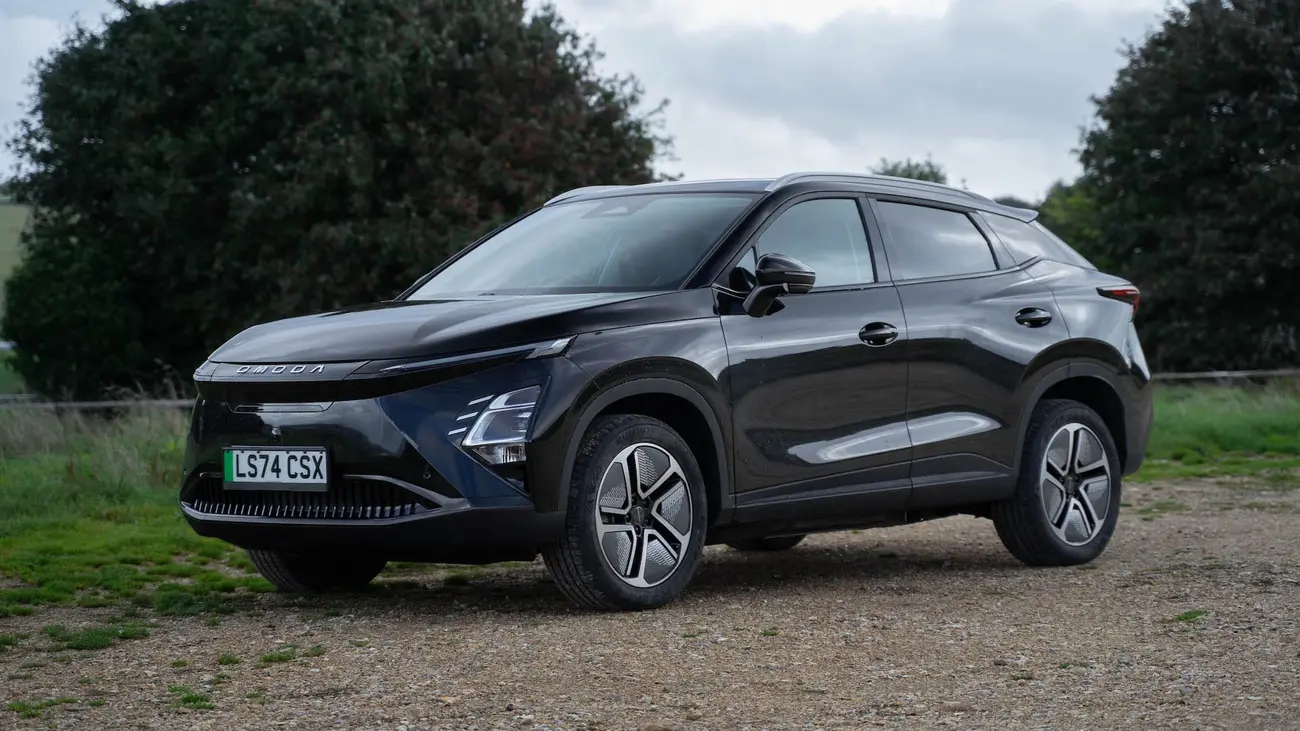
Barcelona already turns out the combustion Omoda and, since October 2025, the Omoda 5 EV made in Spain. The line-up also includes the Jaecoo 7 SUV and the Ebro-brand models — the S700 and S800, both hybrid and combustion. For Portugal, this means the Omoda 5 electric arrives without the Chinese tariff load, leaving room for a more competitive price against European rivals in the same segment.
Leapmotor in Spain: the advantage of having Stellantis as a partner
Leapmotor holds a card no other Chinese brand has: Stellantis is a shareholder. That's why the brand's next step happens inside one of the group's plants, in Figueruelas (Zaragoza), from August 2026.
The first model off that line is the B10, a compact electric SUV, with initial capacity of around 40,000 units a year. The B05, also compact, lands later in 2026, and the A10 and A05 are due in 2027. Until April 2025, Leapmotor built the small T03 in Tychy, Poland; the rest of the range came straight from China. Moving to full local production in Spain matters, because complete assembly — unlike kit assembly — qualifies for national EV purchase incentives.
BYD in Hungary: the biggest project is in Szeged
BYD's first European car plant sits in Szeged, Hungary, and it's the largest bet of the lot. Trial production started at the end of January 2026; series production was expected in the second quarter, but recent statements from BYD now point to late 2026.
The first models are the Dolphin Surf — the city EV sold in China as the Seagull — and the small Atto 2 SUV, the latter in both electric and hybrid form. Capacity is designed to reach around 200,000 cars a year, starting at roughly 150,000 units. There's a catch, though: at least early on, the Hungarian plant relies on batteries and steel imported from China, which limits part of the tax benefit. Hungary, remember, was one of the five countries that voted against the tariffs.
Xpeng and GAC in Austria: kit assembly, with a caveat
In Austria, Magna Steyr in Graz — the contract plant that has assembled cars for many brands over the years — began building Chinese models in the third quarter of 2025. It makes the G6 and G9 for Xpeng, and the Aion V for GAC.
The difference is in the method. This is SKD (semi-knocked-down) assembly, meaning it works from kits shipped over from China. That cuts logistics and delivery times, but here's the catch: kit assembly may not qualify for the same incentives that full local production earns. It's a halfway solution — European on the final badge, Chinese for most of the journey.
Geely and what's next: Polestar 7 built in Slovakia
Geely — owner of Volvo, Polestar, Lynk and Co, Lotus and Zeekr — follows a strategy it sums up neatly as "in Europe, for Europe". The next milestone is at the Volvo plant in Kosice, Slovakia, where from 2028 the Polestar 7 SUV should be born, alongside Smart models.
Beyond these confirmed names, the race continues. By 2030, around ten Chinese-brand factories are expected in or near Europe. Italy and Turkey are competing for new investment, with names like Dongfeng, Changan, Great Wall and SAIC/MG on the table. There are also contract manufacturers — such as VDL in the Netherlands, with capacity for 200,000 cars a year — ready to take on a Chinese partner.
Frequently Asked Questions
In 2026, European lines already produce the Chery Omoda 5 EV and Jaecoo 7 (Barcelona, the former Nissan plant), the Leapmotor B10 and B05 (Figueruelas, Zaragoza, from August 2026) and the BYD Dolphin Surf and Atto 2 (Szeged, Hungary). In Austria, Magna Steyr in Graz kit-assembles the Xpeng G6 and G9 and the GAC Aion V. Geely's Polestar 7 only reaches the Volvo plant in Kosice, Slovakia, in 2028.
They tend to be. An EV assembled in Spain or Hungary doesn't carry the EU countervailing duties, which range from BYD's 17% to SAIC/MG's 35.3%, stacked on top of the 10% base import duty. Removing that burden leaves room for more competitive price tags on the same model, although the final figure also depends on each brand's commercial strategy in Portugal.
Electric cars always benefit from ISV exemption and IUC advantages in Portugal. Full local production can also unlock purchase support reserved for EU-built vehicles, unlike cars imported directly from China. It must be checked case by case, especially for kit-assembled (SKD) models, which aren't always eligible for the same incentives.
In full local production the car is built from scratch at the European plant, as with Chery in Barcelona or Leapmotor in Zaragoza. SKD (semi-knocked-down) assembly, used at Magna Steyr in Graz for Xpeng and GAC, starts from kits shipped over from China and only completes assembly in Europe. The distinction matters because kit assembly may not qualify for the same national incentives that full production earns.
The most immediate advantage is price, by avoiding the EU tariffs, plus the chance to access incentives when production is fully local. Even so, European origin doesn't replace judging the car itself: it's worth comparing real WLTP range, battery capacity, charging speed and the brand's service network in Portugal. The good news is that the supply of electric cars at competitive prices in the Portuguese market is set to grow clearly over the next two years.
Is a Chinese car made in Europe worth buying?
For buyers in Portugal, the most immediate gain is price. A Chinese EV assembled in Spain or Hungary doesn't carry the countervailing duties that weigh on a car shipped straight from China, which can translate into lower price tags on the same model.
Then there's the incentives question. When the car is fully built locally, it becomes eligible for EV purchase support that imported models don't always reach — something to check case by case, especially with kit-assembled cars. In Portugal, the usual EV perks add up too: exemption from ISV (the vehicle registration tax) and benefits on IUC (the annual road tax).
Before deciding, it's worth looking at the usual essentials — real WLTP range, battery capacity, charging speed and the brand's service network here in Portugal. European origin is a strong price argument, but it doesn't replace judging the car itself. What has changed, and changed for the better, is that the supply of electric cars at competitive prices in our market is set to grow clearly over the next two years.