
How Far Can an Electric Car Go at 0% Battery? 15 EVs Tested in 2026
Published: 19/11/2026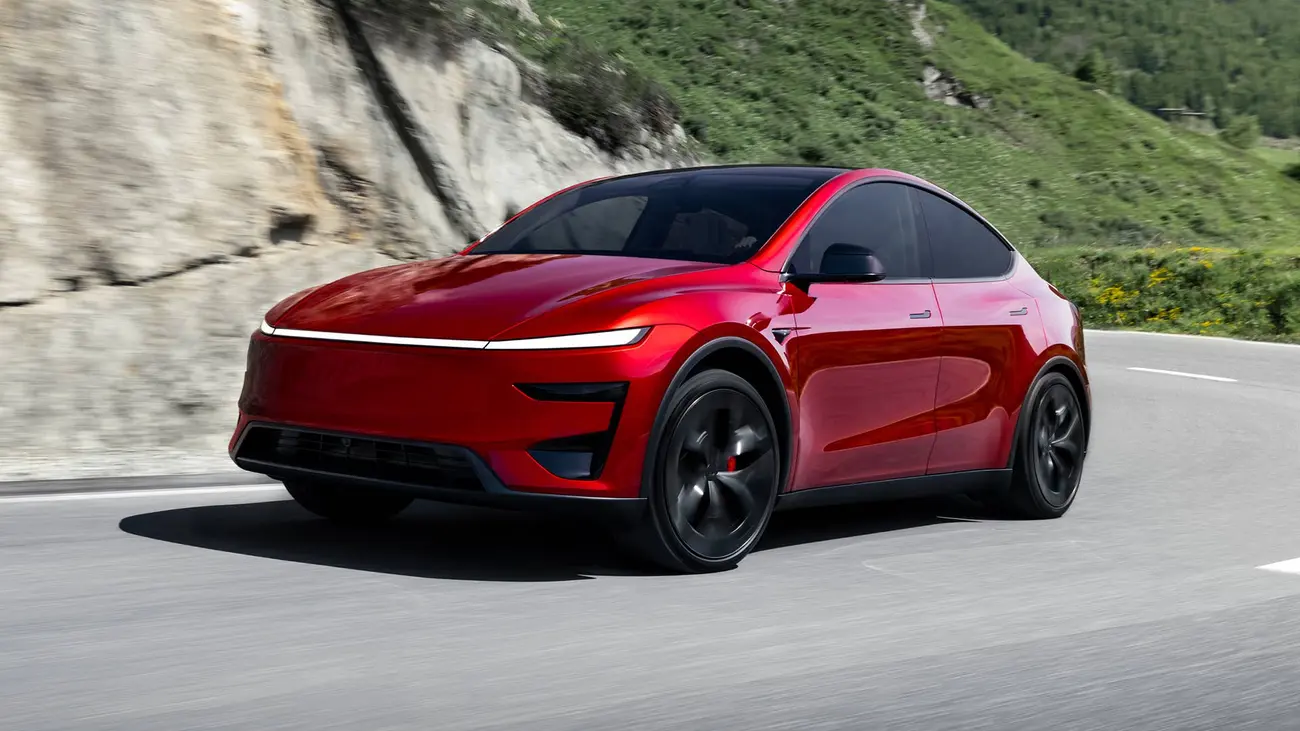
How far can an EV go at 0%? Further than you'd think
A zero on the dashboard doesn't mean the car stops on the spot. In the ECOBEST Challenge 2026, 15 electric cars were driven until they came to a complete halt after the display showed 0% or 0 km, and not one of them died right at zero. On average they kept going for another 16.11 km, with results ranging from 1 km to 32 km.
If you're thinking about buying an EV in Portugal, that answers one of the most common worries about electric car 0% battery range: what actually happens when you hit empty? Short answer: there's almost always a hidden reserve. Longer answer: that buffer varies enormously between models, and it should never be part of your trip planning.
The test was run by the independent AUTOBEST association together with Italian magazine Quattroruote, from 28 to 30 September 2026, at the Vairano proving ground near Milan. Every car costs under €65,000 before taxes, and the methodology was certified by Bureau Veritas for the fourth year running.
The 15 EVs tested: full table of range after 0%
The table combines the distance driven after zero with other data from the same test: usable battery, real-world range against the official WLTP figure, efficiency, and the time needed to add 100 km on a DC fast charger. It's sorted from the biggest reserve to the smallest.
| Model | Usable battery (kWh) | Real / WLTP range (km) | % of WLTP | km/kWh | Reserve after 0% (km) | DC: time per 100 km |
|---|---|---|---|---|---|---|
| Leapmotor B10 | 65 | 357 / 434 | 82.26 | 5.49 | 32 | 12 min |
| Tesla Model Y | 60 | 466 / 525 | 88.76 | 7.77 | 31 | 6 min |
| BMW iX3 | 108.7 | 640 / 737 | 86.84 | 6.14 | 26 | 4 min |
| Volvo EX60 | 92 | 488 / 614 | 79.48 | 5.30 | 21 | 4 min |
| Mazda 6e | 68 | 380 / 479 | 79.33 | 5.59 | 19 | 9 min |
| Kia EV2 | 58 | 397 / 418 | 94.98 | 6.84 | 18 | 12 min |
| Peugeot e-5008 | 73 | 422 / 487 | 86.65 | 5.78 | 16 | 15 min |
| Renault Twingo | 27.5 | 229 / 261 | 87.74 | 8.33 | 15 | 22 min |
| Zeekr 7GT | 97 | 477 / 558 | 85.48 | 4.92 | 14 | 4 min |
| Opel Grandland | 73.7 | 425 / 521 | 81.57 | 5.77 | 13 | 15 min |
| Citroën ë-C5 Aircross | 73.7 | 436 / 498 | 87.55 | 5.92 | 12 | 14 min |
| Mercedes-Benz CLA 250+ | 85 | 613 / 772 | 79.40 | 7.21 | 12 | 5 min |
| Audi Q4 e-tron | 77 | 473 / 511 | 92.56 | 6.14 | 7 | 10 min |
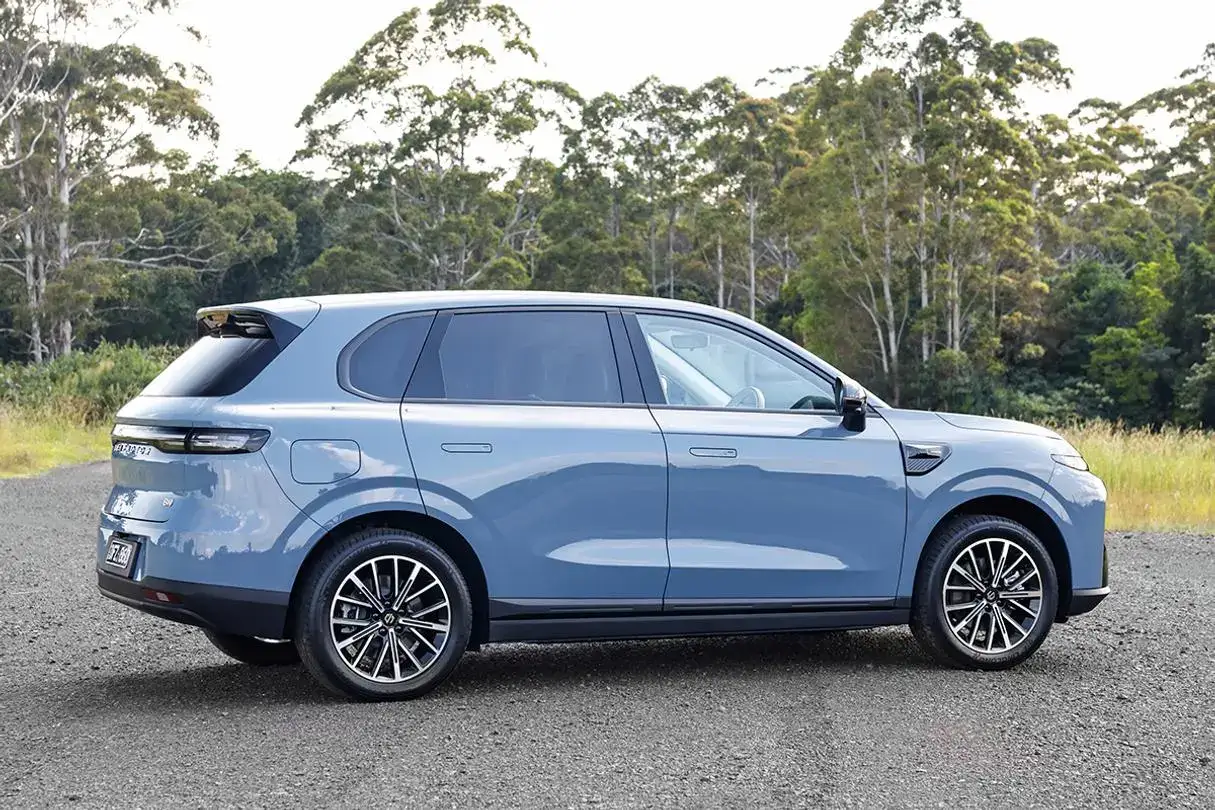
| BYD Atto 2 | 45.1 | 262 / 312 | 83.97 | 5.81 | 5 | 20 min |
| Xpeng P7+ | 73 | 419 / 530 | 79.06 | 5.74 | 1 | 4 min |
Tesla Model Y and BMW iX3 among the most generous
32 km past empty. That's what the Leapmotor B10 managed, the best result this year. The Tesla Model Y Long Range was right behind on 31 km, a 1 km gap that makes no practical difference. The BMW iX3 rounds out the podium with 26 km, followed by the Volvo EX60 on 21 km.
With 31 km in hand, a Model Y that hits 0% somewhere near Coimbra still has a decent shot at reaching a fast charger. For the BMW iX3, those 26 km come on top of the longest real-world range in the whole test: 640 km.
The Renault Twingo deserves a mention too. Despite having the smallest battery in the group, just 27.5 kWh, it covered 15 km after zero, right around the average. It also set a new efficiency record for the event at 8.33 km/kWh.
BYD Atto 2 and Xpeng P7+: almost no margin
At the bottom of the table, the picture changes. The Audi Q4 e-tron managed 7 km, the BYD Atto 2 only 5 km, and the Xpeng P7+ a single kilometre. In these cars, reaching 0% is pretty much the same as stopping.
That doesn't make them worse cars day to day. The Q4 e-tron delivered one of the real-world ranges closest to its WLTP rating (92.56%), and the Xpeng adds 100 km on a fast charger in 4 minutes. What it does show is that the reserve is far from standard, even between models sold side by side in Portugal.
Nor has the trend been a steady improvement. The all-time ECOBEST record is still the 45 km set by the Subaru Solterra in 2023. In the 2022 edition, two cars stopped the moment they reached zero, while the rest managed between 3 and 23 km. How much margin you get is a manufacturer decision, not an industry rule.
Why EVs keep a battery buffer reserve
The reserve is there to protect the battery. Lithium-ion cells degrade if their voltage drops below a certain level, so the BMS (battery management system) holds back a safety margin below the 0% you see on the dashboard. Before the cells reach that danger zone, the car cuts motor power.
This ties in with the difference between gross and usable battery capacity. The Tesla Model Y tested has 64 kWh gross and 60 kWh usable. The Renault Twingo has 29 and 27.5 kWh; the BMW iX3, 113.4 and 108.7 kWh. Usable capacity is what the car lets you draw between 100% and 0%.
Even so, the gross-to-usable gap doesn't predict the reserve. The BYD Atto 2 has 46.5 kWh gross and 45.1 usable, a similar gap to the Twingo's, yet it went 5 km against the Twingo's 15 km. Each brand decides how much energy to release after zero and how to manage it.
Battery percentage and range are separate calculations
State of charge (SoC) in percent and the range estimate in km are calculated separately, and they don't always hit zero at the same moment. In a test by the Out of Spec Testing channel, a 2026 Tesla Model 3 Long Range showed 0% battery while still displaying about 3.2 km of range. Once the screen reached 0 km, it drove roughly another 50 km, using close to 6 kWh of that reserve.
So when you read "range after 0%", keep in mind that ECOBEST measured from the moment the dashboard showed 0 km or 0% until the car could no longer move under its own power.
What the test doesn't tell you (and why you shouldn't rely on it)
Conditions were kind. Temperatures of 20 to 25 °C, Normal drive mode, air conditioning on, tyres at recommended pressure, one occupant, and a mixed route with roughly half of it on motorways. The cars drove in convoy behind a pace car, with drivers swapping every 30 km.
In winter, on climbs, at higher speeds or with an ageing battery, the reserve can be considerably smaller. A cold morning on the A25 heading up to Guarda is a very different proposition from Vairano in September.
There's another catch. AUTOBEST didn't publish how much energy each car had left when it stopped, or what speed it held after zero. The Leapmotor's 32 km versus the Xpeng's 1 km doesn't mean its battery held 32 times more energy.
The ADAC test backs it up: 15 to 21 km
A second independent test, carried out in 2025 by ADAC (Germany's largest motoring club) with tech magazine c't, landed on similar numbers. Six EVs covered between 15 and 21 km after zero:
- Volvo EX40: 21 km
- Tesla Model Y: 20 km
- Kia EV6: 19 km
- BYD Seal: 18 km
- Nio EL6: 16 km
- VW ID.3: 15 km
Warnings come much earlier, but at very different levels. The Kia EV6 warned at 18%, the VW ID.3 at 15%, the Tesla Model Y at 14%, the Nio EL6 at 11%, the Volvo EX40 at 6% and the BYD Seal only at 4%, although it had already cut power at 6%. Near the end, all of them limit power, and many show a tortoise symbol. This is the so-called turtle mode (or limp mode), designed to stretch whatever energy is left.
ADAC's verdict is blunt: use the reserve only in an emergency. To run out of charge by accident, you'd have to ignore several warnings, some of them fairly insistent.
EV ran out of charge on a motorway in Portugal: what to do
If the worst happens anyway, treat it like any other breakdown. Pull over as far to the right as you can, switch on the hazard lights, put on your reflective vest before getting out, and set up the warning triangle. The vest and triangle are mandatory kit in Portuguese cars. Leave the car on the side away from traffic and wait behind the crash barrier if there is one.
Then call your insurer's roadside assistance (assistência em viagem, included in many Portuguese car policies) or the manufacturer's assistance line. Say straight away that it's an electric car, because it changes what kind of help gets sent. Many manufacturers include mobility guarantees with breakdown cover and sometimes a replacement car, so it's worth checking today what your policy and your car's warranty actually include. If anyone is hurt or in immediate danger, call 112.
In Germany, running out of energy on the Autobahn earns a €70 fine and a point on your licence. Whatever the penalty where you are, the real risk is being stationary on a fast road, so the best strategy is not to end up there.
Can you tow an electric car? Only on a flatbed
Don't push the car or tow it with its wheels on the ground. When the drive wheels turn, the electric motor can generate induced voltages that damage the electronics, and gearbox lubrication can fail. A stranded EV should be carried on a flatbed recovery truck.
There are alternatives to a tow truck. Some assistance services carry mobile chargers, and ECOBEST itself showed another option: a Zeekr 7GT with V2L (vehicle-to-load) acted as a power source to revive the cars that were fully drained at the end of the test.
One reassuring stat: according to ADAC's 2025 breakdown figures, almost 45% of call-outs were caused by the 12V battery. Empty traction batteries are a "vanishingly small" cause.
Frequently Asked Questions
Doing it occasionally will not harm the battery: the BMS keeps a buffer below the 0% shown on the dashboard and cuts power before cell voltage drops to damaging levels. In the ECOBEST Challenge 2026, none of the 15 cars stopped at zero, but the reserve ranged from 1 to 32 km. The real risk is being stranded, and frequent full discharges are not good for long-term battery health.
In the ECOBEST Challenge 2026, the Tesla Model Y Long Range covered 31 km after the dashboard hit zero, the second-best result among 15 EVs. In the 2025 ADAC and c't test, the Model Y managed 20 km after zero and gave its first warning at 14% charge. The gap between the two tests shows that the reserve depends on conditions, speed and temperature.
In ECOBEST 2026, the Leapmotor B10 went furthest after zero with 32 km, followed by the Tesla Model Y (31 km) and the BMW iX3 (26 km). The all-time record in the test belongs to the Subaru Solterra, with 45 km in 2023. At the other end, the Xpeng P7+ managed just 1 km and the BYD Atto 2 5 km, and in the 2022 edition two cars stopped as soon as they reached zero.
ADAC and c't magazine recommend heading to a charger at 10% battery at the latest. In the ADAC test, first warnings appeared anywhere between 4% (BYD Seal) and 18% (Kia EV6), and near the end every car limited power in turtle mode. On long trips in Portugal, plan your stops on the MOBI.E network and always have a backup charger in case the first one is busy or out of order.
An EV that has run out of charge should be carried on a flatbed truck, never pushed or towed with its driven wheels on the ground, as the motor can generate induction voltages that damage the electronics. When you call your insurer's or the manufacturer's roadside assistance, say straight away that it is an electric car, since some services use mobile chargers. According to ADAC, almost 45% of breakdowns are caused by the 12 V battery, while empty traction batteries are a vanishingly small cause.
How to plan charging so you never hit 0%
The simplest rule comes from ADAC and c't: start heading for a charger at 10% at the latest. Below that, you're already eating into your safety margin.
For longer trips in Portugal, a few habits help:
- Plan your stops before you leave. Use the car's route planner or an app that shows the MOBI.E public charging network and the fast chargers at motorway service areas.
- Always have a plan B. A broken or busy charger can force you on to the next one, and that's where margin matters.
- Ease off when the battery runs low. Dropping your motorway speed by a few km/h saves a surprising amount of energy.
- Get to know your car. ADAC suggests observing, close to a charger, how your model warns you and when it starts cutting power.
- Don't make 0% a habit. Frequent full discharges aren't good for the battery in the long run.
Between Lisbon and Porto, or on the way down to the Algarve, there are now enough fast chargers that ending up with an electric car at 0% battery is almost always a planning problem rather than bad luck. If you're comparing models, range after 0% is an interesting tiebreaker, but real-world range and charging speed matter far more in everyday life.