
Bidirectional Charging in Portugal: Which EVs Support V2G, V2H and V2L
Published: 12/09/2026
The car that sits parked 95% of the time
An electric car spends roughly 95% of its life parked. All that time, it carries a 50, 60 or 80 kWh battery under the floor — several times what a Portuguese household uses in a day — doing nothing at all. Bidirectional charging reverses the direction of that cable: instead of only taking energy in, the car can push it back out.
The idea isn't new. What changed in 2026 is that it stopped being a pilot project and became a product you can buy — first in France, then Germany, the UK and the Netherlands. Portugal isn't on that list yet. But some of the pieces are already in place here, and it's worth knowing which ones before you sign an energy contract or pick your next car.
V2G, V2H and V2L: three very different things
Three acronyms, three completely different levels of complexity. Mixing them up is the most common mistake.
| Acronym | What it does | What it needs |
|---|---|---|
| V2L (Vehicle-to-Load) | Powers appliances plugged into the car | Nothing. A socket adapter and you're done |
| V2H (Vehicle-to-Home) | Powers your house | Bidirectional wallbox and a certified electrical installation |
| V2G (Vehicle-to-Grid) | Sends energy back to the public grid, for payment | Compatible car, bidirectional wallbox, software, energy contract, grid operator approval and a bidirectional meter |
V2L is the only one that works in Portugal today with zero paperwork. Plug the adapter into the charging port and you get a 230 V socket delivering up to 3.6 kW on Hyundai and Kia models built on the E-GMP platform. Enough for a coffee machine, a camping fridge, power tools — or, and this matters in rural Portugal, keeping the essentials running through a power cut.
V2H is a different league. You need a charger that moves energy both ways and a home installation able to safely island itself from the grid. In France, where installers are already used to this, a full setup runs €4,000 to €8,000.
V2G is the hardest and the only one that puts money in your account. Beyond the hardware, it requires a contract with a supplier or aggregator willing to buy the energy, approval from the distribution grid operator, and a certified meter that measures flow in both directions. In France, that administrative process typically takes three to six months.
Why almost no European car can do this
The answer is dull but it explains everything: ISO 15118-20, the standard that lets car and charger negotiate a two-way energy transfer, was only published in 2022. It's what finally brought bidirectional support to CCS2, the European connector. Before that, the only connector that could work both ways was CHAdeMO — which is why the V2G pioneer was, for a decade, the Nissan Leaf.
The consequence shows up in the International Energy Agency's numbers: in 2026 there are 22 commercially V2G-capable electric models worldwide, under 1.5% of all EV models on sale. Count the ones that manage V2H or V2L too and the figure roughly triples — still a minority.
There's one more counterintuitive detail the IEA highlights: Chinese manufacturers account for more than half of the world's EV models, and contribute exactly one commercialised V2G model.
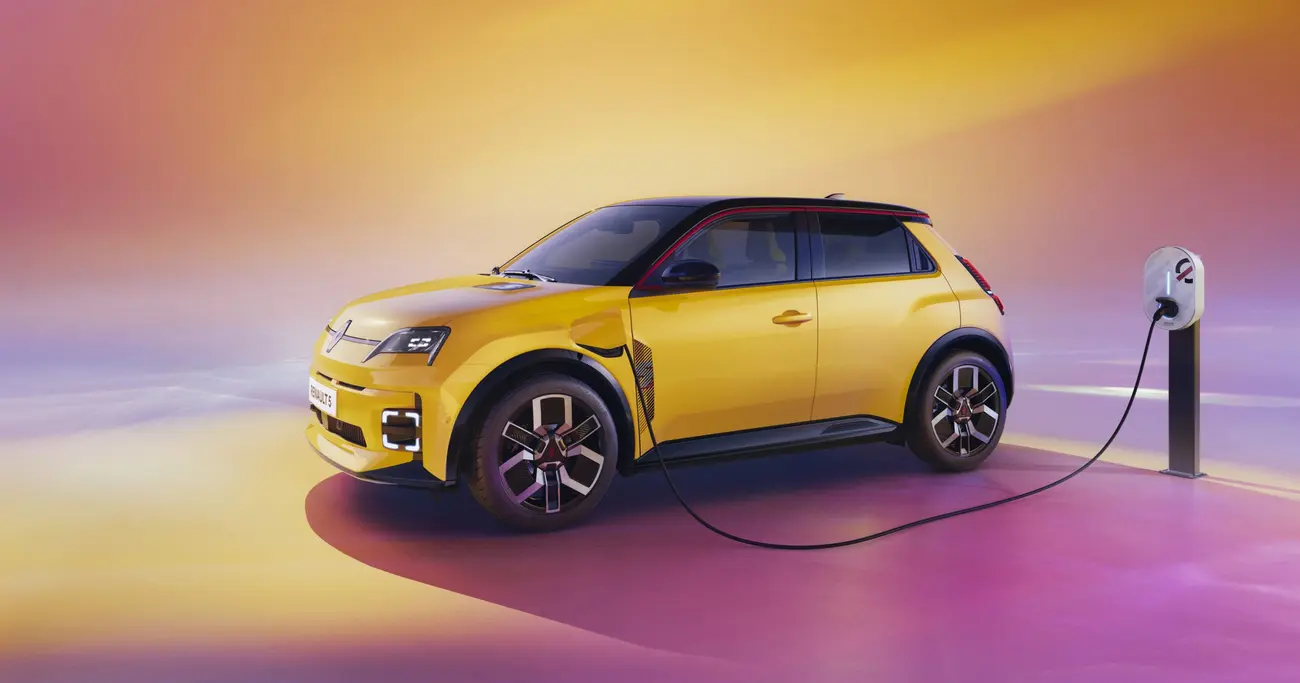
Cars with bidirectional charging sold in Portugal
This is the table that matters if you're choosing a car. One warning first: these capabilities depend heavily on trim level and installed software version, and some functions are only switched on in markets where a commercial offer exists. Treat this as a starting point and check the brand's Portuguese configurator before committing.
| Model | V2L | V2H | V2G | Notes |
|---|---|---|---|---|
| Hyundai IONIQ 5 / 6 | Yes (3.6 kW) | No | Not in PT | V2G works in some French setups |
| Hyundai IONIQ 9 | Yes | Yes | Pilot (Netherlands) | Revised E-GMP, native bidirectional |
| Kia EV6 | Yes (3.6 kW) | Hardware present | Awaiting software | |
| Kia EV9 | Yes | Yes | Pilot (Netherlands, US) | |
| Kia Niro EV | Yes | No | No | |
| Renault 5 / 4 E-Tech | Yes (adapter) | Yes | Yes (FR/DE/UK) | 52 kWh version only, 11 kW charger |
| Renault Mégane E-Tech | Yes | Hardware present | Awaiting software | |
| VW ID.3 / ID.4 / ID.5 / ID.7 | Limited | Yes (Elli, late 2026) | Pilot | Needs ID.Software 3.5+ and a battery above 77 kWh |
| CUPRA Born | — | Yes | Yes, with Wallbox Quasar 2 | Over CCS2 |
| BMW iX3 | — | Yes | Yes (Germany, with E.ON) | Requires BMW Wallbox Professional |
| Mercedes electric GLC | — | Yes | 2026, MB.CHARGE Home | Requires a DC bidirectional station |
| Volvo EX90 | — | Yes, standard | Prepared | Since 2025 |
| Volvo EX30 | — | Prepared | ISO 15118-20 ready | Field tested |
| Polestar 3 | — | Prepared | Under evaluation | |
| BYD Atto 3 / Dolphin | Yes | Yes (Dolphin, UK) | UK only (Octopus) | |
| MG ZS EV / MG4 | Yes | Hardware present (MG4) | Awaiting software | |
| Nissan Leaf | — | Yes | Yes (CHAdeMO) | The original V2G car |
| Toyota bZ4X | Yes | Yes | Prepared | |
| Tesla (European models) | No | No | No | Only the Cybertruck, which isn't sold here |
Notice the pattern: plenty of cars already on Portuguese roads — Kia EV6, MG4, the Volkswagen ID range, the Mégane E-Tech — have the hardware inside and are simply waiting on software. Volkswagen demonstrated back in 2024 that it can switch on V2H over the air. So some of these cars could gain the feature without a workshop visit. No brand has committed to a date for Portugal.
Selling energy back to the grid: what it actually pays
The published figures come from neighbouring markets, and they give an honest sense of scale.
In Germany, BMW and E.ON pay a connection bonus of €0.24 per hour the car is plugged in with V2G active, capped at €60 a month — up to €720 a year — plus €0.40 per kWh returned to the grid. BMW reckons that €720 covers the electricity for 12,000 to 14,000 km of driving.
In France, Renault, through Mobilize and The Mobility House, claims charging costs fall by around 50% on average. With the car plugged in 16 hours a day that works out at roughly €600 a year; in the best case, charging becomes free.
The IEA puts realistic V2G revenue between a few hundred and over USD 1,000 a year, with a caveat: as more vehicles join, the value per car falls.
Without a time-of-use tariff, the maths doesn't work
Here's the point almost no international article makes, and it decides everything in Portugal. V2G and V2H live off the gap between what you pay to buy energy and what you get for selling it. In France the model leans on variable tariffs like EDF's Tempo plan. Here, the equivalent is a bi-horária or tri-horária tariff (Portugal's two- and three-band time-of-use plans), or a contract indexed to the MIBEL wholesale market.
On a flat tarifa simples, you gain close to nothing from arbitrage — the price is the same at 3am and 7pm, so there's no spread to capture. Before spending thousands on a bidirectional charger, the first step is switching tariff and checking whether your consumption pattern really allows charging overnight and discharging in the late afternoon.
Then there's the hardware. A bidirectional wallbox currently costs €3,000 to €8,000 in Europe. The IEA splits it into two families: AC bidirectional units cost under USD 1,500 and pay back in about two years, while DC bidirectional units start above USD 5,000 and take roughly ten, assuming around USD 500 a year of benefit to the owner. AC is the technology that could make this mainstream.
Does V2G wreck your battery?
It's the number one objection, and recent research doesn't support it.
A study in Applied Energy (Sagaria et al., 2025) put a number on it: a decade of V2G adds 9% to 14% of extra degradation across the whole period, roughly 0.31% a year. Small — and there's a physical reason. Between 85% and 90% of battery ageing is calendar ageing, driven by time and temperature whether you use the car or not. Cycling is the smaller half of the equation.
The IEA goes further, noting that well-managed V2G can actually reduce capacity loss compared with unmanaged charging, because it keeps the average state of charge lower instead of leaving the car sitting at 100%. The University of Delaware ran a Leaf fleet on frequency regulation for five years with no meaningful degradation, and RWTH Aachen reached the same conclusion, provided the software avoids extreme states of charge and deep cycles.
None of that removes the warranty question. Typical warranties guarantee 70% capacity for 8 to 10 years or 160,000 km, and manufacturers protect themselves by limiting the feature to V2L/V2H, requiring approved chargers, or capping how much energy you can push through. Read what your brand says about the warranty before joining any programme.
When does V2G reach Portugal?
Three concrete signals, none of them a launch date.
The legal framework already exists. Decreto-Lei n.º 93/2025, of 14 August, created Portugal's new legal regime for electric mobility, aligned with the EU's AFIR regulation, and explicitly names bidirectional charging. The implementing rules sit in ERSE's electric mobility regulation (Regulamento n.º 3/2025); ERSE is the national energy regulator. The new regime allows charging at any delivery point on the network and lets it take part in autoconsumo, Portugal's self-consumption regime — which is, in practice, the legal door opened for V2H at home. ERSE itself flags the brake, though: bidirectionality depends on compatible vehicles, and there is still no settled European standard on how to implement it in AC or DC.
The 2027 EU rule is the firmest milestone. From that date, new chargers installed in the EU must be capable of bidirectional operation and support ISO 15118-20. That changes the installed base by default, rather than depending on each operator's goodwill.
The infrastructure is getting ready. The Iberdrola | bp pulse joint venture moved its 2,500 chargers in Spain and Portugal onto a platform described as V2G-ready in July 2026, part of a €1 billion plan targeting 11,700 points by 2030.
And there's a Portuguese precedent most people have forgotten: Porto Santo, in Madeira, hosted one of Europe's earliest real-world V2G deployments, with 22 Renault Zoes feeding an island microgrid. The island was a laboratory before the technology even had a commercial name.
Frequently Asked Questions
No commercial offer paying for energy returned to the grid was found in Portugal as of September 2026. Paid V2G requires a compatible car, a bidirectional wallbox, a contract with a supplier or aggregator, distribution grid operator authorisation and a certified two-way meter — in France that paperwork typically takes three to six months. The IEA says only France, the Netherlands and the United Kingdom currently have every condition in place, and Portugal is not on that list.
Legally, yes: Decreto-Lei n.º 93/2025 created the new electric mobility legal framework, explicitly mentions bidirectional charging and allows EV charging to take part in self-consumption (autoconsumo) and local storage. What is missing is the packaged commercial offer — car, bidirectional wallbox, certified installer and energy supplier — that already exists in France and Germany. Anyone doing it today is building a bespoke project, including an electrical installation able to safely island the house from the grid.
A bidirectional wallbox costs between €3,000 and €8,000 in Europe, and a full V2H installation in France runs €4,000 to €8,000 — a fair reference for Portugal, where there are still no catalogue prices. The IEA splits the market in two: AC bidirectional units sit under USD 1,500 with roughly a two-year payback, while DC units start above USD 5,000 and take around ten years, assuming about USD 500 of owner benefit per year. AC is the technology that can make this affordable for ordinary buyers.
V2L is the only one of the three technologies that works in Portugal today with no special charger and no paperwork. It is available on the Hyundai IONIQ 5 and IONIQ 6, Kia EV6, EV9 and Niro EV and Genesis GV60/GV70 — all rated up to 3.6 kW on the E-GMP platform — plus the BYD Atto 3 and Dolphin, MG ZS EV, Toyota bZ4X and Renault 5 and 4 E-Tech (via adapter). Note that availability depends on version and trim level, so check the Portuguese configurator before you buy.
It does not void it automatically, but manufacturers attach conditions. Typical warranties guarantee 70% capacity for 8 to 10 years or 160,000 km, and brands protect themselves by restricting the feature to V2L/V2H, requiring approved chargers or capping the energy throughput. The technical worry is smaller than it sounds: a study in Applied Energy (Sagaria et al., 2025) found 9% to 14% of extra degradation over a full decade, around 0.31% per year, because 85% to 90% of battery ageing is calendar ageing rather than cycling. Even so, read your brand's warranty terms before joining any programme.
What to do today, without waiting
If you're choosing an EV in the coming months, the practical decision comes down to this. V2L is real and usable right now — if you camp, work outdoors, or live somewhere with unreliable power, it's a genuine feature worth weighing, and it's available on affordable cars like the BYD Dolphin, the MG ZS EV or the Kia Niro EV.
V2H is legally possible in Portugal, but no packaged commercial offer exists — car, wallbox, installer and energy supplier bundled together — the way it does in France or Germany. Anyone going ahead today is a pioneer, and will pay pioneer prices.
V2G with payment for energy sent to the grid is not commercially available in Portugal, as far as this research could establish in September 2026. Buy a car because of V2G and you're buying a promise.
That said, the gap between promise and product has narrowed a lot in twelve months. The most useful move isn't to wait: pick a car that already carries ISO 15118-20 and the bidirectional hardware on board, switch to a time-of-use tariff, and let the rest arrive through a software update and an energy contract — which is exactly how it will get here.