
BYD Outsold Citroën in Europe: What Changed in the May 2026 Market
Published: 06/07/2026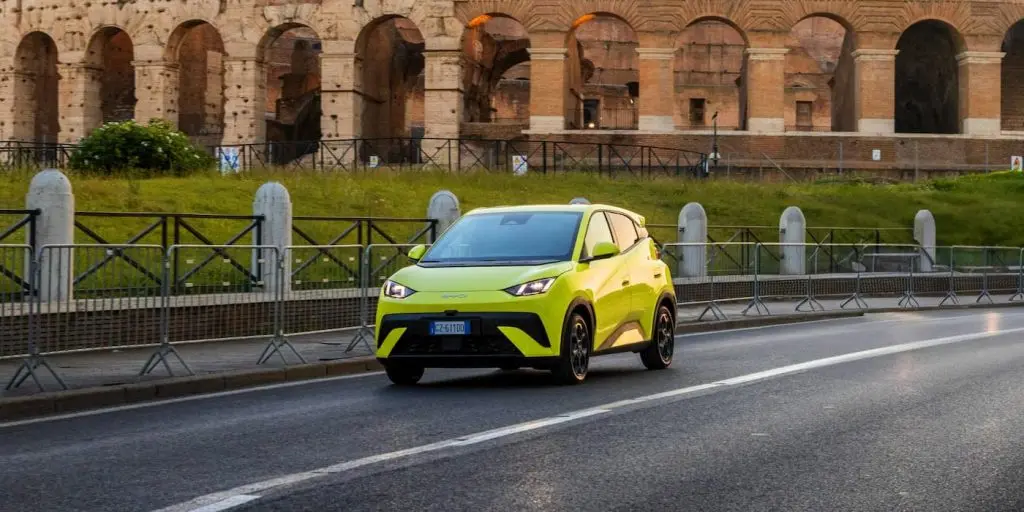
In May 2026, a Chinese brand with barely seven years of serious presence in Europe sold more cars than Citroën, a French marque with over a century of history. BYD registered 32,380 vehicles across Europe (EU, EFTA and the UK), against Citroën's 31,665. The gap is just 715 units, but the symbolism is huge: for the first time, a Chinese carmaker outsold a fully fledged European mainstream brand in a single month.
BYD outsold Citroën in Europe: the May numbers
This was no one-off fluke. BYD's May sales grew 136.6% year on year — more than double the volume of a year earlier. And Citroën didn't collapse: the Stellantis brand was actually up 11.7% for the year to date. It was simply overtaken by BYD's cruising speed.
In May's brand ranking, BYD landed 14th, ahead of Citroën (15th), SAIC/MG, Fiat, Tesla and Ford. The top of the table is worth a look to see the company BYD now keeps:
| Position | Brand | May 2026 sales |
|---|---|---|
| 11 | Opel/Vauxhall | 36,291 |
| 12 | Hyundai | 37,062 |
| 13 | Geely Group | 38,146 |
| 14 | BYD | 32,380 |
| 15 | Citroën | 31,665 |
| 16 | SAIC/MG | 30,527 |
| 17 | Fiat | 29,740 |
| 18 | Tesla | 28,610 |
| 19 | Chery | 27,412 |
| 20 | Ford | 25,290 |
The January-to-May running total confirms the trend. BYD racked up 135,307 units, a 145.2% jump from the 55,183 of the same period in 2025. No legacy brand grows at this pace — it's the number of a brand entering a market, not one defending it.
BYD vs Tesla: the duel that defines the EV market
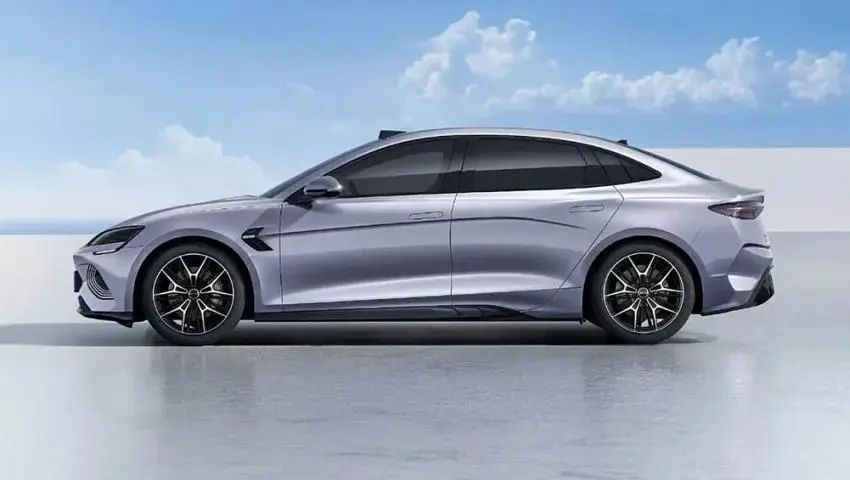
The most interesting clash isn't with Citroën — it's with Tesla. In May, BYD (32,380) outsold Tesla (28,610), even though Elon Musk's brand bounced back 107.9% from a very weak May 2025. Over five months, BYD holds 2.3% of the combined market against Tesla's 2.0%.
The difference in strategy explains a lot. Tesla sells only fully electric cars at a high average price. BYD covers far cheaper segments — its entry model, the Dolphin Surf, starts in the low €20,000s — and its totals include both pure electrics and plug-in hybrids, such as the Seal U DM-i. It's this top-to-bottom breadth that lets BYD reach buyers Tesla simply doesn't compete for.
One point matters for anyone following the topic: ACEA's figures lump together every fuel type. The Chinese totals are no longer a purely electric story. Part of the growth comes from hybrids and even combustion, especially at other Chinese brands.
Chinese car brands and a record market share in Europe
BYD isn't alone. In May, Chinese brands together sold 121,030 vehicles in Europe, up 97% year on year, hitting a record 10.7% market share — above April's 9.8%. More than one in ten new cars sold in Europe now wears a Chinese-owned badge.
Looking at the five largest Chinese-owned groups (SAIC, BYD, Geely, Chery and Leapmotor), the January-to-May total reached 619,353 cars, about 10.6% of the market. The individual growth rates are striking:
- Chery (Omoda, Jaecoo, Jetour): 122,843 units, +316% — much of it combustion and hybrid
- Leapmotor (sold through Stellantis): 43,037 units, +552.9%, though from a tiny base
- SAIC/MG: 141,490 units, +11.6% — still the biggest Chinese seller by volume
- Geely Group: 176,676 units, +6.5% — dominated by Volvo and Polestar, European-facing marques
On the other side of the ledger, several legacy brands lost ground even as the market grew. Ford fell 16.9%, Nissan 11.4%, the core Volkswagen brand slipped 4%, and the Renault Group dropped 5.4%. The total EU market rose about 4% year to date, with electrics doing the pulling: battery share climbed from 15.3% to 20% — one in five new cars.
Why BYD is growing so fast — and what it means in Portugal
Three factors explain the surge. First, price: the Chinese range enters from below, in segments where European brands no longer have an affordable answer. Second, supply: BYD has expanded its line-up and dealer network fast. Third, electrification: the heavy bet on EVs and plug-in hybrids catches exactly the part of the market that's growing.
There's a risk worth watching. Since October 2024 Brussels has applied anti-subsidy duties on EVs built in China, and is now weighing whether to extend the tariffs to hybrids. If that happens, the hit would land immediately on imported models — but it tends to fade as production shifts to Europe. BYD is already building a factory in Hungary, and AlixPartners forecasts Chinese brands reaching around 16% of European share by 2030.
For the Portugal-based buyer, the takeaway is practical. Chinese brands have stopped being a curiosity and become a real alternative, especially in the affordable-EV space. If you're considering an electric car under €30,000, it's worth putting BYD in the comparison — the same brand that, in May, outsold Citroën across all of Europe. The next thing to watch is the decision on hybrid tariffs, which could move prices as soon as 2026.
Frequently Asked Questions
BYD's range in Portugal starts with the entry-level Dolphin Surf in the low €20,000s and rises to sedans and SUVs such as the Seal and the Seal U DM-i. It is exactly this top-to-bottom price spread that let BYD register 32,380 cars across Europe in May 2026 and outsell Citroën. For an electric car under €30,000 it is worth requesting an up-to-date quote from a dealer, as prices vary by version, battery and current campaigns.
Chinese brands are no longer a curiosity: in May 2026 they sold 121,030 vehicles in Europe, a record 10.7% market share, meaning more than one in ten new cars. Brands like BYD offer long warranties, generous equipment and competitive prices, especially in the affordable EV segment. The main things to watch are the still-growing service network and resale value compared with established European brands.
BYD's volume is driven by its more affordable electric and plug-in hybrid models, led by the Dolphin Surf (entry level) and the Seal U DM-i, a plug-in hybrid SUV. This strategy of covering several segments with both BEV and PHEV powertrains explains the 145.2% jump in sales over January-May 2026, to 135,307 units.
In May 2026 Chinese brands collectively reached a record 10.7% of the European market, up from 9.8% in April. The five largest Chinese-owned groups (SAIC, BYD, Geely, Chery and Leapmotor) registered 619,353 cars over five months, around 10.6% of the market. Consultancy AlixPartners forecasts Chinese brands reaching roughly 16% European share by 2030.
Since October 2024 Brussels has applied anti-subsidy duties to electric cars built in China and is now studying extending tariffs to plug-in hybrids, which could raise the price of imported models in 2026. However, the impact tends to fade as production shifts to Europe: BYD is already building a factory in Hungary to supply the European market tariff-free.