
BYD Shark in Portugal: Price, Electric Range and Ford Ranger PHEV Rival
Published: 13/07/2026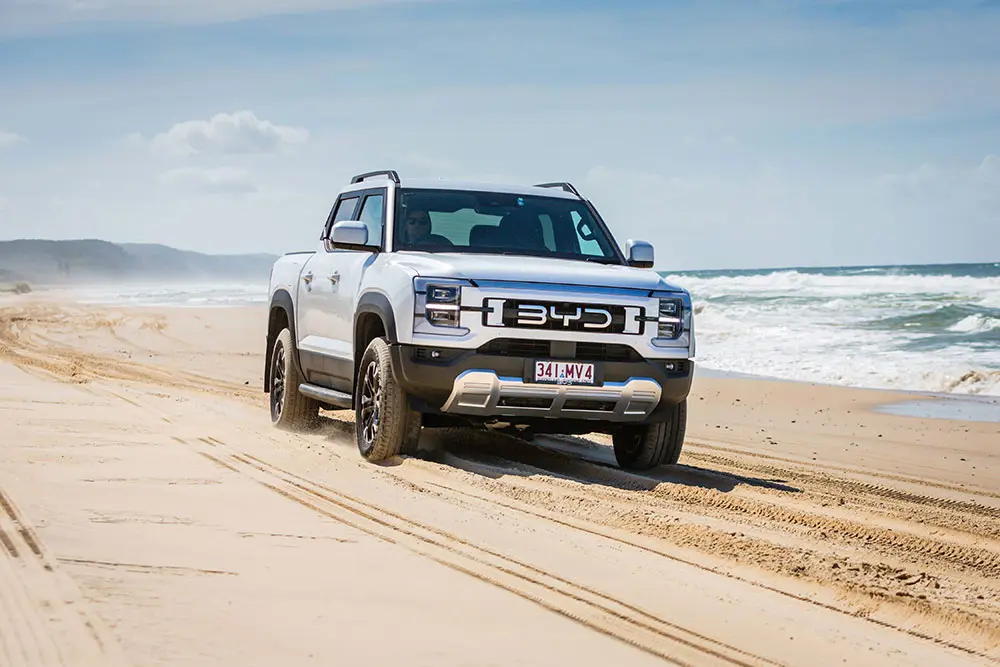
The BYD Shark lands in Europe — with 430 hp under the hood
A Chinese pickup that sprints from 0 to 100 km/h in 5.7 seconds, quicker than a Golf GTI. It sounds like marketing hyperbole, but that is exactly what BYD has just unveiled at the Goodwood Festival of Speed 2026. The BYD Shark has made its UK and European debut, arriving to take on the Ford Ranger PHEV and the Toyota Hilux head-on. There is no confirmed BYD Shark price for Portugal yet, but there is plenty to unpack — and good reasons for buyers here to pay attention.
After two years on sale in Mexico, Brazil, Australia and across Asia, this plug-in hybrid pickup is finally making the jump to Europe. And the version reaching us is the most loaded one in the range.
What the Super Hybrid DMO system actually does
The Shark is not an electric pickup. It is a plug-in hybrid built on BYD's DMO (Dual Mode Off-Road) platform, and the drivetrain is the most interesting part of the whole package.
At its centre sits a 1.5-litre turbocharged four-cylinder petrol engine (135 kW / 184 hp), paired with two electric motors — one on each axle, giving permanent all-wheel drive. The front motor delivers 170 kW and the rear one 150 kW. Add it all up and the Shark produces 430 hp (436 PS) and 650 Nm of torque. Hence that 5.7-second dash to 100 km/h.
The system works two ways. In parallel mode, the petrol engine and electric motors drive the truck together. In series mode, the combustion engine simply charges the battery while the electric side handles propulsion. In practice, it behaves like an EV until the battery runs low, then the petrol engine steps in.
BYD Shark electric range: 85 km on battery alone
Here is the strongest argument. The Blade LFP battery — the same lithium iron phosphate tech BYD uses in its EVs — holds around 30 kWh (BYD's UK material quotes 32.2 kWh; the spec sheet lists 29.58 kWh usable). That is good for up to 85 km in electric mode (56 miles WLTP).
What that means day to day: most city trips and commutes happen without burning a drop of petrol. If you drive around Lisbon or Porto during the week and only reach for petrol at weekends or on longer trips, the Shark could go weeks between fill-ups.
With a full tank and a full charge, combined range reaches 670 km (WLTP). Enough for a Lisbon-Faro-Lisbon run without stopping.
Charging is respectable for a hybrid, too. On a 55 kW DC fast charger, the battery goes from 30 to 80% in about 21 minutes. At home on an 11 kW wallbox, a full charge takes a little over three hours. And there is a genuinely useful bonus: the 6.6 kW V2L system turns the Shark into a giant power socket, running tools, camping gear or site equipment straight from the truck.
BYD Shark vs Ford Ranger PHEV: who wins
This is the comparison that matters, because the Ford Ranger PHEV is the direct target. The Shark wins clearly on power and electric range. The Ranger hits back where a pickup traditionally earns its keep: towing and payload.
| Specification | BYD Shark | Ford Ranger PHEV |
|---|---|---|
| Power | 430 hp | 275 hp |
| Electric range | 85 km (56 mi) | 43 km (27 mi) |
| Towing capacity | 2,500 kg | 3,500 kg |
| Payload | 790 kg | 1,000 kg |
| 0-100 km/h | 5.7 s | slower |
The takeaway is simple. If you want performance, tech and electric range, the Shark is ahead by a comfortable margin. If you regularly tow a heavy trailer or haul more than 800 kg in the bed, the Ranger still has the edge.
In the UK, that payload gap has a tax consequence. Because the Shark comes in at 790 kg — below the 1,000 kg that defines a commercial vehicle — it misses the VAT exemption the Ranger offers to businesses. In Portugal the tax lines are drawn differently (ISV vehicle tax, IUC road tax and the light-commercial classification all follow their own rules), so this point will need reassessing once the Shark is homologated locally.
BYD Shark specs: the numbers that count
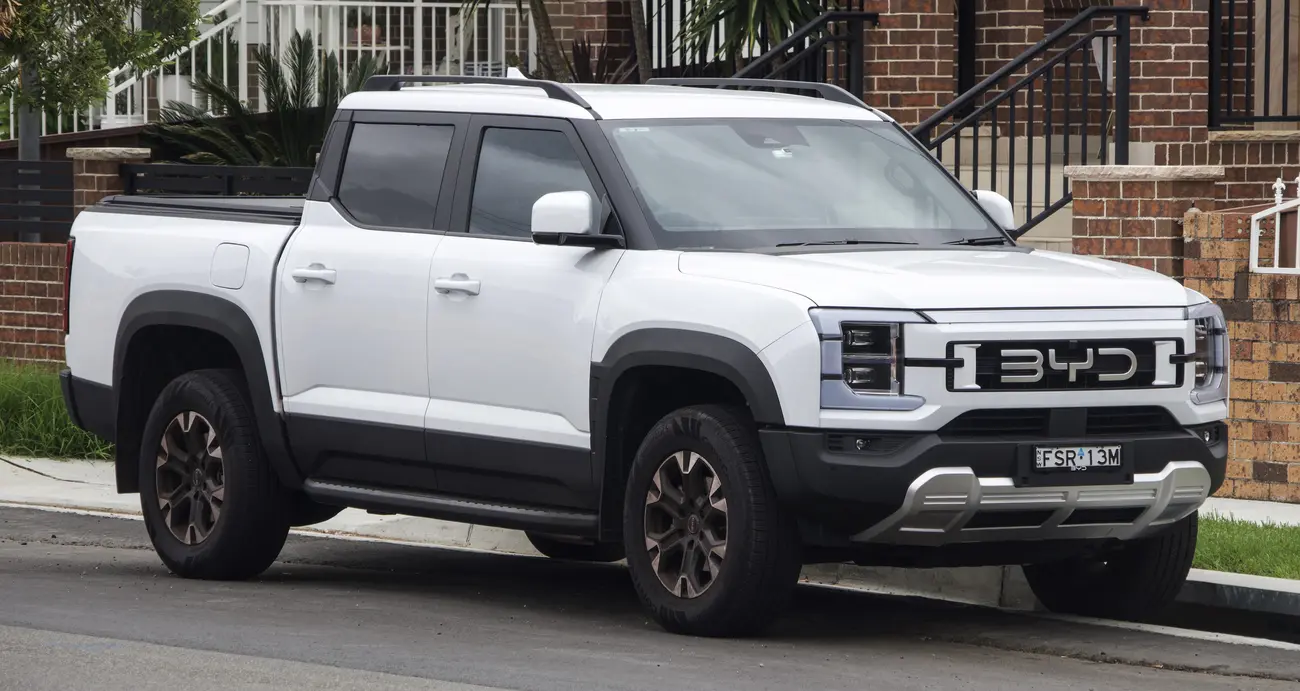
Beyond the hybrid system, the Shark is a mid-size pickup with real off-road credentials.
- Dimensions: 5,457 mm long, 1,971 mm wide, 1,925 mm tall, 3,260 mm wheelbase
- Load bay: 1,200 litres
- Angles: 31° approach and 19.3° departure, with 230 mm ground clearance
- Off-road modes: Sand, Mud, Snow and Gravel, plus hill descent control
- Interior: 15.6-inch rotating central touchscreen, 10.25-inch digital driver display, wireless Apple CarPlay and Android Auto, 360° camera, heated and ventilated front seats
- Safety: full 5-star ANCAP rating (2025)
This is no experiment. The Shark was named Ute and Car of the Year in Australia in 2025, and the 100,000th BYD sold there was a Shark 6. That global track record gives some reassurance to anyone hesitating over a brand still young in Portugal.
Frequently Asked Questions
There is no official Portuguese price yet. In the UK the Shark costs £47,290 including VAT (around $63,000), so a starting price above €50,000 in Portugal is a reasonable expectation. The final figure will depend on ISV vehicle tax, whether it is classed as a commercial or passenger vehicle, and BYD's local pricing strategy.
No official Portuguese date has been confirmed. The UK and European debut took place at the Goodwood Festival of Speed 2026, with orders open in the UK and deliveries expected in the final quarter of 2026. Since BYD already sells cars in Portugal and its dealer network is expanding, the Shark's arrival looks more a question of when than if.
The Shark manages up to 85 km on electric power alone (56 miles WLTP), thanks to its roughly 30 kWh Blade LFP battery. With a full tank and a full charge, combined range reaches 670 km WLTP. In practice, most city trips and commutes can be done without burning any petrol.
It depends on how you use it. The BYD Shark wins on power (430 hp versus 275 hp) and electric range (85 km versus 43 km), and it is noticeably quicker (0-100 km/h in 5.7 s). The Ford Ranger PHEV takes the lead on heavy-duty work, with greater towing capacity (3,500 kg versus 2,500 kg) and higher payload (1,000 kg versus 790 kg).
In the UK its 790 kg payload falls below the 1,000 kg threshold that defines a commercial vehicle, so the Shark misses the VAT exemption the Ranger offers to businesses. Portugal's rules are different — ISV vehicle tax, IUC road tax and light-commercial status follow their own criteria — so the tax treatment will only be clear once the Shark is homologated locally.
When the BYD Shark arrives in Portugal, and for how much
It is the obvious question, and the honest answer is: there is no official date or price for Portugal yet. The launch was British and European, with orders open in the UK and deliveries expected in the final quarter of 2026.
What we do know allows an estimate. In the UK, the Shark costs £47,290 including VAT (around $63,000). Converted and adjusted for the mainland European market, it is reasonable to expect a starting price above €50,000 in Portugal — the final figure will depend on ISV tax, whether it is classed as a commercial or passenger vehicle, and BYD's pricing strategy. BYD already sells cars in Portugal and its dealer network is growing, so the Shark's arrival looks more a question of when than if.
If you are shopping for a plug-in hybrid pickup in Portugal, it is worth waiting for the official pricing and homologation before deciding. Once confirmed local figures land, the comparison with the Ford Ranger PHEV — and the real cost of putting one on the road, taxes included — will come into much sharper focus.