
BYD Sealion 08 in Portugal: Price, Real-World Range and Full Specs
Published: 28/08/2026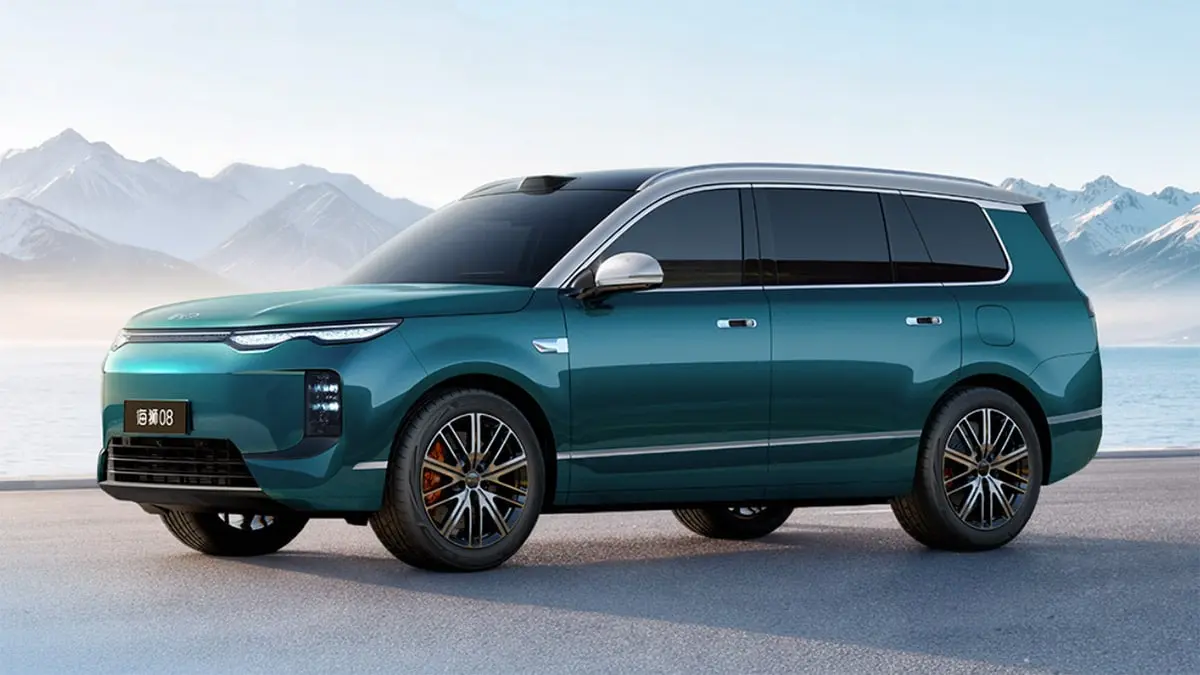
810 kilos of battery: BYD's new flagship SUV
BYD launches the Sealion 08 in China on 2 September 2026, and it takes over as the top model of the entire Ocean series. The long-range version carries a second-generation Blade battery of 115.072 kWh that weighs 810.5 kg on its own — 31.2% of what the car weighs at the kerb. Almost a third of this SUV is battery.
The headline number is a different one: 900 km of range. That figure comes from China's CLTC cycle, though, and that is exactly where any honest conversation about the BYD Sealion 08 price and range in Portugal has to start.
BYD Sealion 08 specs: three electric versions
The figures below come from the official Chinese MIIT filing published in June 2026 — not from the reveal-day estimates in Beijing, which pointed to a 130.5 kWh battery that never materialised.
| Version | Battery | Power | CLTC range | Kerb weight |
|---|---|---|---|---|
| Entry RWD | 92.093 kWh LFP (633 kg) | 320 kW (429 hp) | 710 km | 2,420 kg |
| Long-range RWD | 115.072 kWh LFP (810.5 kg) | 370 kW (496 hp) | 900 km | 2,595 kg |
| Dual-motor AWD | 115.072 kWh LFP | 215 kW front + 370 kW rear = 585 kW (784 hp) | 800 km | 2,710 kg |
The top version hits 100 km/h in roughly 5 seconds despite weighing close to three tonnes. Some outlets quoted 480 kW and 4.9 seconds at reveal time; the MIIT filing says 585 kW, and that is the number we trust.
Charging is the most spectacular chapter — and the one most dependent on infrastructure. BYD claims 10% to 97% in about 9 minutes using the flash-charging capability of the second-generation Blade battery, built into the structure via CTB (cell-to-body). That time assumes Chinese megawatt-class chargers. In Portugal, even at the fastest posts on the MOBI.E public network, the car will only charge as fast as the post allows — realistically somewhere near the 230 kW the Sealion 7 already accepts today.
Bigger than a Land Cruiser
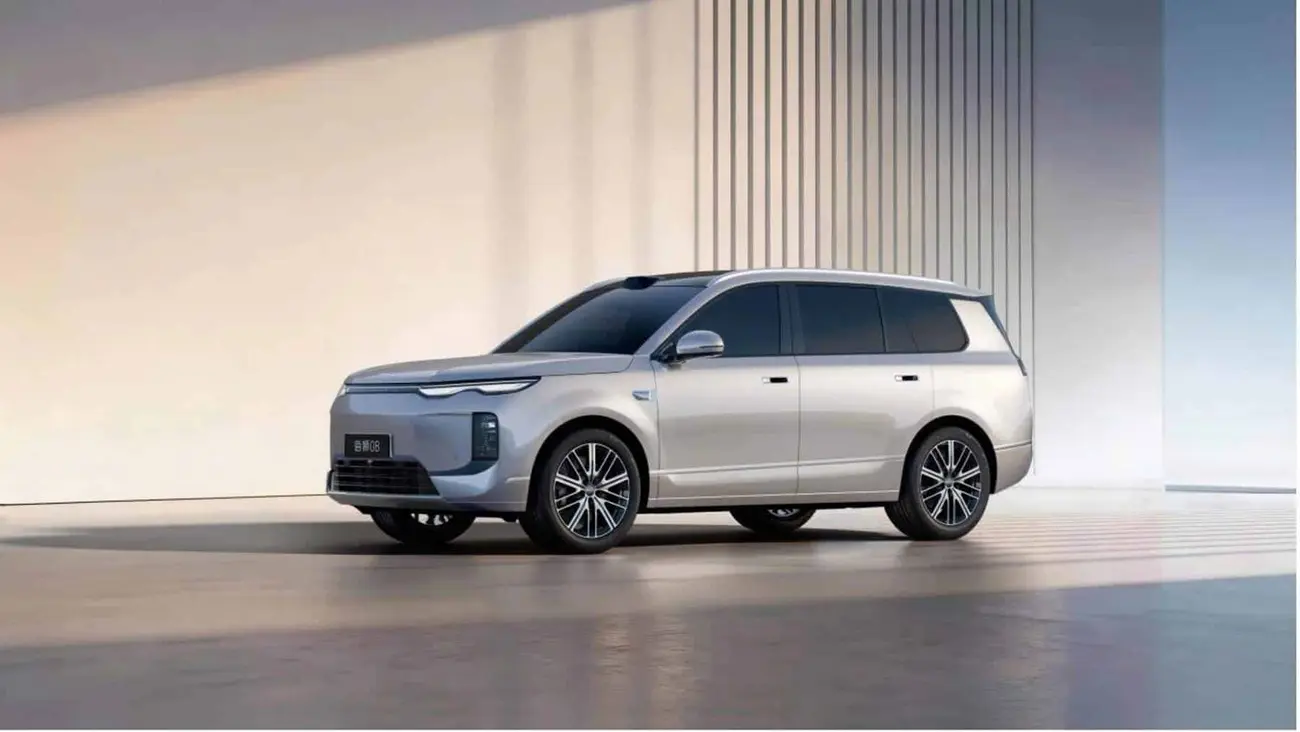
It measures 5,115 mm long, 1,999 mm wide and 1,800 mm tall, on a 3,030 mm wheelbase. That makes it longer than a Toyota Land Cruiser 300 and only just shorter than a Mercedes GLS. BYD is aiming at the BMW X7 and the Land Rover Defender 130.
In Portugal, those two metres of width matter in practice. A standard parking bay here is 2.3 metres wide, and underground garages in older Lisbon and Porto buildings are simply off the table for a car this size. This is a machine for someone with a private garage and a lot of motorway kilometres.
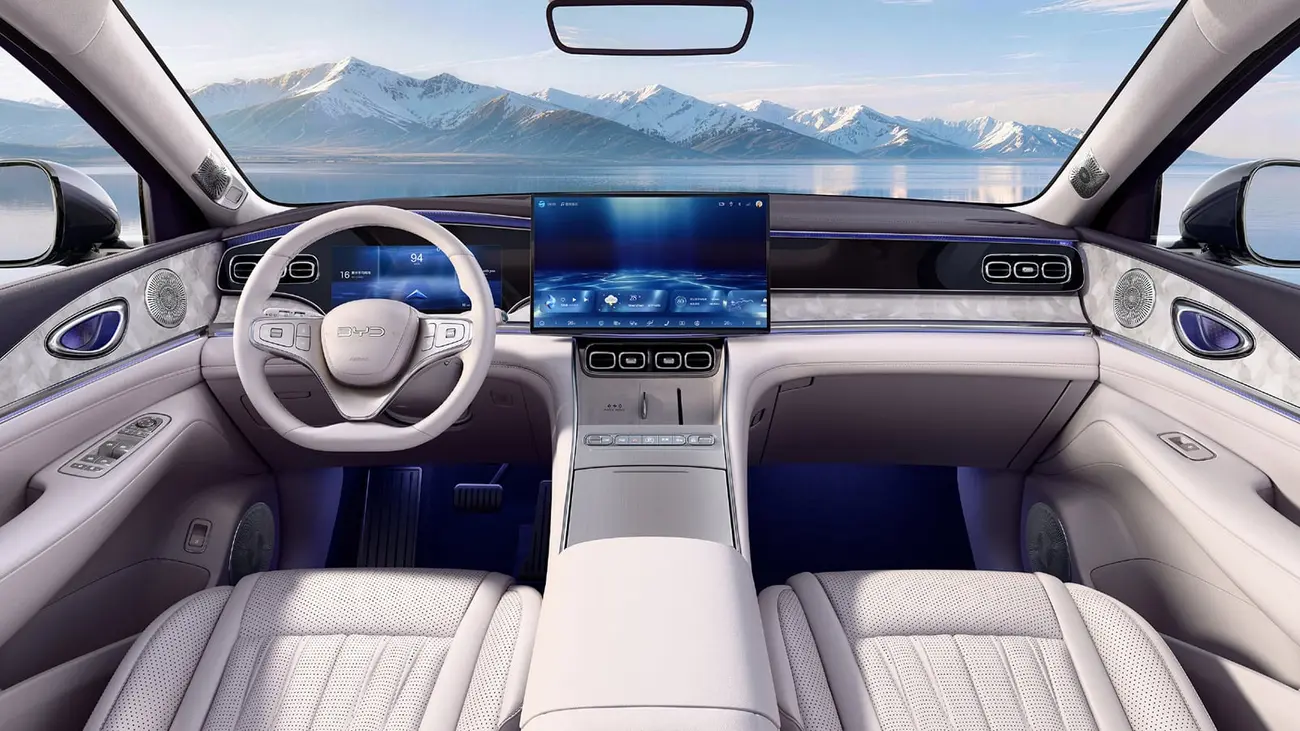
Inside, the equipment list runs long: a 15.6-inch rotating central screen, a second 21.4-inch screen in the roof, a 25-speaker Devialet audio system, an onboard fridge, a folding table, and second-row seats with ventilation, heating and massage. Layouts run from five to seven seats, including a six-seat version with zero-gravity chairs. The chassis gets DiSus-A dual-chamber air suspension, rear-wheel steering and a road-preview system. Driver assistance is God's Eye 5.0 / DiPilot 5.0, with LiDAR and assisted navigation on both urban roads and motorways.
Real-world range: what 900 km CLTC is worth in WLTP
There is no WLTP homologation for the Sealion 08. Every European figure you read today is a conversion, ours included.
The useful part is that this car gives us a rare internal yardstick. The plug-in hybrid version publishes both measurements for the same battery: 400 km on CLTC and 275 to 300 km on WLTC. In other words, the Chinese cycle inflates by 25% to 31% over the European one — same car, same year, same battery.
Apply that correction to the 900 km CLTC of the 115 kWh version and you land somewhere between 620 and 675 km WLTP. WLTP is optimistic in its own right: on a motorway at 120 km/h in winter, expect 20% to 25% below that. A sensible working number is around 500 km in summer and closer to 400 km in cold weather.
For a comparison you can actually buy here: the Sealion 7 with 91.3 kWh usable is rated at 502 km WLTP, and does roughly 500 km real in mild weather, 375 km in the cold. The Sealion 08 adds 24 kWh and gains range in proportion — no miracles.
The plug-in hybrid with 400 km of electric range
The Sealion 08 DM 5.0 pairs a 1.5-litre turbo petrol engine of 115 kW (154 hp) with a 200 kW (268 hp) electric motor. The DM-p variant uses two electric motors, 200 kW each, for 400 kW (536 hp) combined.
Electric range is the selling point: 400 km CLTC, or 275 to 300 km on WLTC. Even taking the more conservative European figure, that is more electric range than most full EVs sold in Portugal five years ago. For someone driving 40 km a day and one long trip a month, it is effectively an EV with a safety net.
The catch here is tax. Plug-in hybrids do not get the ISV exemption (ISV is Portugal's vehicle registration tax) that full EVs enjoy, and they pay the annual IUC road tax at the standard rate. A PHEV of this size and power risks a heavy ISV bill, which changes the maths completely against the battery-electric version.
Price: from yuan to euros
Chinese prices are already public, because pre-orders opened on 13 August:
| Version | China price | Approximate straight conversion |
|---|---|---|
| Plug-in hybrid | 230,000 – 260,000 yuan | EUR 27,500 – 31,100 |
| Battery electric | 250,000 – 280,000 yuan | EUR 29,900 – 33,500 |
Those are pure currency conversions, not European prices. No Chinese car arrives in Portugal anywhere near those numbers, for three reasons that stack: EU tariffs on electric vehicles built in China, 23% Portuguese VAT, and the cost of homologation, shipping and a dealer network.
The best gauge is the smaller sibling. The Sealion 7 costs EUR 58,990 in Germany and EUR 58,190 in the Netherlands, from a comparable Chinese sticker. In Portugal, BYD has advertised it from EUR 38,990 on campaign (a pre-VAT figure), with the Comfort trim around EUR 47,990 and the Excellence around EUR 56,490.
Extrapolating: if and when the Sealion 08 reaches us, the likely starting point is above EUR 60,000, with the 115 kWh dual-motor version closer to EUR 75,000. That is a reasoned estimate, not a price. BYD has announced nothing for Europe.
BYD Sealion 08 vs Sealion 7: wait or buy now?
| Sealion 08 (China) | Sealion 7 (Portugal) | |
|---|---|---|
| Battery | 92.093 / 115.072 kWh | 91.3 kWh usable |
| Range | 710 – 900 km CLTC (no WLTP) | 502 km WLTP |
| Max power | 585 kW (784 hp) | 390 kW (530 hp) |
| 0-100 km/h | about 5.0 s | 4.5 s |
| DC charging | 10-97% in 9 min (China) | 230 kW, 10-80% in 24 min |
| Length | 5,115 mm | 4,830 mm |
| Seats | 5 / 6 / 7 | 5 |
| Price | 250,000 yuan in China | from about EUR 47,990 |
| Available in Portugal | not announced | yes |
The read is straightforward. If you need seven seats and maximum range, the Sealion 08 is the right car — but you may be waiting two years, and you still do not know the price. If you need a large electric SUV this year, the Sealion 7 is in showrooms now, has a price, and already benefits from the ISV exemption and reduced IUC that Portugal grants electric cars.
When will the BYD Sealion 08 be available in Europe?
There is no date. Autoevolution reports the model is headed for European markets, but BYD has announced no timeline, no price and no European homologation. None of those three exists today.
The brand's own track record offers a clue. The Sealion 7 reached Germany and the Netherlands in December 2024 and the UK in February 2025, roughly a year after its Chinese launch. If the Sealion 08 follows the same rhythm, a European arrival points to late 2027 — and Portugal usually trails the larger markets by a few months.
There is also a chance it arrives wearing a different badge. In Australia, the possibility of it landing as a Denza — the group's premium brand — has already been raised, and that scenario makes sense for a five-metre SUV with air suspension and Devialet audio.
Frequently Asked Questions
No European price has been announced, so any figure is an estimate. In China the electric Sealion 08 costs between 250,000 and 280,000 yuan (roughly EUR 29,900 to 33,500 at a straight exchange rate), but that number does not survive the trip: EU tariffs on Chinese-built electric cars stack on top of 23% Portuguese VAT, homologation, shipping and dealer margin. The best benchmark is the Sealion 7, which starts from a similar Chinese sticker and sells for EUR 58,990 in Germany. On a conservative reading, a European Sealion 08 would start above EUR 60,000, with the 115 kWh dual-motor version closer to EUR 75,000.
The headline 900 km is on China's CLTC cycle and no WLTP homologation exists for this model, so the European figure is an estimate. BYD itself publishes both cycles for the plug-in hybrid version — 400 km CLTC against 275 to 300 km WLTC — pointing to a 25% to 31% gap. Applying that correction, the 115 kWh version should land between 620 and 675 km WLTP. In real use, at 120 km/h on the motorway and in cold weather, expect 20% to 25% less: around 500 km in summer and closer to 400 km in winter.
That figure is achievable in China, using the second-generation Blade battery, an 800-volt architecture and BYD's own megawatt-class chargers, which Europe does not yet have. In Portugal the fastest public DC chargers typically run between 150 and 350 kW, so real charging times will be considerably longer. As a practical reference, the Sealion 7 already sold here peaks at 230 kW and does 10 to 80% in 24 minutes. Until European homologation and infrastructure exist, treat the 9-minute claim as a technical demonstration rather than a daily-use promise.
Yes — 5, 6 and 7-seat layouts have all been cited, with the 6-seat version the most promoted, using individual zero-gravity second-row seats that are heated, ventilated and offer massage. The space is there: 5,115 mm long with a 3,030 mm wheelbase, longer than a Toyota Land Cruiser 300. The trade-off is the 1,999 mm width, almost two metres without mirrors, which makes it demanding in Portuguese garages and narrow streets. Which seating layouts BYD would offer in Europe is still unknown.
There is no announced date, price or European homologation — the only confirmation is the Chinese launch on 2 September 2026 and a stated intention to bring the model to European markets. The available estimate comes from BYD's own track record: the Sealion 7 reached Germany and the Netherlands about a year after its Chinese debut, and Portugal later still. At that pace, a European arrival would point to late 2027. There is also the possibility, already raised in other markets, that the car is sold under BYD's premium Denza brand.
What this launch says about 2026
The Sealion series sold 49,057 units in July 2026 alone, up 54.14% year on year, and has accumulated 227,415 units so far this year — 10.21% of everything BYD Group sells. BYD closed 2025 with 2.25 million battery-electric cars against Tesla's 1.63 million.
At that volume, the brand no longer needs to enter Europe on price. The Sealion 08 is a five-metre SUV with air suspension, rear-wheel steering and LiDAR as standard, aimed squarely at an X7. Watch the European price announcements over the coming months — that is where you will see whether BYD wants to compete with BMW or simply undercut it.