
BYD Seal 06 vs Tesla Model 3 price: 15 cm longer, half the money
Published: 22/08/2026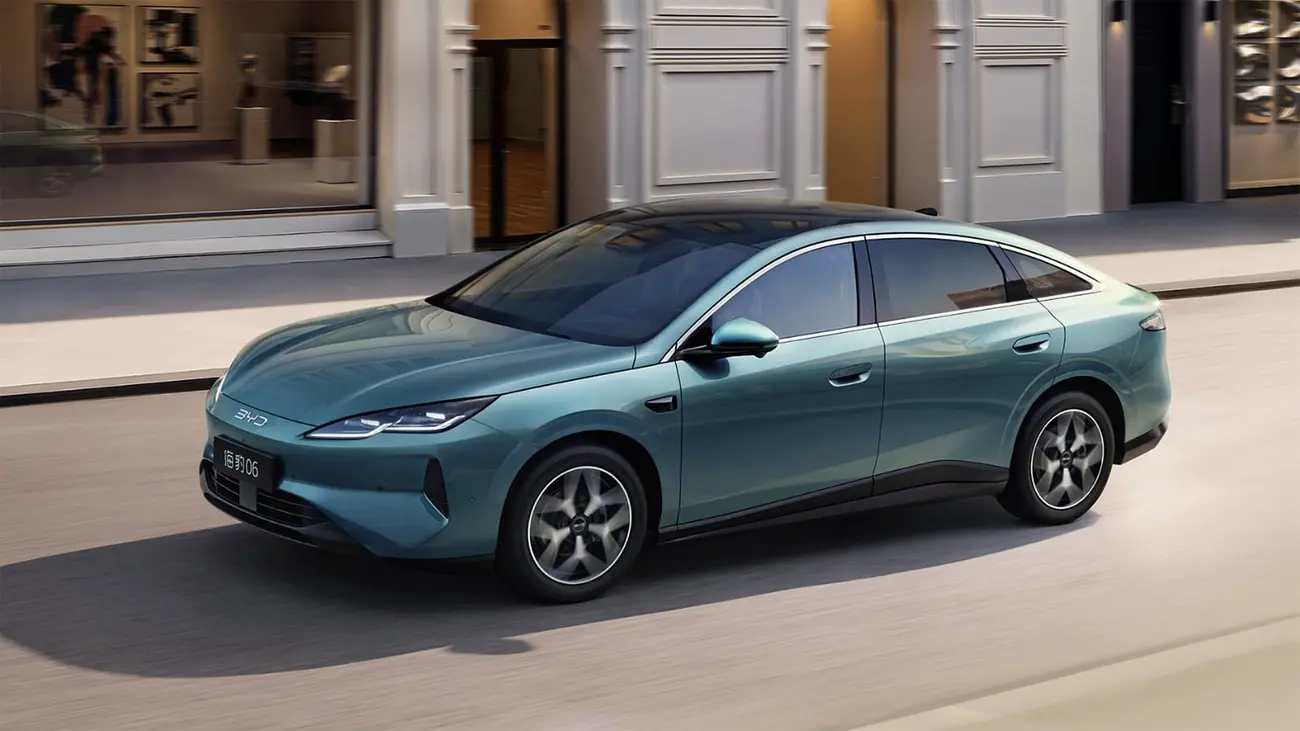
BYD Seal 06 vs Tesla Model 3 price: 15 cm longer, half the money
99,900 yuan. That's where BYD's new sedan starts — roughly €12,000 at the direct exchange rate — after its launch in Shenzhen on 11 August. A rear-wheel-drive Tesla Model 3 in China costs 235,500 yuan, about €30,200. And the Chinese car is the bigger of the two.
One clarification before going further, because the naming is a minefield: this Seal 06 (with the zero) is not the Seal 6 DM-i that BYD already sells in Portugal from around €43,990, nor the BYD Seal EV at roughly €45,400. Three different cars, near-identical names. The 2027-model-year Seal 06 is, for now, a China-only product.
The numbers side by side
| BYD Seal 06 EV | Tesla Model 3 RWD (China) | |
|---|---|---|
| Price (China) | 109,900 – 155,900 yuan (~€13,200 – 18,700) | 235,500 yuan (~€30,200) |
| Length | 4,870 mm | 4,720 mm |
| Width | 1,890 mm | 1,848 mm |
| Height | 1,495 mm | — |
| Wheelbase | 2,820 mm | — |
| Max range (CLTC) | 630 km | 634 km |
| Power | 120 kW or 240 kW (322 hp) | — |
| 0–100 km/h | 5.9 s | — |
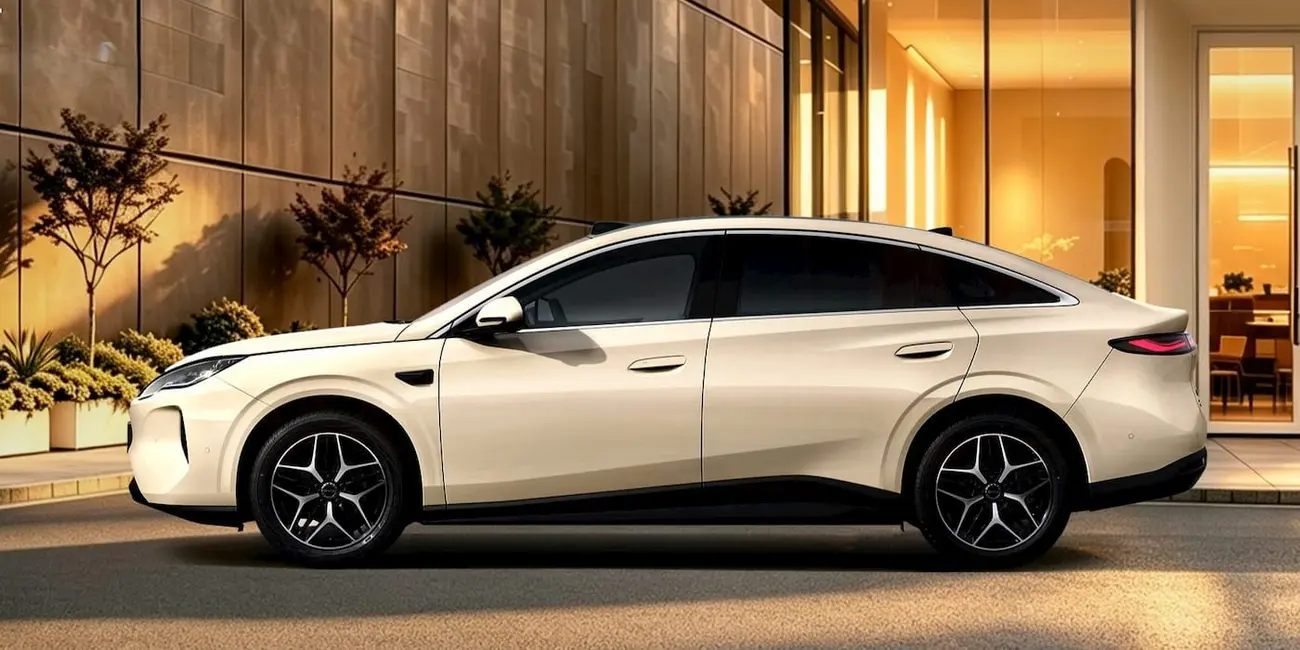
That's 150 mm more length and 42 mm more width than a Model 3. In a segment where rear knee room is the deciding factor for family buyers, it matters — and the wheelbase grew 30 mm over the outgoing Seal 06, to 2,820 mm.
BYD Seal 06 price: why the Chinese figures don't travel to Portugal
Here's the part most headlines skip. That €13,200 is a Chinese retail price, with local incentives, local labour and no border in between.
To reach Europe, an EV built in China currently pays around 27% in import duties — the standard 10% plus the EU's anti-subsidy tariffs applied to BYD. On top of that come importer margin, European type approval, 23% VAT and, for a pure EV, the one piece of good news: exemption from ISV, Portugal's vehicle registration tax. The DM-i plug-in hybrid gets no such exemption and pays ISV like any other PHEV.
Add it all up and you understand why the Seal 6 DM-i, which sells in China for money of the same order, starts at €43,990 in Portugal. A straight yuan-to-euro conversion is a statistical curiosity, not a price forecast.
BYD Seal 06 range: 630 km CLTC is not 630 km on the A1
China's homologation cycle, CLTC, is considerably more generous than Europe's WLTP. As a rough rule, a 630 km CLTC figure lands somewhere around 480–520 km on WLTP — and real-world motorway range in Portugal, at 120 km/h with the air conditioning running, sits lower still.
With that caveat in place, the spec sheet holds up well. The electric version uses second-generation Blade LFP batteries in two sizes, 52.868 kWh and 64.315 kWh, on an 800 V platform. Those give the two CLTC figures: 530 km and 630 km, up from 545 km on the previous generation. The single motor produces 120 kW in entry trims or 240 kW (322 hp) at the top, with 0–100 km/h in 5.9 seconds.
Charging is the headline act. On BYD's flash-charging stations the battery goes from 10% to 70% in 5 minutes, and 10% to 97% in 9 minutes. BYD has built 7,018 of those stations across 325 Chinese cities and is targeting 20,000 by the end of 2026, throwing in the first year of flash charging free for EV buyers. None of that transfers to Portugal: MOBI.E, the national charging network, and the ultra-rapid chargers on the motorways simply don't deliver the power those times require.
The DM-i version and 2,370 km on one tank
The plug-in hybrid is, oddly, the cheaper of the two: 99,900 to 141,900 yuan. It runs BYD's fifth-generation DM system, pairing a 1.5-litre naturally aspirated engine of 74 kW with an EHS hybrid transmission and an electric motor of either 120 kW (161 hp) or 175 kW (235 hp).
Batteries measure 25.287 kWh or 34.275 kWh, good for 230 or 320 km of electric-only CLTC range — enough, even after discounting for real-world use, to cover a full week of city commuting without burning fuel. With the battery depleted, quoted consumption is 2.59 l/100 km, and with the 65-litre tank full the combined range reaches 2,370 km. That's Lisbon to Faro and back several times over without stopping for fuel.
LiDAR on a €15,000 car
What separates the 2027 Seal 06 from the car it replaces isn't the price — it's the kit. Higher trims get God's Eye B with a roof-mounted LiDAR, supporting navigation-guided assisted driving in the city (CNOA) and on the motorway (HNOA), plus automatic parking, automated valet parking and remote parking. It's the first time BYD has put a LiDAR-based system in a family sedan at this price, and the company accepts liability for accidents that occur during smart parking and urban navigation-guided driving.
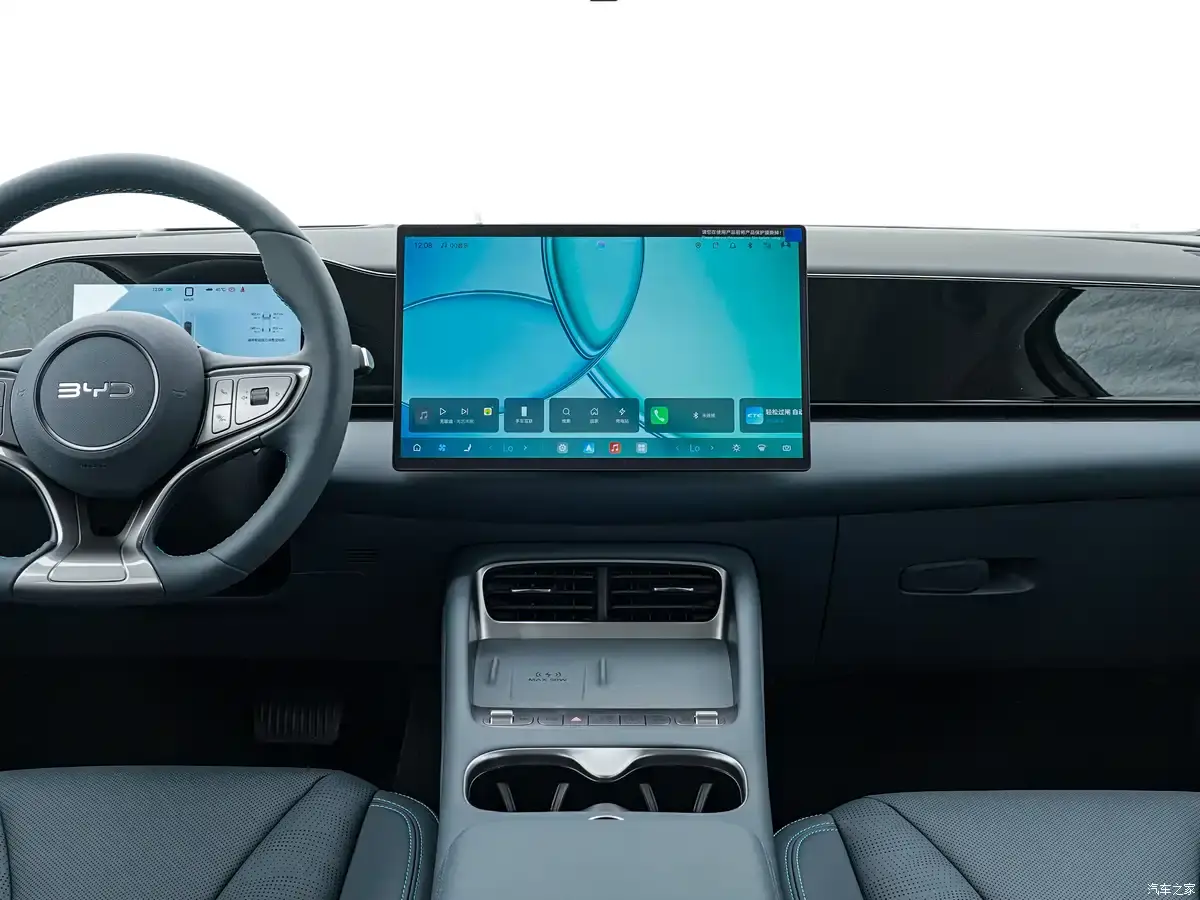
Inside there's a 15.6-inch rotating central screen, an 8.8-inch digital cluster and a head-up display on top trims. The DiLink 150 system runs DeepSeek's language model for continuous voice commands with four-zone recognition. Suspension is MacPherson at the front and a five-link setup at the rear, with DiSus-C electromagnetic damping on the best-equipped versions. Ground clearance is 135 mm.
One detail the sources don't agree on: where the motor sits. Some outlets report a front motor, others don't specify, and the previous Seal 06 EV was rear-wheel drive. Treat it as unconfirmed.
Will the BYD Seal 06 come to Portugal?
No European launch has been announced. No date, no price, no confirmation the model is coming at all.
What does exist is favourable context. BYD wants to double its European retail network by the end of 2026, from around 1,000 to 2,000 outlets across 29 markets, after European sales tripled in 2025 to 80,807 units in the first nine months alone. The Szeged plant in Hungary began trial production in the first quarter of 2026 and is targeting series production in the second, with a planned maximum capacity of 300,000 vehicles a year and investment reported at up to €4 billion. A Turkish plant is also in play, and multiple reports say it will focus on plug-in hybrids — the Seal 05 and Seal 06 among them.
Building in Europe is the only way around the 27% tariff wall. If the Seal 06 ever leaves Szeged or Turkey rather than Shenzhen, the pricing conversation changes entirely — though it still won't be a €13,000 conversation.
Frequently Asked Questions
They are three different cars with almost identical names. The BYD Seal is the all-electric saloon already sold in Portugal from around 45,400 euros, while the Seal 6 DM-i is the plug-in hybrid (saloon and Touring) available from around 43,990 euros. The Seal 06 (spelled with a zero), unveiled in Shenzhen on 11 August 2026 as a 2027 model year car, is a China-only model sold in 12 EV and DM-i variants and is not offered in Europe.
There is no Portuguese price because the car is not sold here. In China the EV version costs between 109,900 and 155,900 yuan (roughly 13,200 to 18,700 euros at the direct exchange rate) and the DM-i between 99,900 and 141,900 yuan (roughly 12,000 to 17,000 euros), but those figures do not transfer: a China-built EV currently faces about 27% in EU import duties, on top of European type approval, importer margin and 23% VAT (EVs are exempt from Portugal's ISV registration tax, plug-in hybrids are not). For perspective, the Seal 6 DM-i has Chinese prices in the same ballpark and starts at 43,990 euros in Portugal.
The advertised 530 km and 630 km figures come from China's CLTC cycle, which is markedly more optimistic than Europe's WLTP. In practice, 630 km CLTC translates to roughly 480 to 520 km WLTP, and real motorway range in Portugal at 120 km/h with climate control running falls below that. The second-generation LFP Blade batteries hold 52.868 kWh or 64.315 kWh on an 800 V platform, which allows a 10% to 70% charge in five minutes at BYD's flash-charging stations in China.
Yes. The Seal 06 measures 4,870 mm long, 1,890 mm wide and 1,495 mm tall, against 4,720 x 1,848 mm for the Tesla Model 3 — that is 150 mm more length and 42 mm more width. Its wheelbase grew 30 mm over the previous generation to 2,820 mm, which mostly benefits rear passenger space. On maximum range the two are effectively level on the CLTC cycle: 630 km for the BYD and 634 km for the rear-wheel-drive Model 3.
No European launch has been announced — no date, no price, and no confirmation that the model will arrive at all. The industrial context is favourable: BYD's Szeged plant in Hungary began trial production in the first quarter of 2026 with series production due in the second and planned capacity of up to 300,000 units a year, while the Turkish plant is expected to focus on plug-in hybrids. Building in Europe is the only way around the 27% tariffs, but even then a Portuguese price would never come close to the Chinese figures.
What this means if you're buying in Portugal
Nothing immediate. The Seal 06 isn't on sale here and nobody has promised it will be.
What it does show is how fast this segment is moving. A sedan longer than a Model 3, on an 800 V platform, charging 10–70% in five minutes and with LiDAR-based driver assistance at the top of the range, sold in China for less than a fifth of what an equivalent EV costs in Portugal. Some of that gap is structural — taxes, tariffs, logistics — and it isn't going anywhere. The rest is technology and industrial scale that does eventually arrive here, two or three years later and at a very different sticker price.
For now, the real BYD electric sedans in Portugal are the Seal 6 DM-i and the BYD Seal. What comes out of Szeged over the next few months is the thing worth watching.