
BMW iX5 Electric in Portugal: The 148 kWh Mega-Battery Explained
Published: 18/06/2026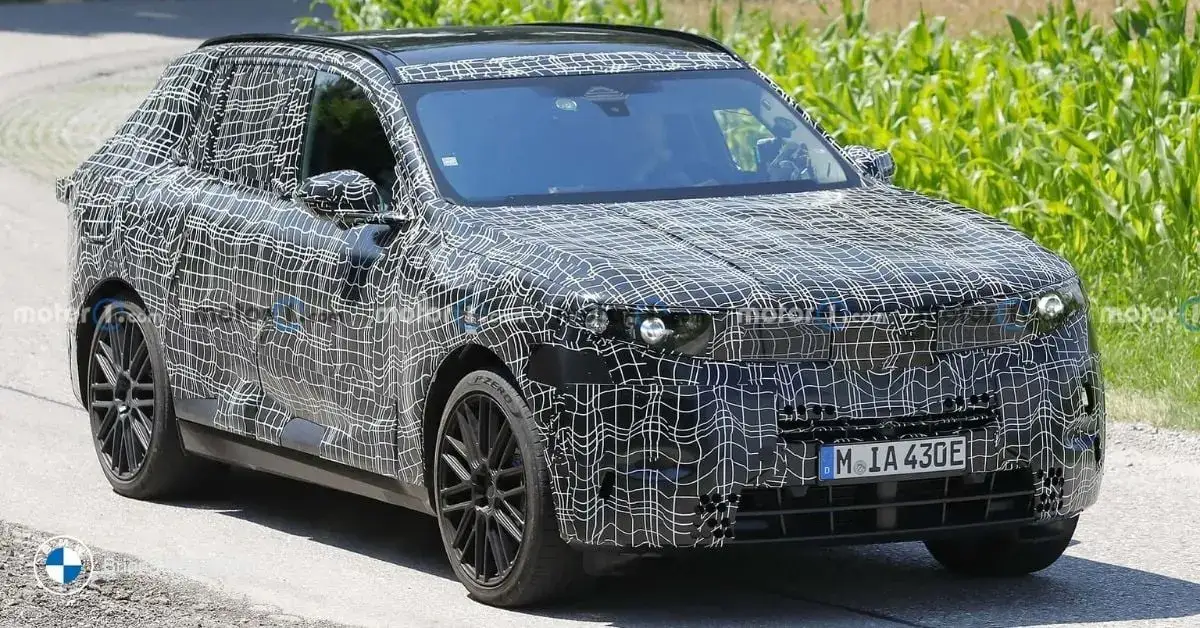
BMW's biggest-ever battery is going into an X5
Around 148 kWh gross. That is the size of the battery BMW is putting inside the iX5, the first fully electric version of the X5. To grasp the scale: the largest pack the brand had fitted to a production car until now sat well below this figure. What arrives is a big SUV, all-wheel drive, nearly 580 horsepower, built to cover hundreds of kilometres without stopping.
The fully electric BMW iX5 has entered its final test phase at BMW's Spartanburg plant in South Carolina, confirmed officially by BMW on 15 June 2026. But one question hangs over the project: is a battery this large actually worth it? More capacity means more weight, more cost, and in some European markets, exposure to weight-based vehicle taxes. Let's take it step by step.
What we know about the iX5 60 xDrive specs
The launch version is called the iX5 60 xDrive, and it's the only one confirmed for 2027. These are the official figures BMW has released — notice that range isn't on the list yet, and we'll get to why.
| Specification | Value |
|---|---|
| Usable battery (Europe) | 141 kWh net |
| Usable battery (US) | 144 kWh |
| Gross battery | around 147.8 kWh |
| Cell type | cylindrical |
| Electrical architecture | 800V |
| eDrive generation | sixth (Gen6) |
| Power | 425 kW / 578 hp |
| Front motor | asynchronous, 184 kW |
| Rear motor | electrically excited synchronous, 240 kW |
| Torque | 594 lb-ft |
| 0-100 km/h | around 4.7 s |
| Drivetrain | dual-motor xDrive AWD |
| Peak DC charging | 350 to 400 kW |
| 10-80% charge | around 25 min |
| Platform | evolved CLAR (not the Neue Klasse platform) |
Two different motors work together: a 184 kW asynchronous unit up front and a 240 kW electrically excited synchronous unit at the rear. That combination delivers xDrive all-wheel drive and a 0-100 km/h sprint of around 4.7 seconds — sports-car pace in a family SUV.
The 800V architecture is the detail that matters most in daily life. With charging peaks between 350 and 400 kW, BMW says going from 10% to 80% takes about 25 minutes. In practice, that's a coffee and a quick break at a motorway service area on the A1.
The XXL battery and range: what the estimates say
Here honesty matters: the BMW iX5 range has not been confirmed. BMW has published no official WLTP figure, and consumption data is still pending while the car finishes testing. Everything circulating right now is estimate and leak, not fact.
Estimates point to somewhere between 870 and 1,000 km on the WLTP cycle according to French sources, or "over 500 miles" (roughly 800 km) in US references. Attractive numbers, but not facts — treat them that way until BMW confirms them.
For a realistic sense, the best reference is the smaller sibling. The iX3, with a battery of around 108.7 kWh, already certifies up to 805 km WLTP and completed a real-world 1,000 km drive from Munich to Debrecen without stopping to charge. If a smaller pack can do that, an iX5 with nearly 148 kWh should go further — but not in the same proportion, because the X5 is bigger, heavier and less aerodynamic.
And that is exactly what raises questions. A battery this size adds significant weight and cost. The question worth asking before buying: do you really need 900 km of range, or would a smaller, cheaper pack cover your daily reality?
iX5 vs iX3: which one makes more sense?
If range is your absolute priority, the iX5 will be BMW's flagship. But the iX3 already offers a number that covers almost any use case in Portugal.
| BMW iX3 50 xDrive | BMW iX5 60 xDrive | |
|---|---|---|
| Battery | around 108.7 kWh | 141 kWh (Europe) |
| Range | up to 805 km WLTP | estimated, not yet confirmed |
| Architecture | 800V, Gen6 | 800V, Gen6 |
| Platform | Neue Klasse (dedicated EV) | evolved CLAR |
| Positioning | premium electric SUV | flagship large SUV |
There's an interesting technical difference. The iX3 is built on the Neue Klasse platform, designed for electric cars. The iX5 uses an evolved version of the CLAR platform, the same one that underpins the combustion versions. That lets BMW build electric, hybrid, petrol, diesel and even hydrogen on the same line — the X5 will be the brand's first model offered with five powertrains.
BMW iX5 price in Portugal: what to expect
The BMW iX5 price in Portugal has not been announced. There is no official European figure, and any number you see floating around is speculation. What we do know is the US starting point: roughly 75,000 to 80,000 dollars.
To frame it for the Portuguese market, it's worth looking at the iX3, which starts at 73,925 euros in Germany. Since the iX5 is bigger, more powerful and carries a much larger battery, it's reasonable to expect it to land above that in Europe. But again, that's our read, not a confirmed price.
The good news for EV buyers in Portugal remains fiscal: fully electric vehicles get ISV (the vehicle registration tax) exemption and reduced IUC (the annual road tax), plus company-car advantages. On a car in this segment, the tax saving is not a minor detail.
Frequently Asked Questions
The BMW iX5 price in Portugal has not been announced and there is no official European figure yet — any number circulating is speculation. As a reference, the iX3 starts at 73,925 euros in Germany and the iX5's US starting point is around 75,000 to 80,000 dollars, so it is reasonable to expect the iX5 to land above the iX3 in Europe given its larger size, more power and much bigger battery. In Portugal, being fully electric, it qualifies for ISV (registration tax) exemption and reduced IUC (annual road tax), which helps offset the list price in this segment.
The BMW iX5 range has not been confirmed — BMW has published no official WLTP figure while the car finishes testing, so the numbers circulating are only estimates and leaks. Estimates point to between 870 and 1,000 km on the WLTP cycle according to French sources, or around 800 km ("over 500 miles") in US references. For context, the iX3 with around 108.7 kWh already certifies up to 805 km WLTP, so a pack of nearly 148 kWh should go further — though not in the same proportion, because the X5 is bigger, heavier and less aerodynamic.
It depends on your priority. The iX5 60 xDrive will be the flagship, with BMW's biggest-ever battery (141 kWh net in Europe), 425 kW/578 hp and xDrive AWD — ideal for buyers who want maximum range and performance. The iX3 50 xDrive, with around 108.7 kWh and up to 805 km WLTP, already covers almost any use case in Portugal at a more accessible price. There is also a technical difference: the iX3 is built on the dedicated Neue Klasse EV platform, while the iX5 uses an evolved version of the CLAR platform.
BMW should reveal the iX5 at the end of summer 2026, with production starting at Spartanburg (South Carolina) later in 2026 and sales as a 2027 model. In Europe, arrival is expected in early 2027. The launch begins with the iX5 60 xDrive only, the big-battery version, with an entry-level iX5 50 xDrive expected later, likely with a smaller battery and a more accessible price. No iX5 M is planned.
This is the central question of the project. A battery of nearly 148 kWh promises record range, but it adds significant weight and cost and, in some European markets, exposure to weight-based vehicle taxes. Before buying, it is worth asking whether you really need an estimated 900 km of range, or whether a smaller, cheaper pack — like the iX3's, with up to 805 km WLTP — would cover your daily reality. The entry-level iX5 50 xDrive expected later may be the smarter choice for many buyers.
When the iX5 arrives in Portugal
BMW should reveal the car at the end of summer 2026, with production starting at Spartanburg later in 2026 and sales as a 2027 model. In Europe, arrival is expected in early 2027.
The launch begins with the iX5 60 xDrive only, the big-battery version. An entry-level iX5 50 xDrive should follow later, likely with a smaller battery and a more accessible price — possibly the smarter choice for many buyers. No iX5 M is planned.
For now, the key takeaway: the battery and power are official, but the range and the European price are not. It's worth following BMW's next announcements before drawing conclusions — and before deciding whether the iX5's mega-battery is worth it for you.