
BMW i7 Gets Rimac Gen6 Battery: What It Means for Buyers in Portugal
Published: 10/04/2026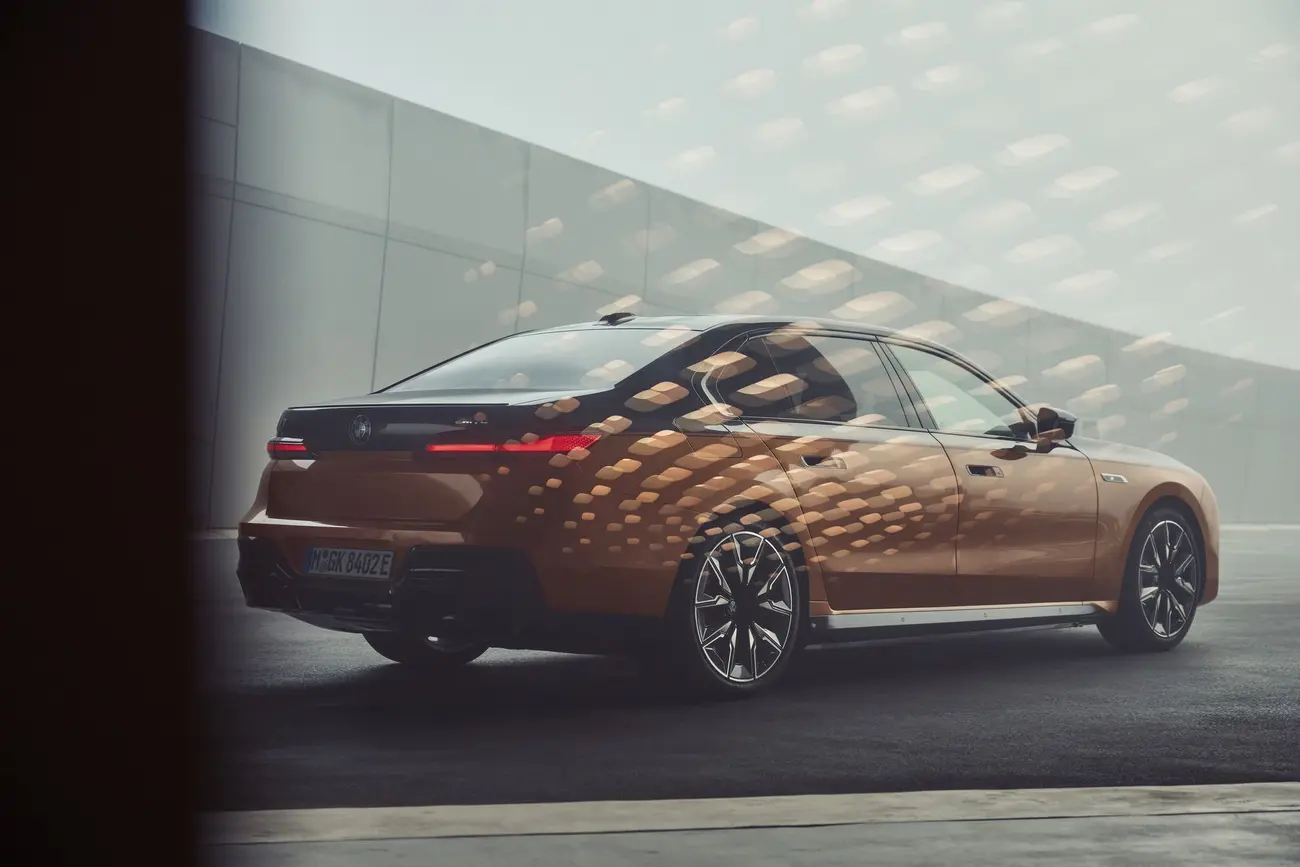
Why BMW called Rimac for help
When BMW and Rimac Technology announced their partnership in 2024, it raised eyebrows. What most people didn't know is that the two had been working together in secret since 2022. Five years of joint development later, the result makes its world debut on April 22, 2026 at Auto China in Beijing: the new BMW i7 facelift becomes the group's first flagship sedan to use the Gen6 batteries co-developed with the Croatians.
Rimac isn't a battery supplier with a long track record — it went from building hypercars to running one of Europe's most ambitious battery industrial projects. Mate Rimac himself calls it "likely the largest industrial project in Croatia's history". For anyone looking at a BMW i7 Rimac battery in Portugal, the point is simpler: the facelifted car charges faster and goes further than today's i7, without waiting for the full Neue Klasse generation to arrive.
What changes inside the Gen6 battery
The core of the story is the 4695 cylindrical cell — 46 mm in diameter, 95 mm tall. It's the same format BMW adopted for the entire Neue Klasse platform. Against the prismatic Gen5 cells in the current i7, BMW claims a 20% gain in volumetric energy density. Plain translation: more energy fits in the same space.
The clever bit is the hybrid architecture. BMW didn't rebuild the i7 from scratch. Instead, it combined the Gen6 cell chemistry with the existing Gen5 module housing. The car keeps most of its current drivetrain and only swaps in the part where the jump is most obvious — the battery itself. That's how BMW brings Neue Klasse tech to the 7 Series without waiting for a brand-new platform.
New BMW i7 range and charging: what to expect
BMW is holding back final figures until the Beijing reveal. We do have solid reference points from the current i7 to frame the jump:
| Spec | Current BMW i7 | BMW i7 2026 (expected) |
|---|---|---|
| WLTP range (max) | Up to 623 km (387 miles) | "Significantly" higher |
| Peak DC charging | 195 kW | "Much faster" |
| 10-80% DC charge | 34 minutes | TBC |
| Range added in 10 min | ~170 km | TBC |
| Cell format | Prismatic Gen5 | 4695 cylindrical Gen6 |
| Energy density | Baseline | +20% volumetric |
For context, pure Neue Klasse models like the iX3 50 xDrive hit up to 805 km WLTP and 400 kW peak charging. The facelifted i7 likely won't match those numbers because of its hybrid architecture, but the gap versus the current car will be clear — especially in time spent plugged in. For a Lisbon-Porto run, strategic charging stops start to disappear: grab a coffee, get back in the car, keep driving.
Where these batteries are actually built
The cells and modules come from the Rimac Campus near Zagreb, a 90,000 square metre facility. The i7 production line alone cost 130 million euros — more than the entire Rimac Campus, which was built for 120 million. Capacity is set at roughly 300,000 modules and 50,000 complete battery systems per year.
Finished packs then travel to BMW's Dingolfing plant in Germany, which remains the only factory worldwide building the 7 Series. The i7 that ends up on Portuguese roads is technically a tri-national car: Croatian chemistry, German assembly, southern European destination.
Frequently Asked Questions
The facelifted BMW i7 has its world premiere on April 22, 2026 at Auto China in Beijing. Based on BMW's typical rollout pattern, European deliveries usually start four to six months after reveal, so expect the new i7 in Portuguese dealerships during the second half of 2026.
BMW has not confirmed official facelift pricing yet. For reference, the current i7 starts around 140,000€ for the eDrive50 and climbs past 170,000€ for the M70 xDrive. The new model is expected to stay in the same range, with minor adjustments depending on equipment, and benefits from Portugal's ISV tax exemption for pure electric vehicles.
BMW describes the new i7's range as "significantly" higher than the current car's 623 km WLTP, thanks to 4695 cylindrical Gen6 cells that deliver a 20% gain in volumetric energy density. Final figures will only be revealed in Beijing on April 22, but for context pure Neue Klasse models like the iX3 50 xDrive reach up to 805 km WLTP.
BMW and Rimac Technology have been working together since 2022 in a five-year joint development programme that now culminates in the i7. The dedicated production line at Rimac Campus near Zagreb cost 130 million euros and can produce 50,000 battery systems per year. Mate Rimac himself calls it "likely the largest industrial project in Croatia's history".
The EQS is currently the benchmark in the luxury electric sedan segment, but the facelifted i7 with Rimac batteries is expected to move ahead on both range and DC charging speed, the two metrics that matter most to premium EV buyers. Both cars qualify for Portugal's ISV exemption and can use the MOBI.E network of 150-350 kW fast chargers along the main motorways.
What this means for a Portuguese buyer
The i7 sits in a segment with few real rivals — Mercedes EQS, Audi's forthcoming electric A8, and a long-wheelbase Porsche Taycan at a stretch. None of them currently offer a clear combination of both class-leading range and genuinely fast charging. If BMW delivers the numbers the Rimac partnership implies, the facelifted i7 moves ahead of the EQS on the two metrics that matter most to this kind of buyer.
On the tax side, Portugal stays friendly to EVs: ISV (the one-off vehicle tax) is waived for pure electrics, annual IUC road tax is low, and company car benefits are significant. For a car in this price bracket, the cumulative saving versus a diesel or hybrid 7 Series is what often makes the i7 affordable in the first place. The MOBI.E network of 150-350 kW fast chargers along the A1, A2 and A25 motorways handles the rest.
When does the new BMW i7 arrive in Portugal
The world premiere is set for April 22, 2026 in Beijing, alongside the combustion 7 Series facelift. Going by BMW's usual rollout pattern, the first European deliveries land four to six months after reveal — so expect to see the facelifted i7 on Portuguese roads in the second half of 2026. Official pricing hasn't been confirmed. The current i7 starts around 140,000€ in Portugal for the eDrive50 and climbs past 170,000€ for the M70 xDrive. The facelift should sit in the same zone, with minor adjustments depending on equipment.
One practical note: the ALPINA i7 is expected to use the same battery, and the i5 facelift should also benefit from the Rimac partnership. Anyone comparing options in the premium electric sedan segment in Portugal should wait for the official Beijing figures before signing anything — the numbers BMW reveals will reset what a flagship electric sedan is expected to deliver in 2026.