
BMW i4 Convertible Portugal: What We Know About the 2028 EV Drop-Top
Published: 30/07/2026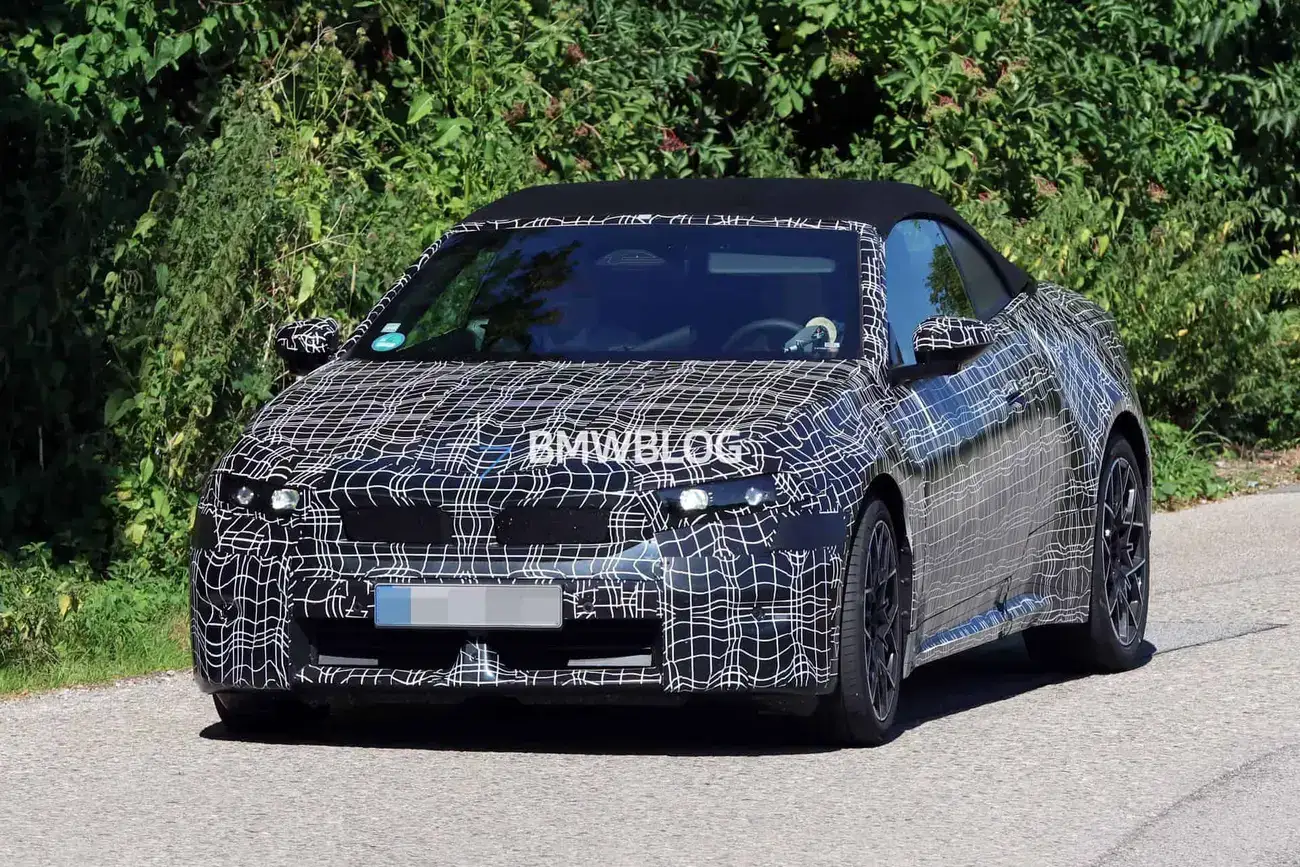
BMW i4 Convertible Portugal: what we know about the electric drop-top coming in 2028
Camouflaged prototypes, caught testing on public roads. That's how the BMW i4 Convertible story broke — a model the German brand hasn't officially confirmed, yet several outlets have already photographed in active testing. Internally it's known as NA3, it rides on the Neue Klasse platform shared with the new i3 sedan, and it's expected to land around 2028.
Worth flagging upfront: everything below comes from spy shots and sources close to BMW, not an official announcement. Treat the numbers as projections, not a locked spec sheet.
A real convertible, not a folding hardtop
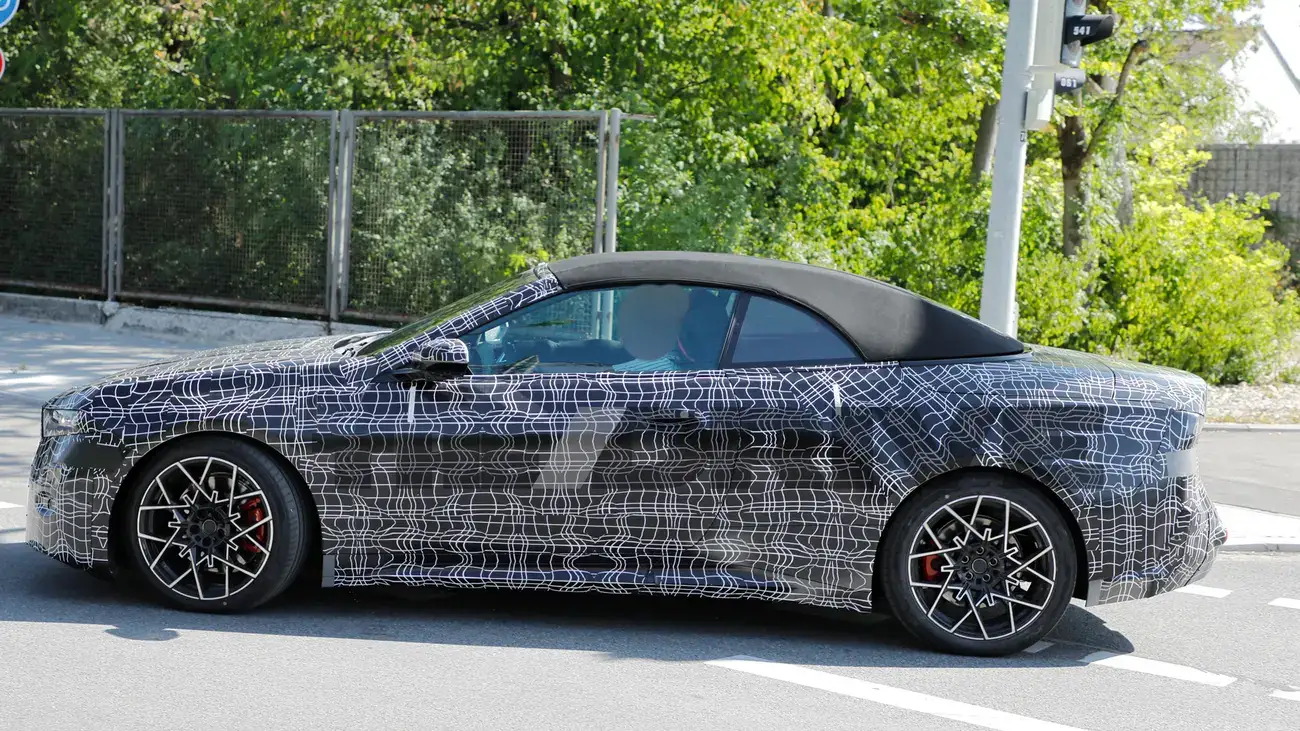
BMW is sticking with the classic 4 Series Convertible formula here: an electrically folding fabric roof, rather than the retractable hardtop that was popular a decade ago. The choice isn't random. A cloth top weighs less and eats less trunk space — something that matters a lot more when the battery pack lives under the floor, as it does in any EV.
The test mule already wears most of its body panels in near-final form, though the headlights and taillights are still described as provisional clusters. Look closer and you'll spot two-tone aero wheels — already seen on the i3 Sedan — plus red brake calipers, a strong hint that an M Sport version is coming. Layout is 2+2: four seats, two doors, with rear legroom expected to be tight, as is typical for this body style.
BMW i4 Convertible range: the leap Neue Klasse promises
Here's the number most people searching for the BMW i4 Convertible actually want: Neue Klasse runs an 800-volt architecture, with charging speeds up to 400 kW. That's a generational jump over the current i4 lineup, which still sits on the older platform.
The projected figures — extrapolated from the i3 sedan, since BMW hasn't confirmed Convertible-specific specs — point to a top "i4 50 xDrive" trim with 463 hp (469 PS / 345 kW), a 108.7 kWh battery, and a WLTP range of 559 miles (900 km) on the sedan body. Electrek estimates the Convertible, heavier and less aerodynamic with its open top, will lose around 15% of that range — still comfortably over 350 miles on an EPA-equivalent basis.
For context: the current i4 generation (eDrive40, xDrive40, M60) tops out around 230-330 miles EPA depending on trim. If these projections hold, the new i4 Convertible would more than double the range of the car it replaces.
| Spec | Projected value | Source |
|---|---|---|
| Platform | Neue Klasse, 800V | All sources |
| Power (top trim) | 463 hp / 469 PS / 345 kW | Carscoops |
| Battery | 108.7 kWh | Carscoops |
| WLTP range (sedan basis) | 559 miles / 900 km | Carscoops |
| Estimated Convertible range | Over 350 miles EPA-equivalent | Electrek |
| Max charging | Up to 400 kW | Carscoops, Electrek |
| Panoramic iDrive display | 17.9-inch, optional 3D HUD | Carscoops |
Neue Klasse's rollout: a staged path to the Convertible
The i4 Convertible isn't arriving on its own. It's part of a broader BMW launch sequence that starts with the iX4, a crossover-coupe due fall 2026, followed by the i3 Touring in 2027, and only then the i4 Coupe (codename NA2) and the i4 Convertible, both expected in 2028.
The combustion lineup isn't disappearing overnight, either. The current gasoline-powered 4 Series Convertible stays in production until mid-2029 — meaning the electric Convertible and its combustion sibling will share showroom space for roughly a year.
When will the BMW i4 Convertible arrive in Portugal?
That's the question we get most, and honestly, there's no firm answer yet. None of the international coverage offers European dates or pricing — reporting so far has focused almost entirely on the US market. What we can say with some confidence: a European launch is unlikely before 2028, and should closely track the i3 Touring's rollout, which arrives a year ahead of it.
On price, it's still too early to put a euro figure on it. A flagship electric convertible with a battery over 100 kWh and cutting-edge tech is unlikely to land under €90,000 in Portugal, going by where the current 4 Series Convertible sits and the premium BMW typically charges for its fully electric i models.
Does an electric convertible have any real competition?
Barely — and that's what makes this launch worth watching. Fully electric convertibles are rare. In the US, the Maserati GranCabrio Folgore is essentially the only direct rival, with just 229 miles of EPA range and a price tag around $206,095. Europe has cheaper alternatives in a very different segment, like the Fiat 500e Cabrio or the MG Cyberster.
The Polestar 6, an electric roadster that once promised to compete in this space, got delayed and appears to have been shelved after Polestar pulled back from several markets. If the i4 Convertible arrives as planned, it lands in a nearly empty niche — with a meaningful range advantage over the only direct rival still standing.
Frequently Asked Questions
There's no confirmed European date yet. All current coverage focuses on the US market, but BMW's Neue Klasse roadmap points to a 2028 global launch, closely tracking the i3 Touring's rollout in 2027. A launch before 2028 is very unlikely.
BMW hasn't released pricing anywhere yet. Based on where the current 4 Series Convertible sits and the premium BMW typically charges for its fully electric i models, a flagship i4 Convertible with a battery over 100 kWh is unlikely to land under €90,000 in Portugal.
The figures so far are projections extrapolated from the i3 sedan: 559 miles WLTP (900 km) on the sedan body with a 108.7 kWh battery. Being heavier and less aerodynamic with the top down, the Convertible should lose around 15% of that range — still comfortably over 350 miles EPA-equivalent, more than double the current i4 lineup's 230-330 miles.
The Neue Klasse platform runs an 800-volt architecture with peak charging up to 400 kW, a generational leap over the current i4's older technical base. BMW hasn't confirmed specific 10-80% charging times for the Convertible yet, but the stated peak power already points to very fast DC fast-charging sessions.
Barely any. The Maserati GranCabrio Folgore is currently the only direct US rival, with just 229 miles of EPA range and a price around $206,095 — well short of the i4 Convertible's projected range. The Polestar 6, which once aimed at this niche, appears to have been cancelled, leaving the segment nearly empty.
Conclusion
For now, the next thing to watch is the iX4, arriving this fall. It'll be the first real signal of how the Neue Klasse platform behaves on the road — well before we know for certain what to expect from the Convertible in 2028.