
Solid-State Battery With a 3-Minute Charge: The Chinese Tech
Published: 30/05/2026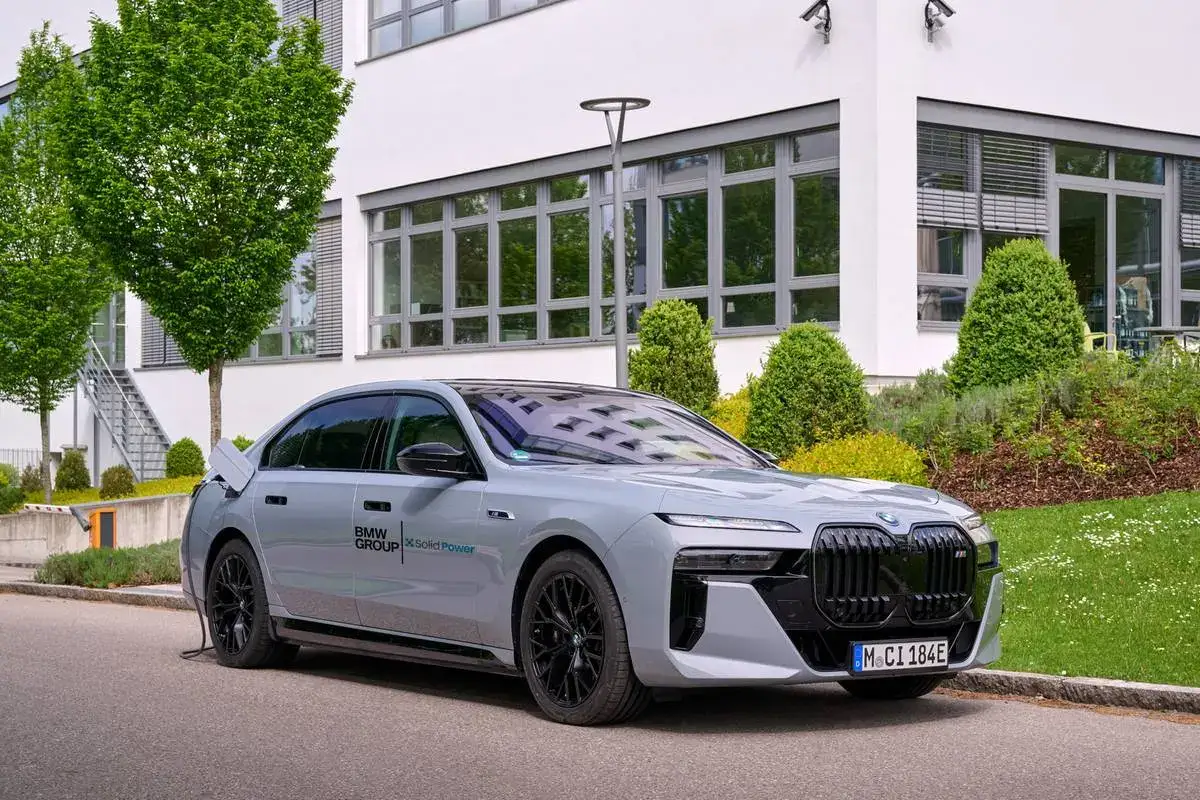
Three minutes. That's how long it would take to fully charge the battery prototype the Chinese Academy of Sciences unveiled in May — roughly the time it takes to fill a tank of petrol. The promise of a solid-state battery with a 3-minute charge is back on the table, and this time the numbers are worth a closer look. For anyone weighing up an EV in Portugal, the question is whether it's worth waiting for.
The prototype hits 451.5 Wh/kg of energy density. For scale: the lithium iron phosphate (LFP) cells in most EVs on the road today sit around 200 Wh/kg. We're talking more than double. What that means in practice, when it reaches Europe, and how it stacks up against what you can already buy — that's what matters before you put off an EV purchase waiting for a technology that isn't in showrooms yet.
What China's solid-state battery actually achieved
The work came out of the Institute of Metal Research, part of the Chinese Academy of Sciences, and was published on 21 May 2026 in the Journal of the American Chemical Society. It's a lithium-metal cell with a solid electrolyte — the combination the industry has chased for over a decade, precisely for the energy-density gain this prototype now shows.
The headline numbers:
| Spec | Value |
|---|---|
| Energy density | 451.5 Wh/kg |
| Charge/discharge time | about 3 minutes (20C rate) |
| Cycle life | 700 cycles at 81.9% capacity retention |
| Cathode | high-nickel, 4.7V |
| Coulombic efficiency | 99.1% average over 1,400 cycles |
| Electrolyte | PVDF polymer with plasticiser (sulfolane) |
The 451.5 Wh/kg figure is the one that changes everything. More energy per kilo of battery translates directly into range: a pack built from cells like these could offer close to 800–1,000 km without adding weight to the car. And 700 cycles at 81.9% retention means the cell doesn't degrade abnormally under ultra-fast charging — historically the Achilles' heel of these chemistries.
The technical trick behind the breakthrough
The trouble with PVDF-polymer solid-state batteries has always been stability: the plasticisers that make the material usable break down on contact with lithium metal and high-voltage cathodes. The team got around this with a method they call compatibilising-solvent plasticisation — a temporary volatile solvent used during manufacturing that evaporates as the film forms, locking the plasticiser into the polymer network and creating a lithium-fluoride-rich interfacial layer. The result: fewer side reactions at both electrodes.
Safer than today's batteries?
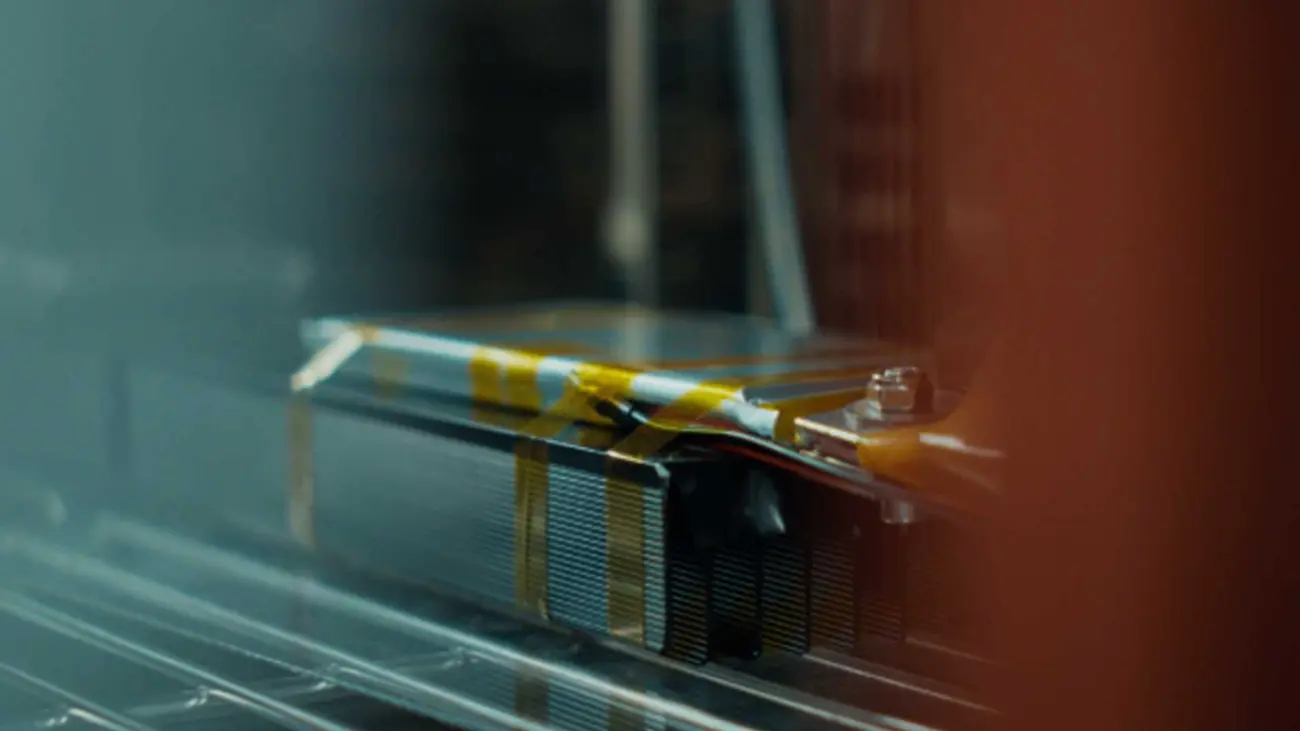
This is one of solid-state's strongest arguments, and the easiest to overlook when everyone's fixated on range. A pouch cell passed a nail-penetration test — a metal spike driven straight through the centre of the battery, with no explosion and no fire.
The liquid electrolytes in conventional batteries are flammable. That's the reason behind the hard-to-extinguish fires you occasionally see in crashed EVs. Swap the liquid for a solid and the fire risk drops sharply. For anyone parking in a closed garage under their building — the reality in plenty of apartment blocks in Lisbon and Porto — that's no small detail.
Solid-state battery vs LFP: the comparison that matters
Before dreaming about 451.5 Wh/kg, it's worth looking at what's already on sale. And here the story is more nuanced than it seems, because today's commercial fast-charging tech isn't solid-state — it's LFP and LMFP, and it's pretty good.
| Technology | Density | Charge speed | Status |
|---|---|---|---|
| Solid-state prototype (CAS) | 451.5 Wh/kg | about 3 min (20C) | lab |
| CATL solid-state target | 500 Wh/kg | — | pilot in 2027 |
| BYD Blade 2.0 Long | 210 Wh/kg | 3C | in production |
| BYD Blade 2.0 Short | 160 Wh/kg | 10–70% in 5 min (8C) | in production |
| Commercial LFP (today) | about 200 Wh/kg | — | in production |
Look at the BYD Blade 2.0 Short: it goes from 10% to 70% in five minutes with its 8C charging architecture. On charging speed alone, it's already close to what solid-state promises. CATL's Shenxing cell charges 10% to 98% in around 6.5 minutes. In other words, solid-state's real edge isn't speed — it's energy density (more range for the same weight) and safety.
The Blade 2.0 Long, in LMFP chemistry, reaches 210 Wh/kg and, in the Denza Z9 GT with a 120 kWh pack, hits 1,036 km of CLTC range. Technology that already exists and already ships in cars. Solid-state will beat this — but it hasn't yet, outside the lab.
Solid-state batteries: when do they reach electric cars?
This is the question that matters if you're thinking of buying. And the honest answer is: not as soon as the headlines suggest.
The Chinese Academy of Sciences prototype is exactly that — a lab prototype, not a product. CATL, the world's largest battery maker, is blunt about it: 2027 will only be small-scale (pilot) production, and true mass production sits closer to 2030. CATL itself shot down rumours of imminent 2,000 km batteries, pointing out that the supply chain is still far from ready.
Cost is the other brake. NIO's 150 kWh semi-solid pack reportedly costs about as much as a whole car. Until solid-state scales, the price keeps it out of reach for the mass market — where cheap, mature LFP keeps dominating.
For Europe there are concrete signs: CATL is localising production for European carmakers and showed its Shenxing Pro cell at IAA Munich in 2025. And a Mercedes EQS prototype fitted with a 500 Wh/kg solid-state battery covered roughly 1,205 km on a single charge. But a demo EQS isn't a car on sale at a dealership in Portugal.
Frequently Asked Questions
Yes, but it's a lab prototype, not a product on sale. The lithium-metal cell unveiled by the Institute of Metal Research at the Chinese Academy of Sciences, published on 21 May 2026, charges and discharges in about 3 minutes (20C rate). It reached 451.5 Wh/kg of energy density and held 81.9% of its capacity after 700 cycles. Even so, it's a long way from powering a production car.
Not as soon as the headlines suggest. CATL, the world's largest battery maker, says 2027 will only be small-scale pilot production, with true mass production around 2030. Cost is the main brake: NIO's 150 kWh semi-solid pack reportedly costs about as much as a whole car. The first models to get them will be top-of-the-range, not affordable EVs.
Solid-state's main advantage is energy density: the CAS prototype hits 451.5 Wh/kg versus around 200 Wh/kg for today's LFP cells — more than double, meaning far more range for the same weight. On charging speed the gap is smaller: the BYD Blade 2.0 Short already does 10% to 70% in five minutes (8C) with LMFP chemistry. Solid-state's other edge is safety, since it uses a solid electrolyte instead of a flammable liquid one.
Yes, it's one of its strongest points. A pouch cell of the Chinese prototype passed a nail-penetration test — a metal spike was driven through the centre of the battery without causing explosion or fire. The liquid electrolytes in conventional batteries are flammable and are behind the hard-to-extinguish fires seen in crashed EVs. Swapping the liquid for a solid sharply reduces fire risk, which matters for anyone parking in closed garages under apartment blocks.
No. The technology powering affordable EVs over the next two or three years is still LFP and LMFP, and it keeps getting better — the BYD Blade 2.0 Long reaches 210 Wh/kg and, in the Denza Z9 GT, over 1,000 km of CLTC range. Charges from 10 to 80% in 15 to 20 minutes are already standard on the motorway fast-charger network. Solid-state isn't expected in production cars in Europe until closer to the end of the decade.
What this means if you're buying an EV in Portugal
If you're delaying an EV purchase to wait for solid-state, the advice is simple: don't. The technology that will power affordable cars over the next two or three years is still LFP and LMFP — and it keeps getting better, as the Blade 2.0 shows. Charges from 10 to 80% in 15 to 20 minutes are already standard on the fast-charger network along the motorways, and EVs with over 400 km of range comfortably cover a Lisbon-Porto run.
Solid-state is coming — but in stages, and in top-of-the-range models first. When it does start appearing in production cars in Europe, towards the end of the decade, it brings two things genuinely worth having: more range for the same weight, and far less fire risk. For now, it's a technology to follow, not to wait for.