
Avatr 07L in Portugal: What 955 hp and 725 km of Range Would Cost
Published: 18/08/2026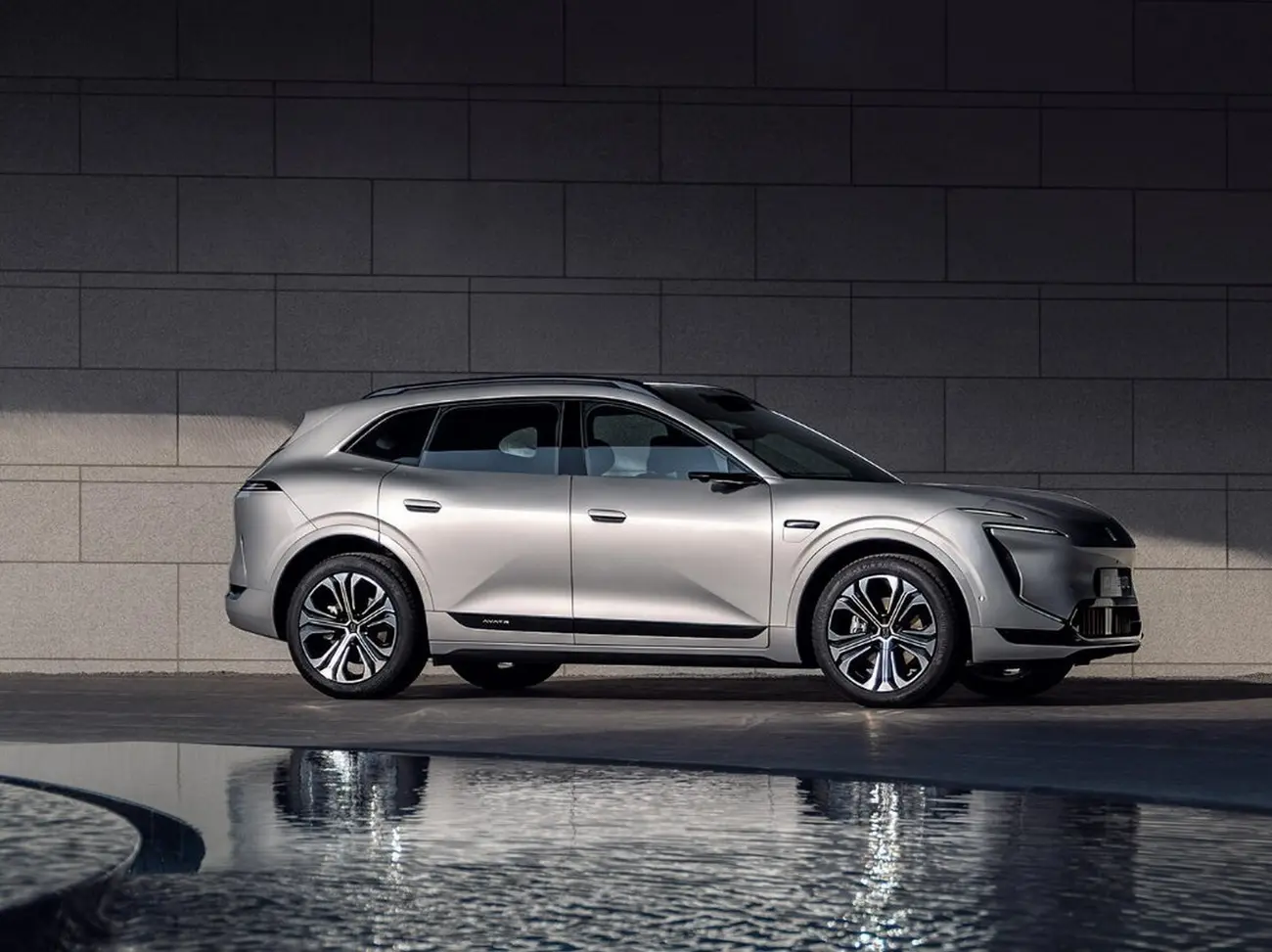
955 hp for around 40,000 dollars — and the rest of the world taking notes
A five-seat family SUV with 712 kW of combined output and a 3.7-second 0-100 km/h time, on sale in China for 269,900 yuan. That's roughly €34,000 at the direct exchange rate. It's the number that put the Avatr 07L on front pages everywhere since its launch on 8 August 2026.
Avatr is the joint venture between Changan, Huawei and CATL — platform, software and battery from three of the biggest names in the Chinese industry. The 07L is the stretched version of the 07, built to go straight at the Xiaomi YU7. And it's the kind of car that forces the obvious question here: how much would the Avatr 07L cost in Portugal? We'll run that calculation — but be clear from the start that it's a theoretical exercise, because this model is not confirmed for Europe.
Three trims, one battery
The range opens with the Elite at 229,900 yuan, continues with the Max+ at 249,900 and tops out with the tri-motor Ultra at 279,900. Limited-time launch pricing drops those to 219,900 / 239,900 / 269,900 yuan — that's where the "$40,000" headline comes from. The Elite was added at the last minute, after July's pre-sales, cutting 20,000 yuan off the entry point.
Elite and Max+ use a single rear motor with 305 kW (409 hp) and 435 Nm, good for 0-100 km/h in 5.9 seconds. For a nearly five-metre SUV, that's already plenty.
Avatr 07L 955 hp: what the tri-motor version actually does
The Ultra swaps that for a distributed three-motor layout: one 210 kW (282 hp) motor at the front and two 251 kW (337 hp) motors at the rear. Combined, 712 kW — 955 hp — and 996 Nm. Hence the 3.7 seconds to 100 km/h. Top speed is capped at 200 km/h across the whole range, which tells you the philosophy: explosive off-the-line and overtaking pace, no chasing autobahn numbers.
In everyday Portuguese driving, a 2.2-second difference in the 0-100 sprint rarely gets used. What you do notice is the response on hill climbs and merging onto the A1 with a full car.
Range: 725 km CLTC is not 725 real kilometres
Every trim shares the same battery: CATL's 89.33 kWh Shenxing pack, LFP chemistry, on an 800 V silicon-carbide platform with 5C charging. Official range is 725 km CLTC on the rear-drive versions and 650 km on the tri-motor.
Watch the test cycle. CLTC is the Chinese standard and it's considerably more generous than Europe's WLTP — the gap usually runs 15% to 25%. Translated, that means roughly 550 to 615 km WLTP on the RWD versions and 490 to 550 km on the Ultra. Still excellent for an SUV this size.
Charging is the part that impresses without asterisks: 30 to 80% in under 10 minutes, and 0 to 80% in 20 minutes, on a compatible high-power DC charger. On a Lisbon-Algarve run, that's a coffee stop, not a lunch stop.
Bigger than a Tesla Model Y
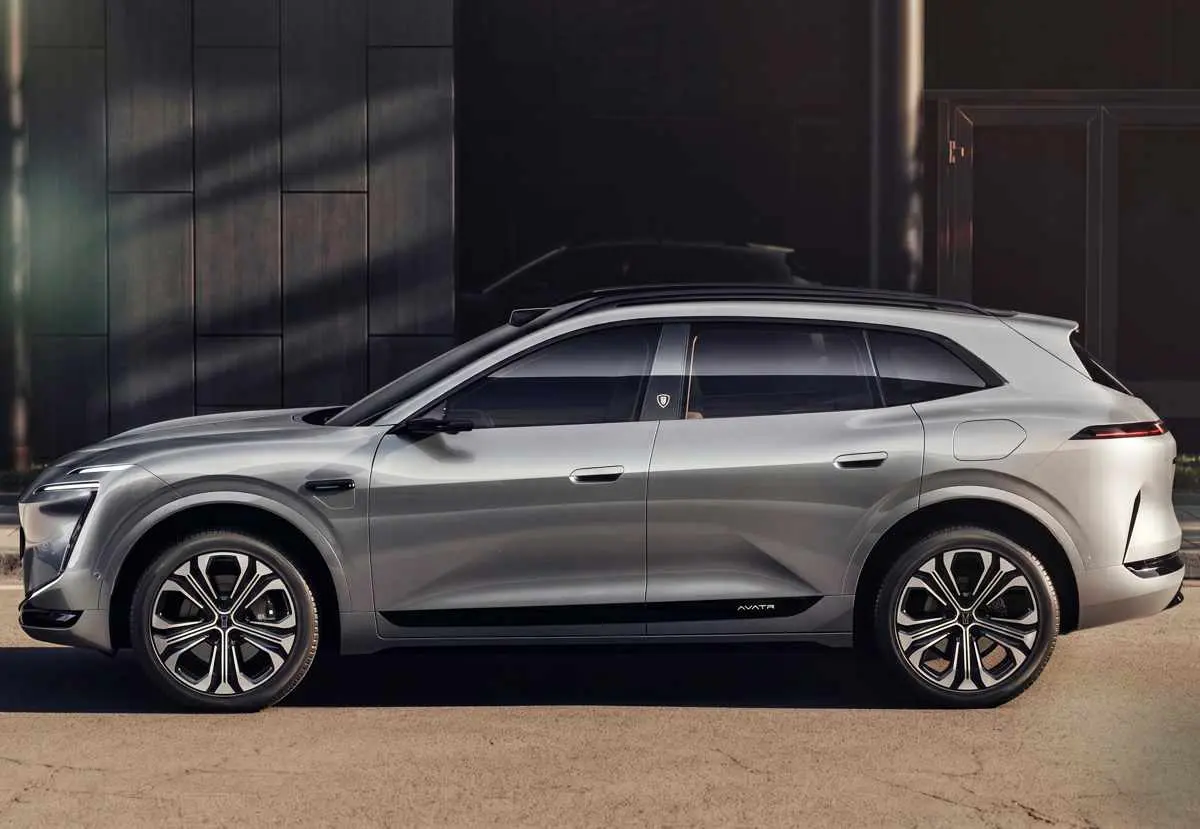
It measures 4,910 mm long, 1,980 mm wide and 1,650 mm tall (1,670 mm on the Ultra, thanks to its air suspension), with a 2,990 mm wheelbase. Against the standard Avatr 07, that's 85 mm more length and 50 mm more wheelbase — almost all of it handed to rear-seat passengers.
The boot swallows 735 litres, or 1,645 litres with the rear seats folded, plus a 100-litre frunk up front. The front seats recline flat into two-metre "beds". This is a noticeably larger car than a Model Y, which pushes it into mid-to-large premium SUV territory.
The Huawei tech is the real argument
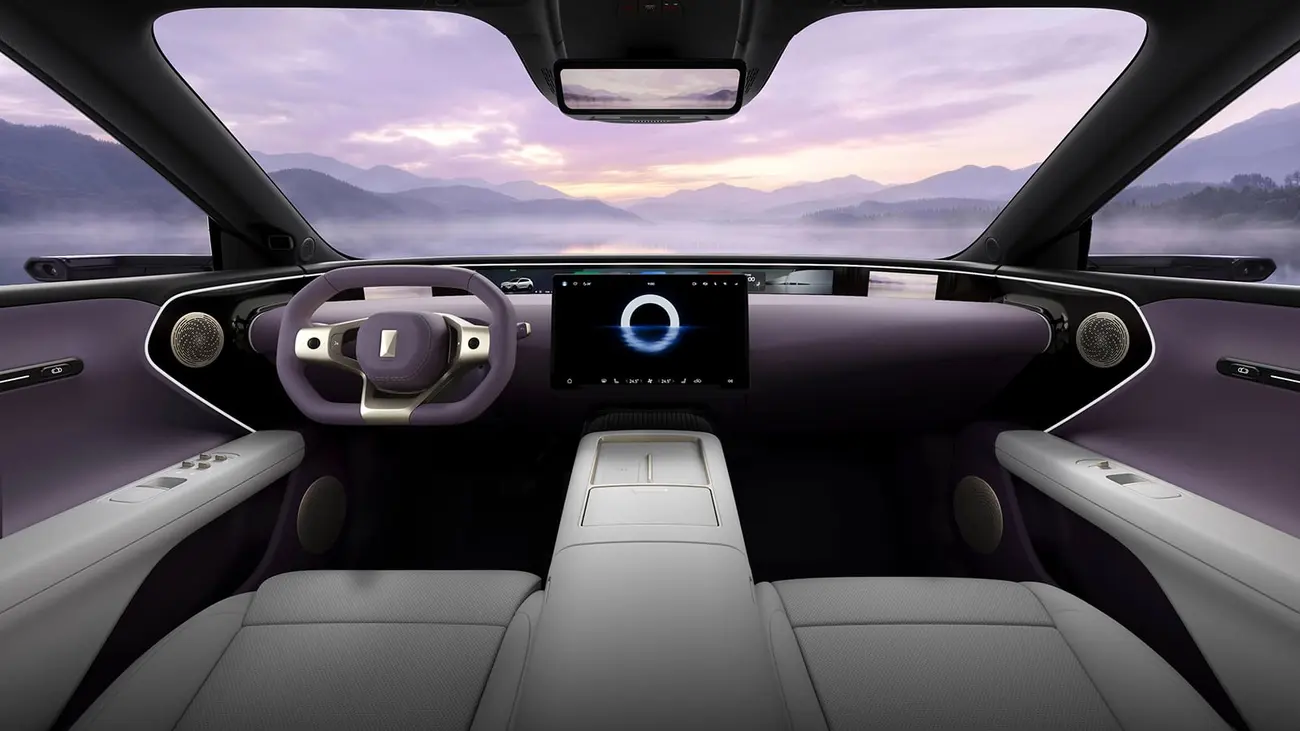
Every version comes with Huawei's Qiankun ADS 5 and the HarmonySpace digital cockpit as standard. The difference is in the hardware: the Elite gets ADS Pro with an in-cabin LiDAR-vision setup, while Max+ and Ultra receive ADS Max with a roof-mounted 896-channel LiDAR. Avatr claims it's the highest-spec LiDAR in mass production, able to pick out a 14 cm object at 120 metres.
Inside, a 35.4-inch 4K panoramic display runs across the dashboard, with a 15.6-inch centre screen below it. Add 25 Huawei speakers, Nappa leather, 6 mm double-glazed door windows and a zero-gravity passenger seat with two 120-degree reclining positions. Max+ and Ultra also trade steel springs for air suspension with continuous damping control — the "magic carpet" setup.
Avatr 07L price Portugal: the hypothetical maths
Worth stating plainly: Avatr has not announced the 07L for Europe. The models confirmed for the European market so far are the 12 saloon and the 11 SUV. Everything below is a calculation, not a price.
The European bill for a China-built EV stacks up in layers. First, the standard 10% import duty. Then the countervailing duties the EU has applied since 2024, ranging from 7.8% to 35.3% depending on the manufacturer — Tesla Shanghai landed at 7.8%, BYD at 17%, Geely at 18.8% and SAIC/MG at 35.3%. Changan sits in the "other cooperating companies" bracket, so the exact rate would only be known once a real homologation and application existed. On top of that come European type approval, shipping, a service network and importer plus dealer margin. Only at the very end does Portugal's 23% VAT get applied.
Using the Chinese list price converted to euros, a mid-range countervailing rate (around 20%) and about 15% for European costs and margin, it works out like this:
| Trim | China price | Euro equivalent | Hypothetical Portugal estimate | Range depending on duty rate |
|---|---|---|---|---|
| Elite (RWD, 409 hp) | 229,900 RMB | about €28,900 | about €53,400 | €48,000 to €55,000 |
| Max+ (RWD, 409 hp) | 249,900 RMB | about €31,400 | about €58,100 | €52,000 to €60,000 |
| Ultra (tri-motor, 955 hp) | 279,900 RMB | about €35,200 | about €65,100 | €58,500 to €67,500 |
In other words, the headline "$40,000" turns into something closer to €65,000 by the time it reaches a European forecourt. The car doesn't get more expensive — the gap between a Chinese factory price and a European retail price does the work.
What could change: minimum prices instead of tariffs
One recent development could move these numbers. In January 2026 the European Commission published guidance for replacing countervailing duties with a minimum import price mechanism, set model by model and configuration by configuration. The first undertaking was accepted on 10 February 2026, covering the Cupra Tavascan built by VW Anhui.
The effect on buyers tends to be small. The real difference is who keeps the money: instead of paying a tariff to the EU, the Chinese manufacturer retains the margin between its own price and the agreed minimum. The showroom sticker doesn't necessarily fall.
Zero ISV, 23% VAT
Some good local news. In Portugal, fully electric vehicles are exempt from ISV — the vehicle tax charged on registration — in both its engine-capacity and emissions components. Unlike an imported combustion car, ISV doesn't enter this calculation at all. Annual IUC road tax is also negligible on a BEV.
What really bites is the 23% VAT applied at the end of the chain — which is exactly why any saving made upstream, on duties or logistics, shows up magnified in the final price.
Frequently Asked Questions
No. Avatr has not confirmed the 07L for Europe: the only models announced for the European market are the 12 saloon and the 11 SUV. At IAA Munich the Changan group committed to launching eight EVs in Europe by 2027, starting in Norway, Denmark, the Netherlands, Germany and the UK, with a European headquarters in the Netherlands and around 120 service points across Germany, France, Italy and Spain by the end of 2026. Portugal is not in that first wave.
This is a hypothetical calculation, since the model is not on sale in Europe. Starting from the Chinese prices (229,900 to 279,900 RMB, roughly 28,900 to 35,200 euros), adding the standard 10% import duty, a mid-range countervailing duty of about 20%, some 15% for shipping, type approval and margin, and Portugal's 23% VAT, you land between 53,000 and 65,000 euros depending on trim. The 955 hp tri-motor Ultra would sit near 65,000 euros, against roughly 34,000 euros in China.
The official figures are 725 km CLTC on the rear-wheel-drive versions and 650 km on the tri-motor, from an 89.33 kWh CATL Shenxing LFP battery. China's CLTC cycle is 15% to 25% more optimistic than Europe's WLTP, so a European homologation would likely show 550 to 615 km on the RWD trims and 490 to 550 km on the Ultra. In real motorway use, expect a further 15% to 20% below those numbers.
No. In Portugal fully electric vehicles are exempt from ISV in both its engine-capacity and emissions components, and annual IUC road tax is negligible. What makes a Chinese EV expensive in Europe is the standard 10% import duty, the EU countervailing duties (7.8% to 35.3% depending on the manufacturer), type-approval and logistics costs, and the 23% VAT applied at the end of the chain.
Yes, noticeably bigger. The 07L measures 4,910 mm long, 1,980 mm wide and 1,650 mm tall (1,670 mm on the Ultra with air suspension), on a 2,990 mm wheelbase. That is 85 mm more length and 50 mm more wheelbase than the Avatr 07, almost all of it given to rear-seat passengers. The boot holds 735 litres, or 1,645 litres with the seats folded, plus a 100-litre frunk.
So when does it reach Portugal?
The honest answer is that it doesn't, for now. What exists is a Changan group plan, presented at IAA Munich, to bring eight EVs to Europe by 2027, starting in Norway, Denmark, the Netherlands, Germany and the UK, with a European headquarters and parts distribution centre in the Netherlands and roughly 120 service points across Germany, France, Italy and Spain by the end of 2026. Portugal isn't in the first wave.
Avatr has meanwhile entered Greece through the Autohellas group, a distribution model that doubles as a southern-Europe test. And the brand has the numbers to explain the hurry: 35,250 units sold in the first seven months of 2026, around 5,040 a month, a refiled Hong Kong IPO application, and a target of 800,000 annual sales by 2030 with 40% coming from outside China.
For anyone shopping for a large electric SUV in Portugal today, the 07L isn't an option — it's a benchmark. It shows what 89 kWh, 800 V and a top-tier LiDAR cost when they leave the factory without tariffs attached, and it gives you a useful yardstick for judging what's already on sale here. Two things are worth watching: which models Changan actually homologates for Europe in 2027, and how the minimum-price mechanism develops. Those two decide whether a car like this ever makes sense in our market.