
Used Audi Q4 e-tron in Portugal: Buying Guide, Versions and What to Check
Published: 02/11/2026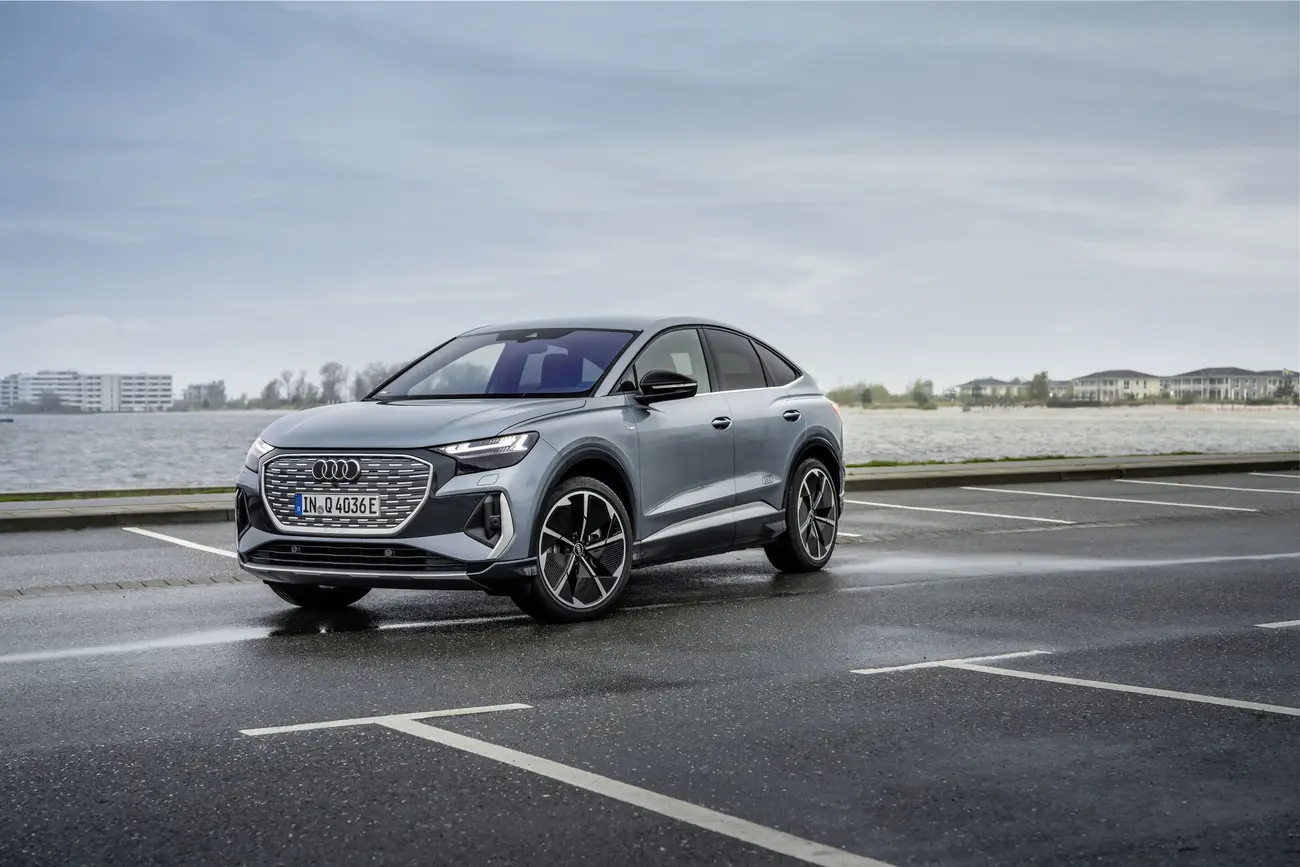
Used Audi Q4 e-tron: same badge, different cars
A 2022 Q4 e-tron "40" and a 2025 "40" wear the same badge on the tailgate, yet one has a 77 kWh usable battery and the other a 59 kWh pack. That's the detail that trips up most people shopping for a used Audi Q4 e-tron in Portugal — and it's not the only one. Audi reshuffled names, motors and charging speeds three times in four years.
Here's the reassuring part: underneath the confusion sits one of the most dependable used EVs around. In Germany's TÜV inspection reports the Q4 ranks among the best electric cars, and batteries that have passed 160,000 km are still above 90% health. If you're planning to buy one here, knowing how to spot the right generation is worth more than any haggling.
MEB underneath, Audi cabin on top
The Q4 e-tron arrived in 2021 on the Volkswagen Group's MEB platform, shared with the VW ID.4, ID.5 and Skoda Enyaq. Batteries and motors are common to all of them. Production started in Zwickau, with Audi's Brussels plant joining in 2023.
What the extra money buys is the badge, some additional tech and a nicer interior. The car is 4.59 m long, weighs around 2.2 tonnes and offers 520 litres of boot space as an SUV or 535 litres as a Sportback, rising to almost 1,500 litres with the seats folded. Adults fit comfortably in the back.
The Sportback is the sloping-roof version, slightly more aerodynamic and efficient. In Germany it cost about €2,000 more new. On the used market that gap blurs — pick on taste and condition.
Audi Q4 e-tron 40 vs 45: versions and batteries by generation
Keep this table handy before you open a single listing:
| Version | Period | Power | Drive | Battery (gross/usable) | DC charging | WLTP range |
|---|---|---|---|---|---|---|
| 35 e-tron | 2021–2023/24 | 170 PS | Rear | 55/52 kWh | 100–125 kW | 341–346 km |
| 40 e-tron (early) | 2021–2023 | 204 PS | Rear | 82/77 kWh | 125–135 kW | 473–508 km |
| 50 e-tron quattro | 2021–2023 | 299 PS | All-wheel | 82/77 kWh | 135 kW | 447–480 km |
| 45 e-tron | from Sept 2023 | 286 PS | Rear or quattro | 82/77 kWh | 135 kW / 175 kW (quattro) | up to 562 km |
| 55 e-tron quattro | from Sept 2023 | 340 PS | All-wheel | 82/77 kWh | 175 kW | — |
| 40 e-tron (new) | from 2025 | 204 PS | Rear | 63/59 kWh | 145 kW | 402–415 km |
Audi Q4 e-tron 2021 vs 2024: what changed
The September 2023 update (model year 2024) is the one that matters most. The small-battery 35 disappeared, every version got the 77 kWh usable pack, and a new synchronous motor on the rear axle added power and efficiency. The rear-drive 45 jumped to 286 PS, matching the quattro.
Charging improved too: rear-drive cars went from 125 to 135 kW, quattros to 175 kW. In practice that means 10–80% in around 28 minutes — a coffee stop at a motorway services on the A1. WLTP range for the Sportback 45 climbed from 487 to 562 km.
Smaller steps before that still matter on a used car:
- Model year 2022: 135 kW charging, an 11.6-inch screen across the range and, at last, Apple CarPlay and Android Auto. 2021 cars don't have them.
- Model year 2023: retuned suspension, more efficient motors and more standard kit.
- New 40 (2025): a smaller 59 kWh usable battery returns, with 145 kW charging. Sources disagree on the exact date, so always check battery capacity on the car's paperwork.
Audi Q4 e-tron real-world range
WLTP flatters, as usual. A rear-drive 45 rated at 550 km (342 miles) manages between 467 and 500 km in real driving. That's Lisbon to Porto non-stop with plenty to spare.
The 35 is a different story. From 346 km official, expect around 280 km in practice — fine for daily commuting around Greater Lisbon with home charging, tight if you regularly cross the country. Also allow for 1–2% range loss per year or every 16,000 km.
Which used Audi Q4 e-tron to buy
For most buyers the answer is a big-battery car: the early 40 (up to 2023) or the post-update 45. EV Powered recommends S line trim — 20-inch wheels, firmer suspension and sportier looks than the Sport.
The 50 and 55 quattro only make sense if you need all-wheel drive or want real performance. They use more energy (17.9–21.3 kWh/100 km for the 45 quattro, against 17–19.3 kWh/100 km for rear-drive versions), and the 55 is the least efficient of the range. The 35 is worth it only if it's clearly cheaper and your driving is mostly urban.
Audi Q4 e-tron common problems: reliability and recalls
On paper, the Q4 does very well. In the TÜV Report 2026, covering cars aged 2–3 years, 92.2% passed the inspection with no defects against an average of 89.4%. Only 4.0% had significant defects (average 6.5%), making it the second-best EV in the report behind the Mini Cooper SE. Euro NCAP gave it 5 stars in 2021, with 93% for adult protection.
Brakes are the weak spot. TÜV logged service-brake defects on 0.4% of cars versus a 0.2% average — small in absolute terms, and something the ID.4 and Enyaq share.
Audi Q4 e-tron recalls: parking brake and software
- Parking brake: Germany's KBA transport authority flagged a possible electronic parking brake malfunction, fixed with a software update for model years 2022 and 2023.
- UK, February 2024: 17,397 cars recalled for an electronic control unit fix and software update.
- UK, May 2025: 7 cars with an electronic stability unit fault (which can affect braking), fixed by software.
- On-board charger: US sources mention a campaign on 2024–2025 cars over a fault that stops the 12V battery charging. It's not confirmed for Europe — ask an Audi dealer to check by VIN.
Everyday niggles
None of this is serious, but test for it. The most common complaints are infotainment freezing or dropping the phone connection, a charging flap that won't open and a cable that won't release (sometimes even the emergency release fails). Lower door plastics scratch easily, and there are reports of sticky interior trim.
Audi Q4 e-tron battery health, warranty and what to ask for
The battery is where the Q4 is most reassuring. Electrifying checked a range of used cars and none had dropped below 90% state of health (SOH). One with more than 160,000 km in five years was still above 90%; another with 66,000 km showed 93%. How a car was used matters more than the mileage.
The high-voltage battery warranty runs 8 years or 160,000 km, with a minimum of 70% capacity. Note the fine print: Audi only has to repair the pack back above 70%, not replace it. On a 2021 car, that cover lasts until 2029.
Always ask for an SOH report. A check at an Audi workshop or an independent diagnostic costs little next to the price of the car.
What to check when buying a used Audi Q4 e-tron
- Battery capacity — 52, 59 or 77 kWh usable. Don't rely on the badge.
- Model year — skip 2021 cars if you want CarPlay and Android Auto, and favour post-September 2023 cars if you drive long distances.
- Battery health (SOH) report — ideally above 90%.
- Recall campaigns — confirm with a dealer that the parking brake and control unit software updates are done.
- Brakes — inspect discs and pads.
- Charging flap and cable — open, plug in and unplug during the viewing.
- Infotainment — pair your own phone and test the navigation.
- Equipment — the Technology, Technology Pro and Comfort packs cost thousands new. Two cars of the same year can be very differently specced.
- Service history — servicing is every 2 years or around 29,000 km.
How much is a used Audi Q4 e-tron in Portugal?
We don't yet have enough Portuguese prices to build a reliable table by version. The best benchmark is Germany, where supply is large: around 2,400 listings on mobile.de, starting from €19,000–22,000, with prices falling.
Recent German listings give a feel for the market:
| Version | Registered | Mileage | Price |
|---|---|---|---|
| Q4 e-tron 35 | 02/2022 | 18,725 km | €26,240 |
| Q4 Sportback 35 | 08/2022 | 15,632 km | €30,480 |
| Q4 e-tron Sportback 35 | 01/2023 | 13,555 km | €32,880 |
| Q4 e-tron Sportback 40 | 12/2022 | 18,691 km | €37,553 |
| Q4 e-tron 50 quattro | 10/2022 | 18,661 km | €38,260 |
| Q4 Sportback 50 quattro | 07/2022 | 19,048 km | €38,999 |
In the UK, prices run from £14,000 (an early Sport) to £40,000 (a 2024 S line), with post-update cars starting around £26,000. For reference, a new Q4 started at €52,950 in Germany in 2023 and now starts at €46,150.
Buying in Portugal has two advantages. Electric cars are exempt from ISV, the one-off vehicle registration tax, which makes importing from Germany a realistic option — you're left with transport, registration and inspection costs. They're also exempt from IUC, the annual road tax, which keeps running costs low. Compare local asking prices with the figures above before you commit.
Audi Q4 e-tron vs VW ID.4 vs Skoda Enyaq used
All three share batteries, motors and charging hardware. The choice comes down to cabin, space and price.
| Audi Q4 e-tron | VW ID.4 | Skoda Enyaq | |
|---|---|---|---|
| Boot | 520 L | around 543 L | 585 L |
| Big battery (WLTP) | 77 kWh, 317 miles (510 km) | 77 kWh, 328 miles (528 km) | 77 kWh, 331 miles (533 km) |
| Interior | Best of the three | Plainer materials | Well finished |
| Reliability (What Car?) | Behind the Enyaq | Behind the Enyaq | Best of the three |
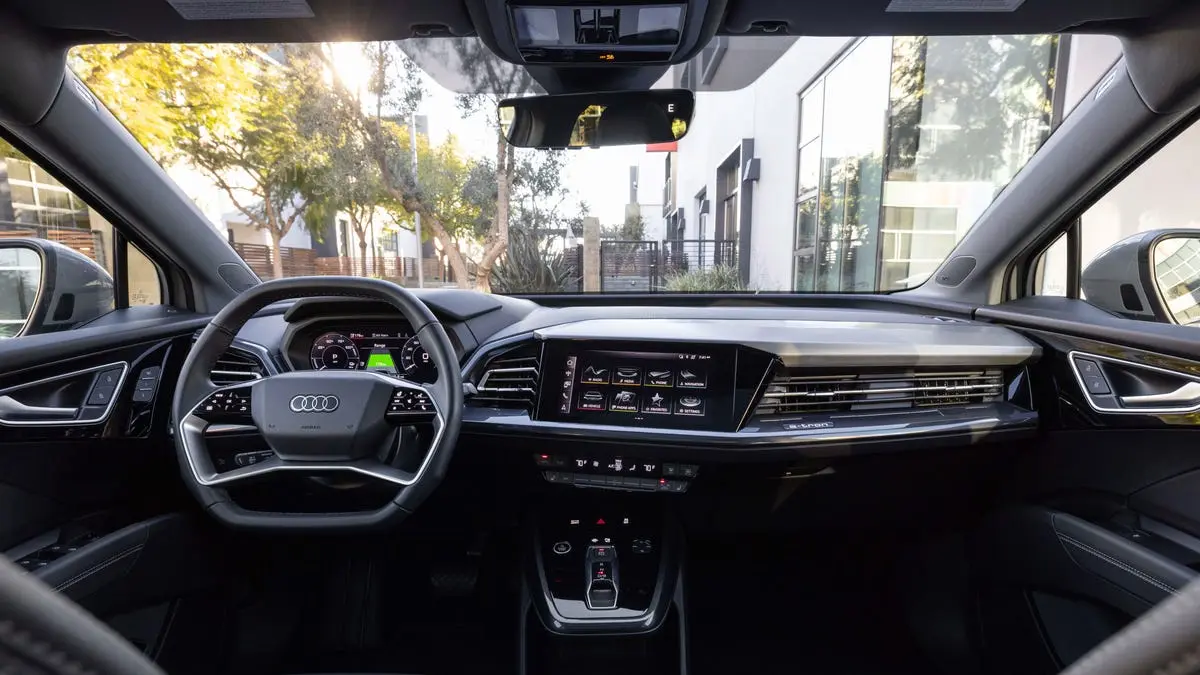
The Audi has the most polished cabin, with Virtual Cockpit and, on early cars, physical climate buttons. In exchange it has the smallest boot and cost more new. Carbuyer named the Enyaq the best buy — more space and strong kit for less money — and the What Car? reliability survey also puts it ahead of its siblings.
Even so, the Q4 remains the pick for buyers who care about image and finish. On the used market the price gap to the Enyaq narrows, and that's where the Audi starts to make more sense.
Frequently Asked Questions
Germany is the best benchmark, with around 2,400 listings on mobile.de starting at €19,000–22,000. 2022–2023 cars with under 20,000 km ask between €26,000 (35 e-tron) and €39,000 (50 quattro). That is well below the €52,950 a new one cost in 2023. Electric cars pay no ISV or IUC in Portugal, so importing from Germany only adds transport, registration and inspection costs to the asking price.
The 35 (2021–2023/24) has 170 hp and a 52 kWh usable battery, giving about 280 km of real-world range against 341–346 km WLTP. The 40 sold up to 2023 has 204 hp and 77 kWh usable, with 473–508 km WLTP. If you drive on motorways, the bigger battery is worth it; the 35 only makes sense for mostly urban use at a clearly lower price. Check the battery size, because the newer 2025 40 uses a 59 kWh pack.
The high-voltage battery warranty runs for 8 years or 160,000 km and covers capacity loss below 70%. It belongs to the car, so a 2021 Q4 stays covered until 2029 as long as it is under 160,000 km. Audi only has to repair the battery back above 70%, not replace it. Ask an Audi dealer to confirm coverage using the VIN before you buy.
It depends on the model year. 2021 cars charge at 100–125 kW, 2022–2023 cars at up to 135 kW, and cars built after the September 2023 update reach 135 kW (rear-wheel drive) or 175 kW (quattro), giving 10–80% in about 28 minutes. The 2025 base 40 with the 59 kWh battery accepts up to 145 kW. For frequent long trips, a post-2023 45 quattro is the fastest-charging choice.
They share the MEB platform, the 77 kWh battery and the motors, so range is almost identical: 510 km WLTP for the Q4 against 528 km for the ID.4. The Audi has the best interior, with Virtual Cockpit and higher-quality materials, but the smallest boot (520 L against about 543 L in the ID.4 and 585 L in the Skoda Enyaq). If space and price matter most, the ID.4 or Enyaq is the better value. If you care about the finish, the Q4 earns its premium, and that premium is smaller used than new.
Is a used Audi Q4 e-tron worth buying in Portugal?
Yes, if you choose carefully. A big-battery 40 from 2022–2023 or a post-update 45, with an SOH report above 90% and recalls done, is one of the most sensible used EVs for a family in Portugal: real-world range close to 500 km, a battery that ages slowly and warranty cover up to 160,000 km. Walk away from listings that don't state battery capacity — and don't let a "40" badge sell you a car that isn't what you think it is.