
Deepal S05 Review: The Chinese Electric SUV Rivaling Tesla Model Y in Europe
Published: 16/02/2026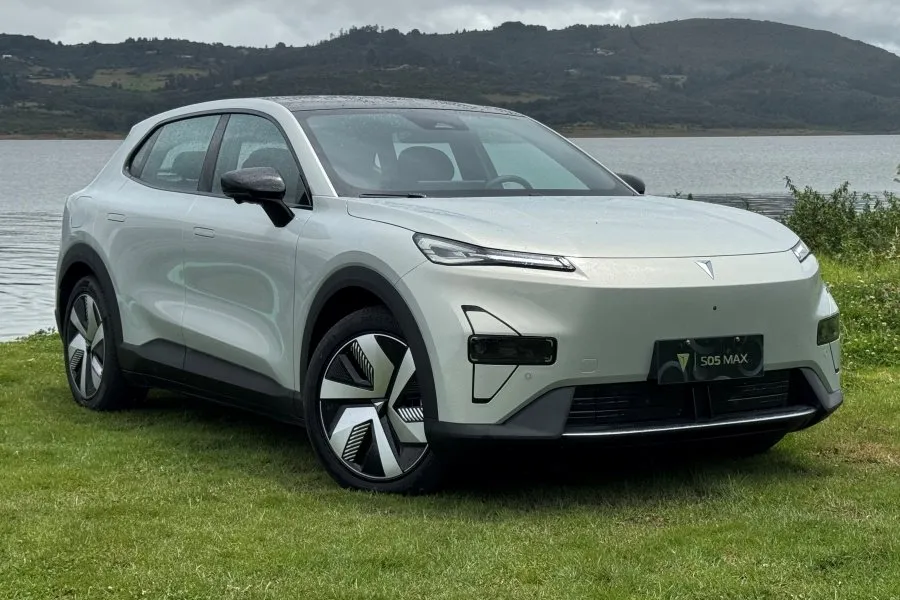
Introduction to the Deepal S05
The Deepal S05, a Chinese electric SUV from Changan, is designed to directly compete with established models like the Tesla Model Y and Volkswagen ID.4 in the European market. While its performance in the Chinese market has been impressive, its entry into Europe raises questions about its competitiveness, especially regarding price and quality.
Design and Dimensions
The design of the Deepal S05 is penned by Klaus Zyciora, former head of design at Volkswagen. With dimensions of 4,620 mm in length, 1,900 mm in width, and 1,600 mm in height, and a wheelbase of 2,880 mm, it offers generous interior space. The drag coefficient is 0.25, which is decent but not as efficient as the Tesla Model Y (0.22).
Exterior Features
- Dimensions: Length: 4,620 mm, Width: 1,900 mm, Height: 1,600 mm
- Drag Coefficient: 0.25
- Design: Signed by Klaus Zyciora, featuring details like an illuminated logo on the C-pillar that indicates battery charge level.
Minimalist Interior
The interior of the S05 adopts a minimalist approach similar to Tesla's style, with a large 15.4-inch display as the control center. However, the quality of the interior materials leaves much to be desired, with predominant use of hard plastics and a lack of a glove box affecting practicality.
Interior Highlights
- Central Display: 15.4-inch with 2.5K resolution
- Information System: Augmented reality HUD
- Interior Material: Predominance of hard plastics
Storage Capacity
The cargo space of the Deepal S05 is a strong point, with a rear trunk offering 492 liters, expandable to 1,250 liters with seats folded. The "frunk" (front trunk) provides 159 liters, surpassing European competitors.
Powertrain and Performance
The S05 is available in two versions: RWD Pro and AWD Max. The RWD Pro version features a 200 kW (268 hp) motor and 290 Nm of torque, while the AWD Max version offers a combined power of 320 kW (429 hp) and 502 Nm of torque.
Engine Specifications
- RWD Pro: 200 kW, 268 hp, 290 Nm
- AWD Max: 320 kW, 429 hp, 502 Nm
- Range: 485 km (RWD), 445 km (AWD)
Battery and Charging
The Deepal S05 uses a 68.8 kWh LFP battery, supporting fast charging up to 200 kW DC. The charging time from 30 to 80% is approximately 20 minutes.
Charging Details
- Battery Capacity: 68.8 kWh
- Fast DC Charging: Up to 200 kW
- AC Charger: Limited to 11 kW
European Pricing and Availability
In the European market, the prices for the Deepal S05 start at €38,990 for the RWD Pro version and go up to €44,990 for the AWD Max version. These figures represent a significant increase compared to the Chinese market, where the model is sold for prices between €14,586 and €18,234.
Frequently Asked Questions
The Deepal S05 is available in Europe with prices starting at €36,990 for the RWD Pro version and €42,990 for the AWD Max version. In Portugal, business customers can access fleet pricing at €30,073 + VAT (RWD) and €34,950 + VAT (AWD). In China, the same model costs between €14,586 and €18,234, reflecting a significant price increase in Europe due to import tariffs and local taxes.
The Deepal S05 comes in two versions: the RWD Pro with a 200 kW (268 hp) motor and 290 Nm of torque, and the AWD Max with a combined 320 kW (435 hp) and 502 Nm. Both use a 68.8 kWh LFP battery with DC fast charging up to 200 kW (30-80% in 20 minutes). WLTP range is 485 km for RWD and 445 km for AWD. The boot offers 492 liters (expandable to 1,250 liters) and the frunk provides 159 liters.
The Deepal S05 RWD Pro (€36,990) is cheaper than the base Tesla Model Y in Europe, offering a larger boot (492 vs 438 liters) and a 159-liter frunk. However, the Tesla Model Y has a more efficient drag coefficient (0.22 vs 0.25), a more extensive Supercharger network, and higher-quality interior materials. The S05 compensates with a 15.4-inch 2.5K resolution display and an augmented reality HUD.
The Deepal S05 is manufactured by Changan Automobile, one of China's largest automotive groups. Deepal is Changan's electric sub-brand. The exterior design was penned by Klaus Zyciora, former head of design at Volkswagen. The vehicle comes with a seven-year or 160,000 km general warranty, while the traction battery benefits from eight-year or 200,000 km coverage (with a minimum 70% state of health).
Yes, the Deepal S05 is already available in Portugal. The RWD Pro version launched first, and the AWD Max version with all-wheel drive and 435 hp has since arrived on the market. Changan plans to launch up to ten models in Europe over the next three years, strengthening its European presence through the Deepal brand.
Conclusion: Challenges in the Portuguese Market
The Deepal S05 faces significant challenges in Europe, mainly due to its high price compared to established models like the Tesla Model Y and Volkswagen ID.4. While it offers attractive design and competitive cargo space, the quality of materials and pricing may be obstacles to capturing the Portuguese market. Purchase decisions may depend on the customer's priority for design and space versus perceived quality and cost.